
India Successfully Launches Own Satellite
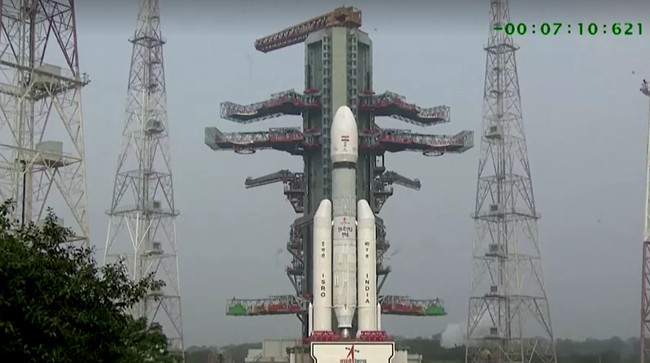
The Indian Space Research Organisation (ISRO) successfully launched the EOS-05 Earth observation satellite using the GSLV-F17 launch vehicle on Friday at 2:55 am local time. After experiencing obstacles in previous missions, the ISRO team worked tirelessly until the GSLV-F17 successfully placed the EOS-05 satellite into a Sub-Geosynchronous Transfer Orbit with precision at 3:14 am.
Quoting India Express on Friday (4/9/2026), this Friday’s launch marks the space agency’s first success for the year 2026. EOS-05 is India’s first imaging satellite specifically designed for direct monitoring from a Geosynchronous orbit at an altitude of approximately 36,000 km above the Earth’s surface.
The ISRO team noted that the 51.7-metre-tall vehicle was launched from the second launch pad at the Satish Dhawan Space Centre in Sriharikota amidst light rain. The vehicle set a record by carrying the heaviest satellite ever launched into geosynchronous orbit, with a launch mass reaching 420.5 tonnes. The Head of ISRO, V Narayanan, warmly welcomed this extraordinary achievement.
“I am very pleased to announce that the GSLV F-17 vehicle has successfully and precisely injected the advanced EOS-05 geo-imaging satellite into its intended and required orbit,” he stated. “This is the 107th launch from Sriharikota and the 19th mission of the GSLV.”
Narayanan added that this success is the second launch in the current financial year and the first for ISRO. A total of six more launches are targeted for this financial year, including the NVS-03 satellite. The ISRO team is also focusing on completing the Gaganyaan mission, where the first unmanned mission under this prestigious programme is scheduled to launch within this financial year.
The GSLV-F17 launch itself consisted of three crucial stages: solid, liquid propulsion, and cryogenic. Cheers of victory immediately erupted in the launch control centre when the completion of the cryogenic stage was announced by directors 15 minutes after liftoff, marking the successful overcoming of technical constraints that had previously haunted the cryogenic stage in earlier missions.
This historic moment was witnessed by three former ISRO directors—K Radhakrishnan, K Kiran Kumar, and S Somanath—alongside teams from the Indian Air Force and Indian Navy at the launch site.