
India Rocked by 'Cockroach' Movement as Gen Z Demands Decent Education
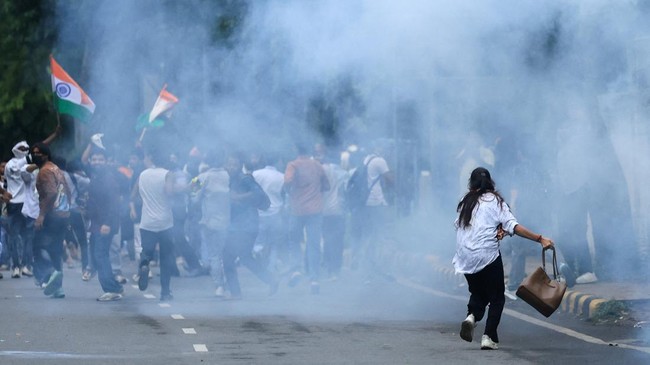
India is being rocked by a wave of protests over education, with the ‘Cockroach’ movement gaining momentum after young people were likened to the insect in a comment that sparked public outrage. Rather than being an insult, the term has been transformed into a symbol of resistance and resilience among India’s youth against economic and social pressures.
The wave of youth-driven protests has now become the biggest political threat to Prime Minister Narendra Modi in his third term. Originating from a scandal involving the leak of medical entrance exam (NEET) papers that affected more than 2 million candidates, the Cockroach Janta Party (CJP) movement has become a symbol of the younger generation’s frustration with the education system, high unemployment, and weak government accountability.
The movement, which initially began as satire on social media, has now managed to rally millions of supporters and staged a major protest in New Delhi. Thousands of demonstrators demanded the resignation of Education Minister Dharmendra Pradhan, reform of the national examination system, and justice for students affected by the paper leaks. Clashes with security forces, who used tear gas and batons, have only increased public support for the movement.
Observers believe the exam leak issue is merely a trigger. Beneath the surface, the anger of young people is fuelled by the difficulty of finding jobs, the high cost of education, and declining trust in state institutions. This situation has caused the protests to develop into the most serious political challenge for the Modi administration since it won its third term.
Around 65% of India’s population is under the age of 35. For years, this youthful population was seen as India’s greatest asset to drive economic growth and overtake many countries. However, in recent days, tens of thousands of young people have instead filled the streets of New Delhi. The demonstrations, which initially took place peacefully, ended in clashes with police, accompanied by the use of tear gas.
At first glance, the demand is simple: the resignation of Education Minister Dharmendra Pradhan. But behind this demand, the demonstrators believe there is a much larger problem, namely an education system that is deemed to have failed to keep pace with the demographic bonus.
The movement is led by a group called the Cockroach Janta Party, which started as a meme on social media in May. The name ‘cockroach’ emerged after the Chief Justice of India was perceived to have likened unemployed youth to the insect. The movement then evolved into real action. Their Instagram account has gathered around 24 million followers, while environmental activist Sonam Wangchuk began a hunger strike to demand education reform. On the 21st day of his protest, Wangchuk was forcibly taken to hospital by plainclothes officers.
At the protest site, Yash Mishra, a 28-year-old demonstrator also on hunger strike, described education as a basic need. ‘Education is like water. A basic need that should be accessible to everyone,’ he said, as quoted by The Economist.
Similar demands also came from Rahul Gandhi, leader of the Congress Party. He called for Dharmendra Pradhan to resign and accused the Modi government of having ‘ruined the future of India’s youth.’ Despite this, Dharmendra Pradhan refused to step down. In a post on X on 21 July, he promised ‘answers, reforms and accountability’ but did not grant the demand for his resignation.
The scale of the demonstrations is inseparable from the condition of India’s younger generation. Nearly 25% of young people are not in education, employment, or training, risking missing the momentum to enter the job market. On the other hand, the government has actually set a public education spending target of 6% of GDP. However, the realisation remains around 4%, leading many to believe that investment in human resources is not in line with India’s economic ambitions.
Competition to enter universities, especially medical faculties and elite campuses, is becoming increasingly tight and expensive. This pressure is exacerbated by rampant exam paper leaks. In May, the government cancelled a medical school entrance exam taken by around 2.2 million candidates after a suspected paper leak was discovered. Many candidates reported having spent years preparing for the exam. India has recorded nearly 100 cases of exam paper leaks in the past decade, yet only two perpetrators have resulted in convictions.
Amidst the intense competition, the impact is not only academic. The Cockroach Janta Party reported that at least 20 students took their own lives after the exam paper leak in May. On the other hand, the acceptance rate at some of India’s top universities is generally below 1%, further increasing the pressure on students.
While India has succeeded in getting children into formal education at an earlier age—with 60.3% of five-year-olds enrolled in primary school in 2023—the transition to higher levels is not as smooth. Only 33% of the population aged 15-19 are still in secondary education, one of the lowest figures compared to countries in the OECD database.