
India Launches Rain Exchange, Allowing Investors to Profit from Weather Forecasts
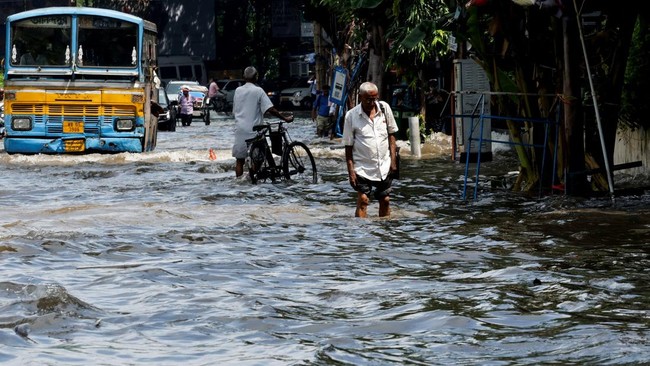
For some, the rainy season means always carrying an umbrella. For farmers, it represents the hope of a good harvest or the fear of crop failure. For hydroelectric power companies, it dictates dam levels that determine energy production capacity. Starting this year in India, the monsoon season also represents an opportunity for profit or loss in the financial markets.
Ahead of the monsoon, which typically arrives in Mumbai in mid-June, the National Commodity and Derivatives Exchange (NCDEX) has launched new contracts that allow market participants to take positions on a simple question: will this month’s rainfall be higher or lower than the 30-year average? In short, investors can now bet on rain.
For India, this step is more than just a new product launch. The monsoon supplies a large portion of South Asia’s annual water needs and affects agriculture, energy, and food inflation. Now, one of the region’s most important natural phenomena is being treated as a tradable asset.
Weather has long been traded. The weather derivatives market emerged in the United States in the mid-1990s, initially used by energy companies to protect themselves against temperature changes affecting electricity consumption. Unlike traditional insurance, contract holders do not need to prove they have suffered a loss; if predefined weather parameters are met, payments are made automatically. Similar concepts have appeared in more extreme instruments, such as Jamaica receiving US$150 million last year after Hurricane Melissa met the criteria of a catastrophe bond issued by the nation.
What makes India’s move interesting is not the mechanism, but the object being traded. While temperature-based contracts are relatively common, rainfall-based contracts are much rarer. Interestingly, NCDEX is not targeting farmers as its primary users. Most Indian farmers manage small plots and are more concerned with local weather than rainfall in Mumbai. Instead, the market targets large corporations with broad weather exposure, including banks (whose agricultural loan portfolios are sensitive to crop yields), hydroelectric companies, solar power firms, and hedge funds.
However, pricing rain is significantly more difficult than pricing stocks or commodities. Stock prices can be linked to corporate earnings, and oil prices can be analysed through supply and demand. Rain has no such underlying foundation; there is only the forecast. Weather forecasts are not always accurate, as meteorologists often face phenomena where heavy rain falls in one area while adjacent regions remain dry. Consequently, market participants are not just betting on the weather, but also on the human ability to predict it.
There is also a deeper question regarding whether rain is India’s greatest weather risk. Pranjul Bhandari, an economist at HSBC, argues that temperature is now more important than rainfall in understanding the country’s food inflation. Extreme heat accelerates the evaporation of reservoir water used for irrigation, and perishable produce spoils more easily when temperatures surge. Conversely, the impacts of a good monsoon are often manageable through storage. Heat does not offer the same luxury. Therefore, if the goal is to protect businesses from weather risks, the question is not whether India needs a rain market, but whether rain remains the most important risk to trade. While companies have used insurance for decades, they are now beginning to trade the weather itself. The challenge remains ensuring the market focuses on the most relevant risks—which, in India, may be rising temperatures rather than the monsoon itself.
Source: jawawa.id (https://jawawa.id/newsitem/india-launches-rain-exchange-allowing-investors-to-profit-from-weather-forecasts-1780802965)
Originally published by CNBC Indonesia (https://www.cnbcindonesia.com/research/20260606141312-128-740666/india-punya-bursa-hujan-investor-bisa-cuan-dari-ramalan-cuaca), translated from Indonesian