
IndexMundi Releases Police Corruption Index, Analyst Criticises Sample Transparency and Potential Information Warfare
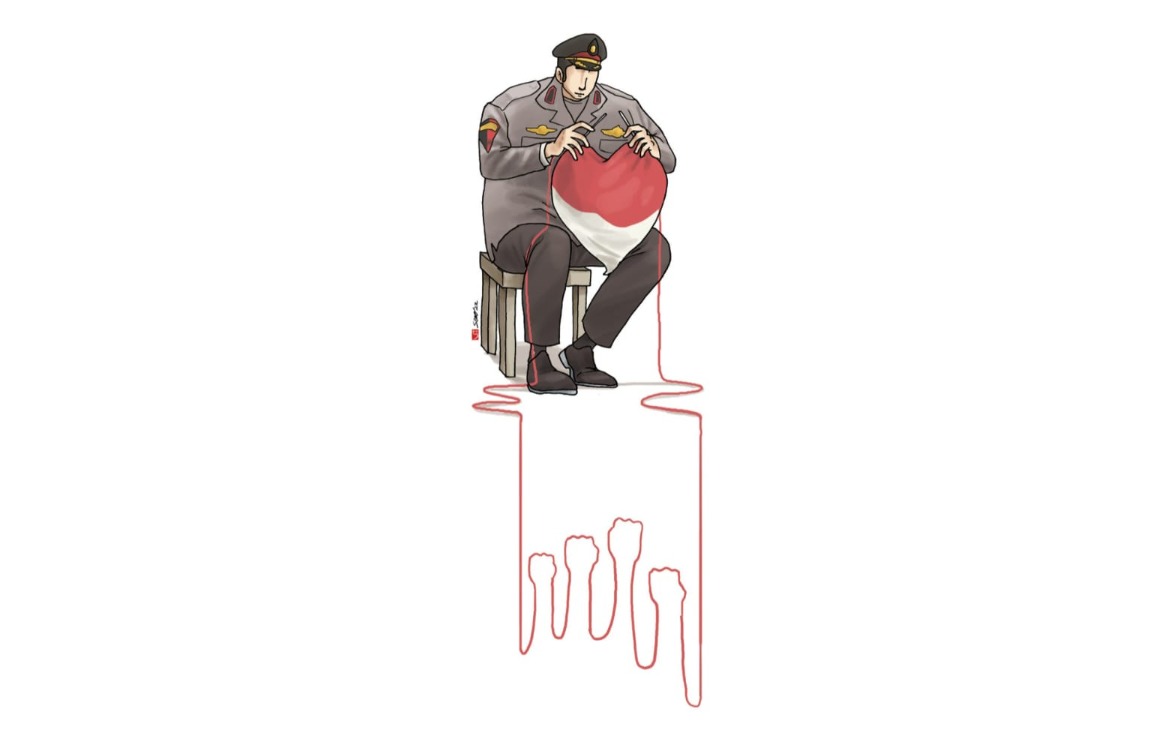
International survey institution IndexMundi Global Surveys, through its Police Corruption Perceptions Index, has released data placing the Indonesian National Police (Polri) at a public distrust score of 7.56. This figure is considered high on the index scale, which measures how severely corruption is perceived by the public towards law enforcement agencies and public institutions in various countries. However, the measurements in this survey are acknowledged to be subjective as they are based on how corruption is felt by the public, rather than on legally verified crime data. Senior political analyst Boni Hargens offered a critical assessment of the research’s validity. According to him, this highly subjective study has serious weaknesses in terms of accuracy and scientific methodology. “The lack of methodological clarity makes it difficult for readers to assess the empirical weight of the research,” Boni said on Monday (6/7/2026). Boni highlighted that without transparency regarding sampling procedures, the number of respondents, geographical distribution, and data verification mechanisms, a perception survey cannot be used as a strong scientific reference. This ambiguity is seen as opening wide space for interpretative bias, both from parties wishing to use the data to attack certain institutions and from those wanting to dismiss it defensively. Beyond the methodological issues, Boni also linked the emergence of such data to the contemporary geopolitical landscape. Amid an increasingly intense era of information warfare, influence operations, and proxy wars, he assessed that speculation about a global conspiracy agenda to weaken the image of Indonesian democracy by cornering strategic institutions cannot be dismissed outright, although he did not confirm this directly. Regardless of the debate over the survey’s motives, this methodological critique serves as an important reminder for the public and policymakers to possess adequate data literacy and a proportional critical attitude. This is especially crucial in the current information traffic, where anyone can produce information without considering accuracy and moral integrity. Furthermore, Boni stressed that the assessment from IndexMundi should not be used as the sole reference in evaluating the performance of the Indonesian police. He referred to the fact that various domestic and international institutions have actually appreciated the positive transformation within Polri under the leadership of Police Chief General Listyo Sigit Prabowo. Long-term transformation, such as changes in organisational culture, improvements to the recruitment system, budget transparency, and the strengthening of public complaint mechanisms, requires a comprehensive evaluation. “After all, public trust in the police institution is an invaluable state asset. Building that trust requires consistency, transparency, and the courage to keep improving, far beyond any survey,” Boni concluded.