
Independent Waste Management Promoted Through Draft Regional Regulation
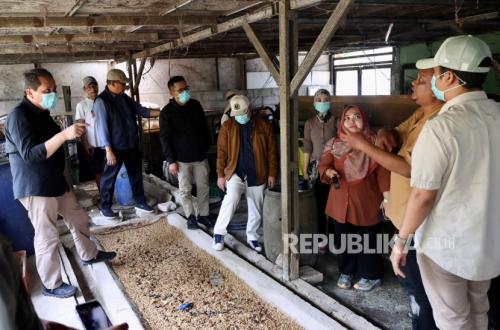
The Special Committee XXI of the West Java Regional House of Representatives (DPRD) is promoting stronger household-based waste-management communities through a draft regional regulation. The regulation is expected to provide legal certainty and support for people who take the initiative to process waste independently.
Tom Maskun, chairman of the committee, said waste management at source needed to be strengthened by involving the public. One promising initiative, he said, was processing organic waste by farming maggots, or black soldier fly (BSF) larvae.
Tom made the remarks after a working visit to Greenday Maggot BSF Farm in Karawang Regency on Tuesday (20 October 2026).
According to data from the Environmental Agency, independently processed waste in Karawang Regency accounts for around 0.5 per cent of the total waste volume. Nevertheless, the initiative reflects growing public concern about environmental issues, Tom said.
“At the very least, we can see the public’s awareness and enthusiasm for managing household waste, particularly organic waste, through maggot farming. This is not simply about farming maggots; the main aim is to break the chain of waste so that it is dealt with at source,” Tom said.
Maggot farming can help reduce organic waste accumulation and also has the potential to produce goods with economic value, he said. These include animal and fish feed, as well as liquid organic fertiliser.
However, communities involved in waste management still face a number of challenges. Tom highlighted limited access to government funding, as well as licensing and product legality issues that hamper efforts to expand sales.
The committee is therefore working on a draft regional regulation intended to strengthen the legal foundation for waste-management communities. Its discussion covers harmonising regulations, clarifying authorities, establishing the legal status of communities and securing government support.
Tom hopes the regulation will enable the provincial government to empower communities more effectively and expand environmental education. Household waste management is expected to grow into a collective movement that reduces the volume of waste sent to landfill.
“With this draft regulation, we hope the public’s contribution will become more widespread as an expression of concern for the environment. There will also be a regulation to guide proper waste management,” he said.