
Independence Day: PLBN Sebatik Affirms Comprehensive Border Management
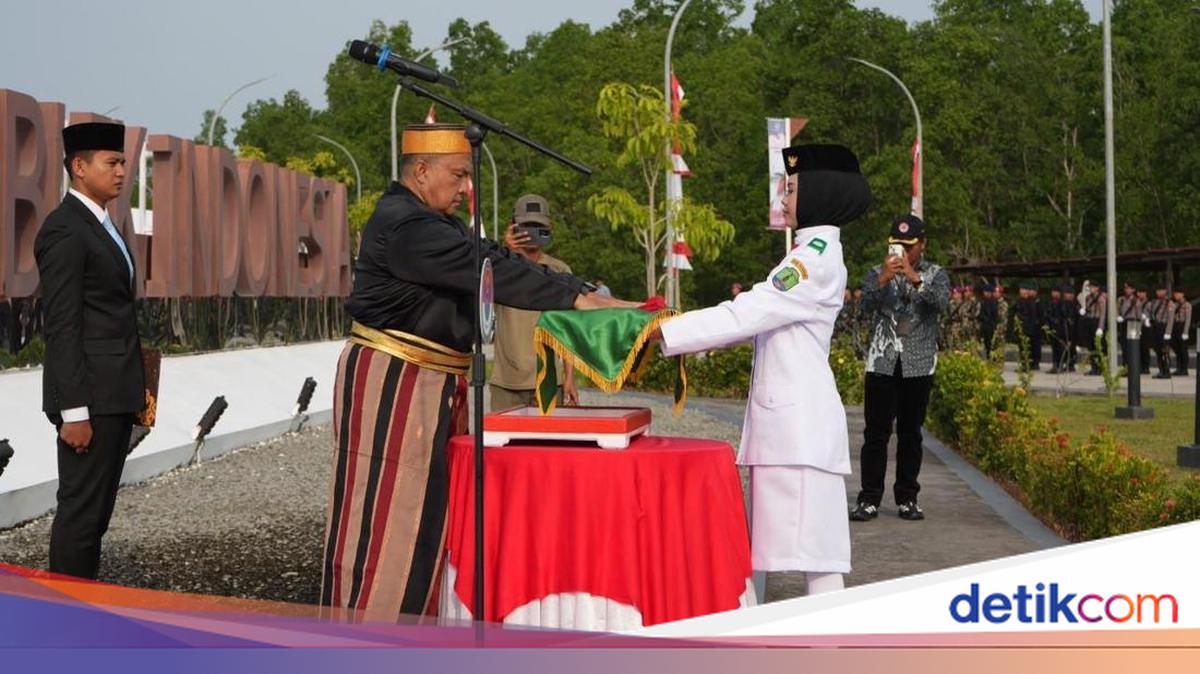
The Sebatik Cross-Border Post (PLBN) held a ceremony to commemorate the 81st Anniversary of the Independence of the Republic of Indonesia. The event, organised by the National Border Management Agency (BNPP), took place solemnly at the Tasbara Plaza of PLBN Sebatik, Nunukan Regency, North Kalimantan.
The Independence Day commemoration on Monday (17/8) carried the theme ‘A Sovereign, Just and Prosperous Indonesia’. This theme serves as a strong foundation for reinforcing the commitment to comprehensive border area management. Border regions are now focused on being the nation’s foremost face and a crucial part of equitable national development.
During the ceremony, BNPP Expert Group member Edi Mardiyanto acted as the Inspector of Ceremony. He appeared elegant in traditional Bugis attire complemented by a Songkok Recca Bone cap. Meanwhile, the role of Ceremony Commander was entrusted to Captain Hilman Herawan Praskoso, Commander of the Border Security Task Force of Yonkav 13 Pamtas Satya.
Edi was tasked with reading a message directly from the Minister of Home Affairs, who also serves as Head of BNPP. He affirmed that the perspective on border areas can no longer regard them as outermost regions synonymous with underdevelopment.
Borders are the most strategic part of the nation’s sovereign territory. These areas must receive primary attention through sustainable development programmes and services.
‘Borders are not lagging outermost regions, but rather the front face of the nation. Border residents deserve better welfare and should contribute to the nation’s progress,’ Edi said in a written statement on Tuesday (18/8/2026).
He further explained that border area management requires close synergy and collaboration from all elements. This includes the active involvement of the central government, regional governments, TNI and Polri personnel, the business community, and local community participation.
Accelerated infrastructure development, strengthening of the economic base, and improved public service quality must proceed in an integrated manner. This comprehensive approach is considered capable of delivering direct impact on community welfare levels.
‘We must not work in silos. Infrastructure must support the economy. The economy must improve community welfare. Services must strengthen the state’s presence, and all of it must reinforce Indonesia’s sovereignty,’ Edi stressed.
He also highlighted the vital position of border communities, who must be placed as the primary beneficiaries of development outcomes. Communities are expected not only to bear the heavy responsibility of safeguarding the sovereignty of the nation’s frontier areas, but must also absolutely obtain access to basic services, connectivity facilities, and various economic opportunities.
‘Border communities must not only be the nation’s foremost guardians. They must become the primary beneficiaries of development,’ he concluded.
In line with this direction, the government is now preparing a major roadmap. This strategic plan is set out in the Grand Design for the Transformation of State Border and Border Area Management 2026-2045. This policy will serve as the direction for integrated border management over the next two decades.