
Independence Day: Freeing Campuses from the Scourge of Sexual Violence
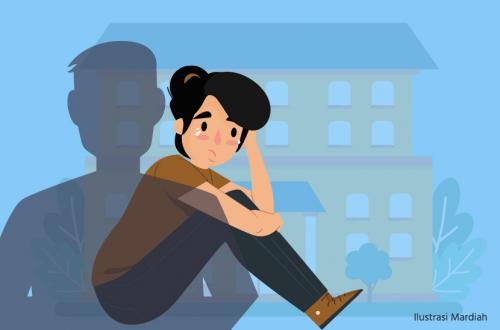
Eighty-one years of Indonesian independence. Yet, there are still members of the academic community who have not fully experienced that freedom. They live in the shadow of harassment, intimidation, imbalanced power relations, and the fear of reporting the violence they experience.
A university is fundamentally not just an arena for the transfer of knowledge. More than that, it is a crucible for character building, integrity, and respect for human rights and dignity. Therefore, every member of the academic community—students, lecturers, and education staff—has the right to a safe, dignified academic environment, free from all forms of violence.
Sexual violence in higher education is deeply concerning. According to Beni Setiawan, there were 2,761 cases of sexual violence within Indonesian higher education institutions throughout 2025. This figure equates to an average of more than 230 cases per month, or about seven cases per day. The magnitude of this number is suspected to represent only the tip of the iceberg, as sexual violence is a phenomenon that often remains hidden.
The state has demonstrated a strong commitment through Law Number 12 of 2022 concerning the Crime of Sexual Violence and the Minister of Education, Culture, Research, and Technology Regulation Number 55 of 2024. The latter regulation expands the scope of handling, covering not only sexual violence but also physical and psychological violence, bullying, discrimination, intolerance, and policies containing violence. Its aim is to create a friendly, safe, and violence-free higher education environment. These regulations make protection not merely a moral issue, but a legal obligation.
However, the existence of regulations alone is insufficient. The implementation of the Sexual Violence Prevention and Handling Task Force (Satgas PPKS) on campuses must be strengthened. The selection of its members must be stringent, ensuring they possess integrity, competence, and a victim-centred perspective. The task force’s role is not just to receive reports, but to actively build a prevention system through education, socialisation, and the creation of a safe reporting ecosystem.
Campus leadership plays a crucial role. Rectors, deans, and department heads must be at the forefront of creating a zero-tolerance culture towards sexual violence. They must ensure that every report is handled seriously, confidentially, and without revictimisation. There should be no more attempts to cover up cases in the name of institutional reputation. A good campus reputation is one that dares to be transparent and just.
Education and awareness are the main keys. Students, lecturers, and education staff must understand the forms of sexual violence, consent, and reporting mechanisms. This education must be integrated into academic and non-academic activities. A safe campus culture can only be built when the entire academic community has collective awareness and responsibility.
Victim recovery is an aspect that is often overlooked. Victims of sexual violence not only suffer physical and psychological trauma, but also social and academic impacts. Campuses must provide comprehensive recovery services, including psychosocial counselling, legal assistance, and academic flexibility. Victims must be supported to continue their studies without fear or stigma.
On this 81st Independence Day, it is time for us to reflect: has our academic community truly achieved independence? True independence is when every individual on campus is free from fear, free from violence, and free to develop their potential to the fullest. Let us make the spirit of independence a momentum to free campuses from the disaster of sexual violence. A safe campus is a reflection of a civilised nation.
Source: jawawa.id (https://jawawa.id/newsitem/independence-day-freeing-campuses-from-the-scourge-of-sexual-violence-1785725536)
Originally published by Republika (https://analisis.republika.co.id/berita/tj68hj483/hari-kemerdekaan-memerdekakan-kampus-dari-bencana-kekerasan-seksual), translated from Indonesian