
Independence and the Development Paradox
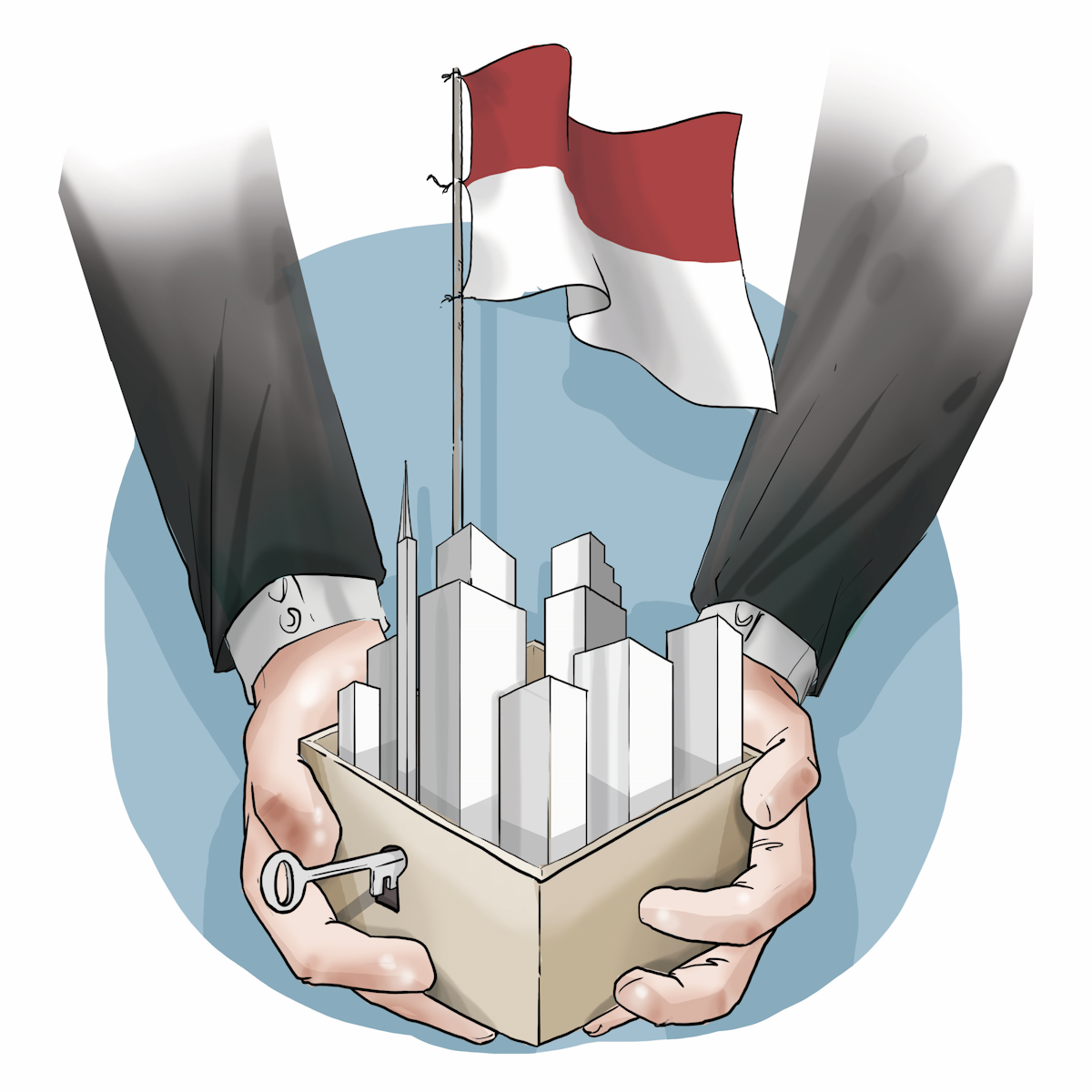
Ahead of Indonesia’s 81st Independence Day celebrations, the Central Statistics Agency (BPS) reported the latest conditions of Indonesian society. According to BPS data, the number of open unemployed in May 2026 fell to 7.22 million people (4.65%). Meanwhile, the number of poor people in March 2026 shrank to 22.93 million people, or 8.07% of the total population. Compared to September 2025, the number of poor people decreased by 430,000, while compared to March 2025 it decreased by 920,000. The government’s success in reducing poverty in 2026 marks the lowest poverty rate in more than a decade, continuing a downward trend since the post-pandemic economic recovery. Besides the declining number of poor people, the quality of poverty was also reported to have improved. The Poverty Depth Index (P1) fell to 1.268 from 1.290 in September 2025, while the Poverty Severity Index (P2) fell to 0.291 from 0.303. According to BPS, the decline in poverty was driven by economic growth in the first quarter of 2026, which reached 5.61% year-on-year, increased household consumption, the addition of approximately 1.9 million jobs between February 2025 and February 2026, and the distribution of social assistance by the government. To a certain extent, economic growth is claimed to have successfully created jobs, reduced unemployment, increased workers’ incomes, and reduced poverty. However, BPS also reported that the level of inequality in population expenditure distribution, calculated through the Gini ratio in March 2026, was 0.368, an increase of 0.005 points compared to the September 2025 period. Meanwhile, the Gini ratio in rural areas rose by 0.004 points and in urban areas by 0.001 points. Thus, although the government claims the economy is growing above 5% and the number of poor people is decreasing, what is actually happening behind this is an increase in social inequality. The economic pie is often only enjoyed by the upper middle class. This is the reality that still colours Indonesia’s independence celebrations to this day. In every independence celebration in August, the state address usually outlines a series of development successes and claims of improving economic growth. Every August, we can witness how various corners of the city are adorned with flying red and white flags and bustling with various 17th August competitions, especially the greasy pole climb, which is watched with laughter by residents. In short, people seem to forget what they are experiencing because they are carried away by the joyful celebrations. The independence celebration is always a sacred and joyful moment. However, behind the festivity of this national party, there is another reality that is often overlooked: structural poverty that still haunts and a widening social inequality gap. Indeed, compared to the colonial era, what the Indonesian people feel today is far better. But true independence is not merely about the people being free from the grip of foreign colonisers or the flying of flags on the highest poles. The essence of independence is when every citizen has a guarantee of a decent livelihood, fair access to healthcare, and adequate social protection. When millions of people are still struggling with the pressures of daily needs, soaring rice prices, being unemployed because it is difficult to find decent work, and trapped in illegal online loan debts, then claims about economic progress and national success feel far from reality. Can you imagine how the poor feel when BPJS participants, who should have the right to be served properly, instead become victims of bullying? How can the people smile when the land they have occupied for decades is seized for development interests? When the informal sector and the presence of urban migrants are considered more of a nuisance than victims, what do they have to be grateful for in the independence celebrations that appear so festive and full of laughter? Although much progress has been achieved, it must be objectively acknowledged that Indonesia is still haunted by a welfare paradox. For most of the elite and upper middle class, the independence celebration is indeed a blessing of progress to be grateful for and celebrated. In various regions, the construction of mega infrastructure, massive industrialisation, new toll roads, and digitalisation in various aspects of life are achievements they enjoy. However, for poor families in marginal pockets—both in urban slums and underdeveloped rural areas—true independence remains a dream. As citizens they are independent, but as poor people they continue to suffer. The Central Statistics Agency (BPS) has often shown over the years that the poverty rate has statistically decreased. However, the set poverty line often does not reflect the real cost of living today. Many vulnerable groups are just above the poverty line, who could fall back into poverty at any time due to small shocks, such as being laid off, crop failure, or the medical expenses of a seriously ill family member. This means that people who are not statistically categorised as poor are actually in the near-poor group, who could at any time drop in status to become the new poor.