
Indef Urges Soybean Production Incentives to Strengthen Food Security
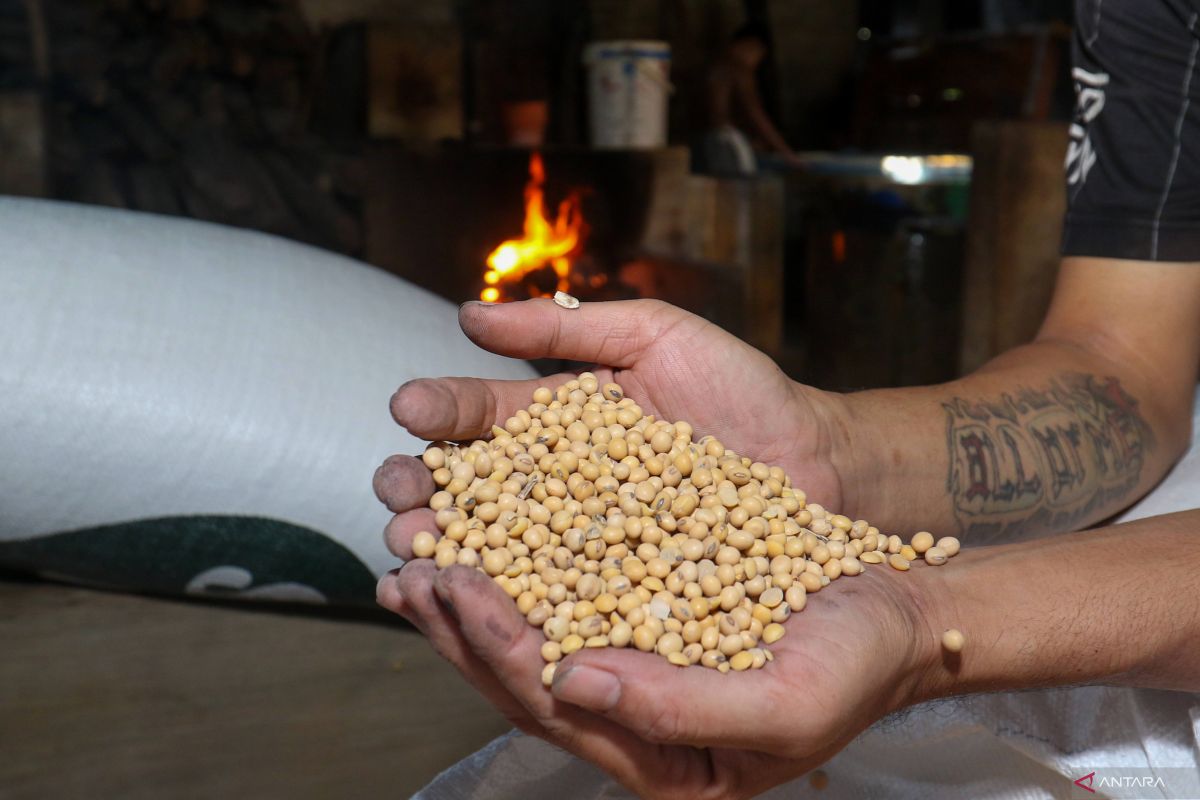
Institute for Development of Economics and Finance (Indef) Executive Director Esther Sri Astuti has urged the government to strengthen incentives for increasing domestic soybean production to support national food security and the sustainability of the tofu and tempeh industry. She stated that incentive policies would be more optimal if directed at strengthening the production sector and creating jobs. “If we want to provide incentives, it is better to direct them towards activities that can create employment so that people have income and purchasing power increases,” Esther said in Jakarta on Friday.
According to her, strengthening domestic soybean and other agricultural commodity production can reduce dependence on imports while reinforcing the foundation of national food self-sufficiency. “If we want to provide subsidies, then give incentives to increase soybean and other agricultural commodity production, not depend on imported soybeans,” she said.
The government, through the Coordinating Ministry for Food, has decided to provide a soybean subsidy of Rp2,000 per kilogramme via Perum Bulog for an initial 250,000 tonnes to maintain price stability amid the rupiah’s depreciation and high import dependency. Based on data from the Ministry of Trade’s Market and Basic Needs Monitoring System, the average national price of imported soybeans was recorded at Rp13,722 per kg on Thursday, a slight increase from Rp13,705 per kg the previous day. Coordinating Minister for Food Zulkifli Hasan said the subsidy is expected to maintain soybean price stability so as not to burden tofu and tempeh artisans or the public. The government estimates the initial subsidy requirement at around Rp500 billion.
Esther further assessed that increasing domestic food production is necessary to help maintain food price stability if supported by smooth distribution. “If agricultural commodity production is abundant and distribution is smooth, it will not trigger food inflation,” she said. She added that strengthening the domestic food production sector will also have a broader economic impact by creating new jobs in agriculture and the food processing industry.
According to Esther, the policy of strengthening domestic soybean production is also in line with the government’s efforts to reinforce national food self-sufficiency and reduce pressure on strategic food raw material imports. She also assessed that strengthening domestic production can help maintain long-term food price stability amid the challenges of exchange rate fluctuations and global supply chain dynamics. Esther added that measures to increase domestic agricultural commodity production must be accompanied by strengthened distribution, farmer productivity, and infrastructure support so that the benefits can be felt sustainably by the public and business actors.
Meanwhile, the government continues to push for strengthening domestic food production through increased agricultural productivity and production facilities to support national food self-sufficiency targets. During a meeting with the Ministry of Agriculture on 10 June 2026, Commission IV of the House of Representatives supported strengthening the ministry’s 2027 budget through an indicative ceiling of Rp23.23 trillion and an additional budget proposal of Rp22.43 trillion to accelerate food self-sufficiency and national food security programmes. The additional budget is directed towards increasing production of strategic commodities, downstream processing of plantations, livestock development, seed production, strengthening agricultural extension and training, and agricultural education. The meeting also concluded that increasing production of strategic food commodities is important to reduce import dependency, including for soybeans and garlic. “In accordance with the directive of President Prabowo Subianto, the Ministry of Agriculture is tasked with immediately increasing the production of strategic food commodities that have so far relied on imports to meet domestic needs,” said Minister of Agriculture Andi Amran Sulaiman.