
INDEF suggests strategies to boost exports from manufacturing sector
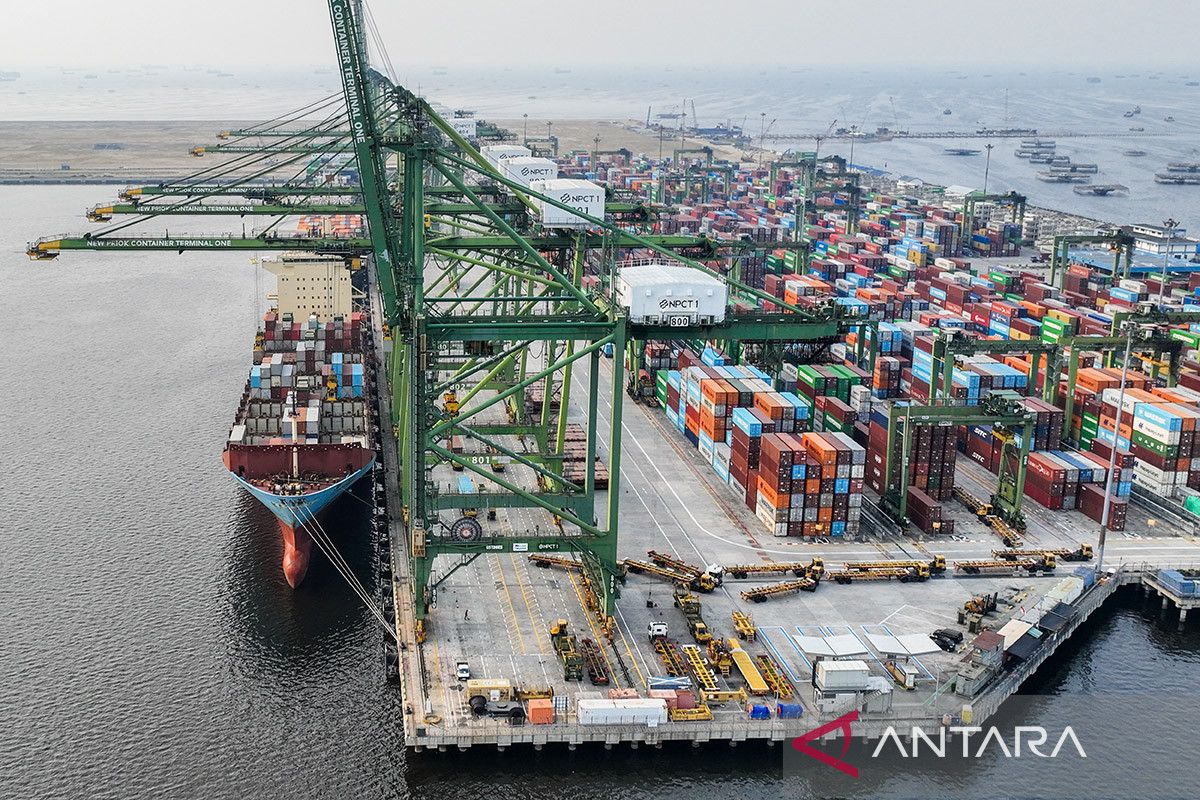
The Head of INDEF’s Macroeconomics and Finance Centre, M Rizal Taufikurahman, stated that the government needs to accelerate exports in sectors with high added value, particularly manufactured products, as a strategy to drive national export growth. “For the remainder of this year, the strategy to boost exports is not sufficient with just trade promotion. The government needs to accelerate exports in sectors with high added value, especially manufactured products, processed foods, chemicals, pharmaceuticals, automotive components, value-added textiles, and downstream products that do not stop at semi-finished goods,” Rizal said in Jakarta on Friday. He argued that the trade balance deficit in May 2026, which occurred for the first time, signals that national exports are weakening amid rising domestic demand for imports, particularly oil and gas and raw materials. He also said this deficit demonstrates Indonesia’s trade vulnerability due to its still-large dependence on oil and gas imports, causing the trade balance to come under immediate pressure when energy prices and import volumes rise. Furthermore, he observed that Indonesia’s exports still rely too heavily on primary commodities and natural resource downstreaming, making them susceptible to weakening global commodity prices, slowing global demand, and pressure from major trading partner countries. In this sector, strengthening the downstream processing of raw materials into semi-finished or finished goods before export, such as metal-based products, palm oil, and agricultural products, can generate greater foreign exchange. He also suggested that Indonesia boost exports in terms of volume and consider product diversification as well as expansion into non-traditional markets. “Exports must be driven by volume, product diversification, and expansion into non-traditional markets such as India, the Middle East, Africa, and Latin America,” he advised. In the short term, Rizal also recommended that the government simplify bureaucracy to strengthen export financing, accelerate tax restitution, reduce port logistics barriers, improve certainty of industrial raw material supply, and maintain exchange rate stability so that exporters do not face excessively high cost risks. At the same time, oil and gas imports need to be reduced through energy efficiency, domestic energy substitution, and controlling unproductive consumptive imports. Data from Statistics Indonesia (BPS) shows that in May 2026, Indonesia’s trade balance recorded a deficit of 1.61 billion US dollars, surging 59 percent compared to the same period the previous year. A surge in imports driven by rising global oil and gas prices was the main cause of this deficit gap.