
Indef: Renewable energy investment crucial to chase 8 per cent growth
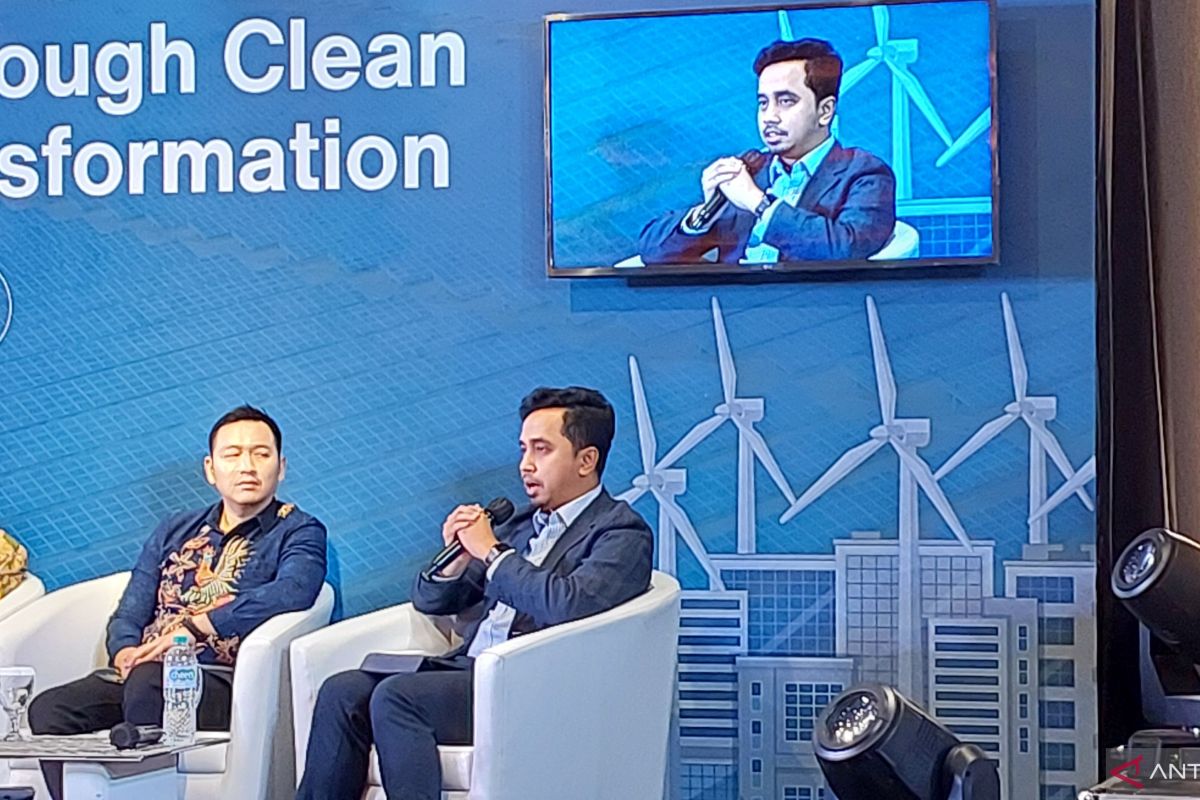
Jakarta (ANTARA) - The Director of International Collaboration at the Institute for Development of Energy and Finance (Indef), Imaduddin Abdullah, believes that renewable energy investment is one of the keys for Indonesia to achieve an economic growth rate of eight per cent per annum while simultaneously improving the quality of national investment.
According to him, to drive higher economic growth, Indonesia requires more than just large volumes of investment; it also needs to enhance the quality of such investments to ensure an optimal economic impact.
“If we look at global investment, the shift from fossil fuels to clean energy has been evident since 2018. Perhaps ten years ago, we would have discussed fossil fuels extensively in terms of investment, but now the focus is on clean energy,” he stated during the BIG Strategic Forum 2026 in Jakarta on Tuesday.
Imaduddin noted that Indonesia requires an economic growth rate of approximately 6-8 per cent to reach its target of becoming a high-income nation by 2045. However, this challenge is significant as Indonesia’s economic growth has historically tended to hover around the 5 per cent mark.
In this context, Imaduddin considers renewable energy to be one of the strategic sectors to be promoted. He explained that global energy investment trends have shifted from fossil fuels towards clean energy. In his view, this change demonstrates that renewable energy is no longer merely an environmental agenda, but has become a core part of the nation’s economic and energy security strategy.
Beyond driving large-scale investment, the development of renewable energy is also seen as a way to strengthen Indonesia’s economic resilience amidst geopolitical uncertainties. Imaduddin stated that diversifying energy sources through renewables can reduce dependence on fossil fuels, which are vulnerable to global volatility.
“Green energy is no longer just about the environment, but also about how we can diversify energy so that our economy becomes more resilient to global shocks,” he said.
He also assessed that the economic benefits of the energy transition will increase significantly if the development of renewable energy proceeds in tandem with electrification. According to Imaduddin, investment in electrification can create linkages with various other economic sectors, ensuring the impact extends beyond the energy sector itself.
He cited the development of solar power plants, which will require supporting investments such as batteries and various other components, as an example. Similarly, the development of electric vehicles will create a need for investment in charging infrastructure.
Imaduddin believes that these conditions can ultimately improve the quality of national investment and help lower Indonesia’s Incremental Capital Output Ratio (ICOR), as a single investment can stimulate economic activity across numerous other sectors.