
Indef: Proper Governance Essential to Strengthen Food Aid Benefits
Jakarta (ANTARA) - The Executive Director of the Institute for Development of Economics and Finance (Indef), Esther Sri Astuti, believes that proper governance can strengthen the benefits of food aid for the community.
According to her, precise management is vital to ensure that aid reaches the entitled population with the appropriate quantity, timing, and quality. “An effective rice assistance mechanism requires data accuracy, distribution transparency, and supply chain integration,” Esther told ANTARA in Jakarta on Tuesday.
In terms of indicators, Esther noted that the implementation of food aid can be evaluated through six aspects: target accuracy, quantity accuracy, timeliness, quality accuracy, cost/price accuracy, and administrative accuracy. Regarding the target aspect, aid must be received by families who are truly eligible.
Furthermore, the amount of rice must match the allocation, distribution must be timely, the quality must be fit for consumption, recipients must not be burdened with unauthorised costs, and the distribution process must be well-documented.
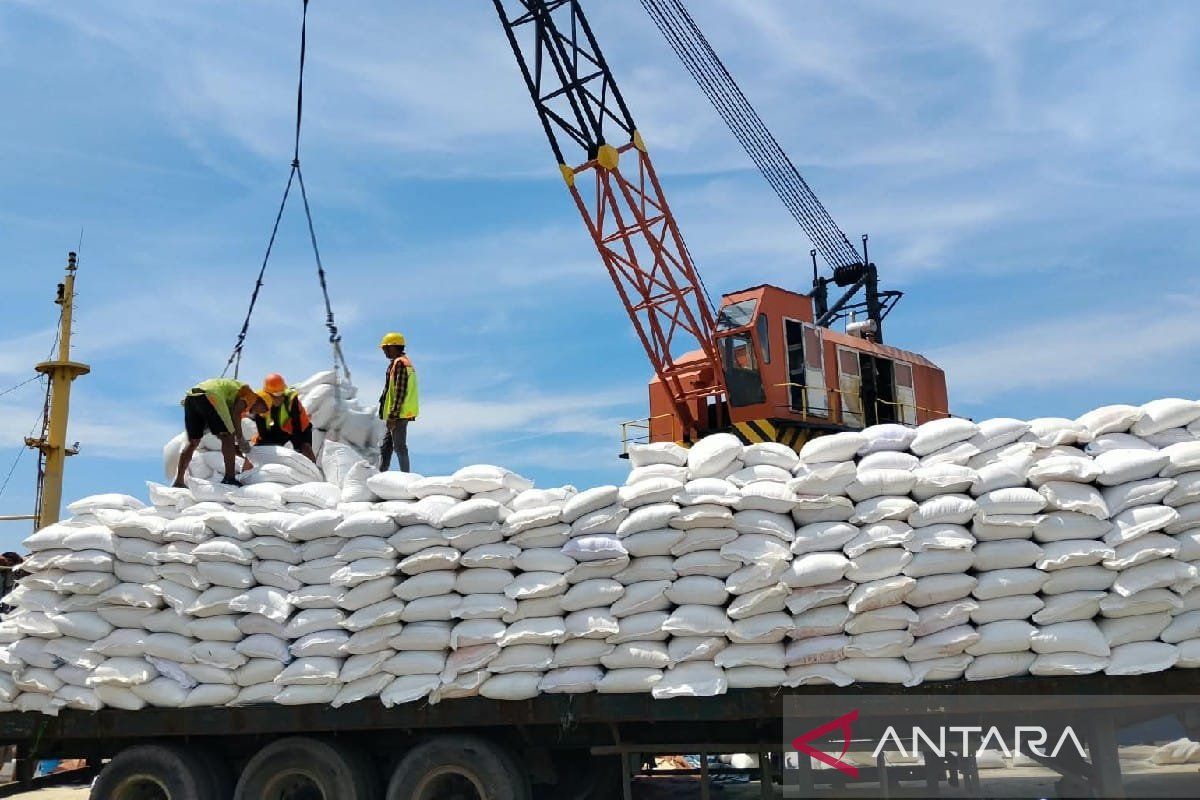
The government has tasked Perum Bulog with distributing rice food aid for the July-September 2026 period to 33,244,308 food aid recipients (PBP), with an allocation of 10 kilograms (kg) per month per person, using the National Socio-Economic Single Data (DTSEN) as the recipient basis. The total allocation for these three months reaches 997,332.24 tonnes. The National Food Agency (Bapanas) recorded that distribution realisation as of 18 September 2026 reached 682,671.45 tonnes, or 68.45 per cent of the total allocation.
Esther reminded that the distribution of rice aid must still account for the risk of damage and variations in quality received by the community. To create a more lasting impact, she believes support for the community should also be directed towards improving the quality of human resources through education.
“Ideally, this aid should be realised through broader access to education and the improvement of school infrastructure, as the impact can be more long-lasting and intellectually enrich the nation,” she said. According to Esther, education can expand opportunities for the community to secure jobs with better income levels, thereby reducing long-term dependency on aid in the long run. “A smart community does not depend on government aid because the opportunity to obtain better jobs with more decent wages becomes available,” she added.
She also noted that providing rice aid does not automatically create sufficient financial space for recipient households to save, invest, or fund education. This condition, according to Esther, relates to the large proportion of food needs in low-income groups, as explained by Engel’s Law.
“The percentage of food expenditure relative to income or total expenditure is known as the food share. According to the economic theory of Engel’s Law, the lower a person’s or household’s income, the larger the percentage used to purchase food,” she stated.
She then presented cross-country studies showing that low-income groups tend to allocate a larger portion of their budget to food and are more responsive to changes in income and prices. As an illustration of the food component in Indonesia’s poverty measurement, Statistics Indonesia (BPS) recorded the Poverty Line for March 2026 at Rp669,235 per capita per month. Of this amount, the Food Poverty Line reached Rp499,886 or 74.70 per cent, while the Non-Food Poverty Line was Rp169,349 or 25.30 per cent.
Esther stated that conversely, if income increases, the proportion of household expenditure on food will decrease, leaving more space to meet other needs. Meanwhile, the government is continuing rice food aid for the October-December 20lar6 period for approximately 33.24 million recipients, with an allocation of 10 kg per recipient each month. With this continuation, the total allocation of rice food aid throughout 2026 could reach approximately 2.6 million tonnes across eight months of distribution. The government has also stated it will continue to oversee the distribution of food aid to ensure it proceeds according to regulations and reaches the intended target communities.
Source: jawawa.id (https://jawawa.id/newsitem/indef-proper-governance-essential-to-strengthen-food-aid-benefits-1790078531)
Originally published by Antara (Indonesian) (https://www.antaranews.com/berita/5753180/indef-nilai-tata-kelola-tepat-perkuat-manfaat-bantuan-pangan), translated from Indonesian