
Indef: LCT and Export Strengthening to Mitigate Currency Weakness Impacts
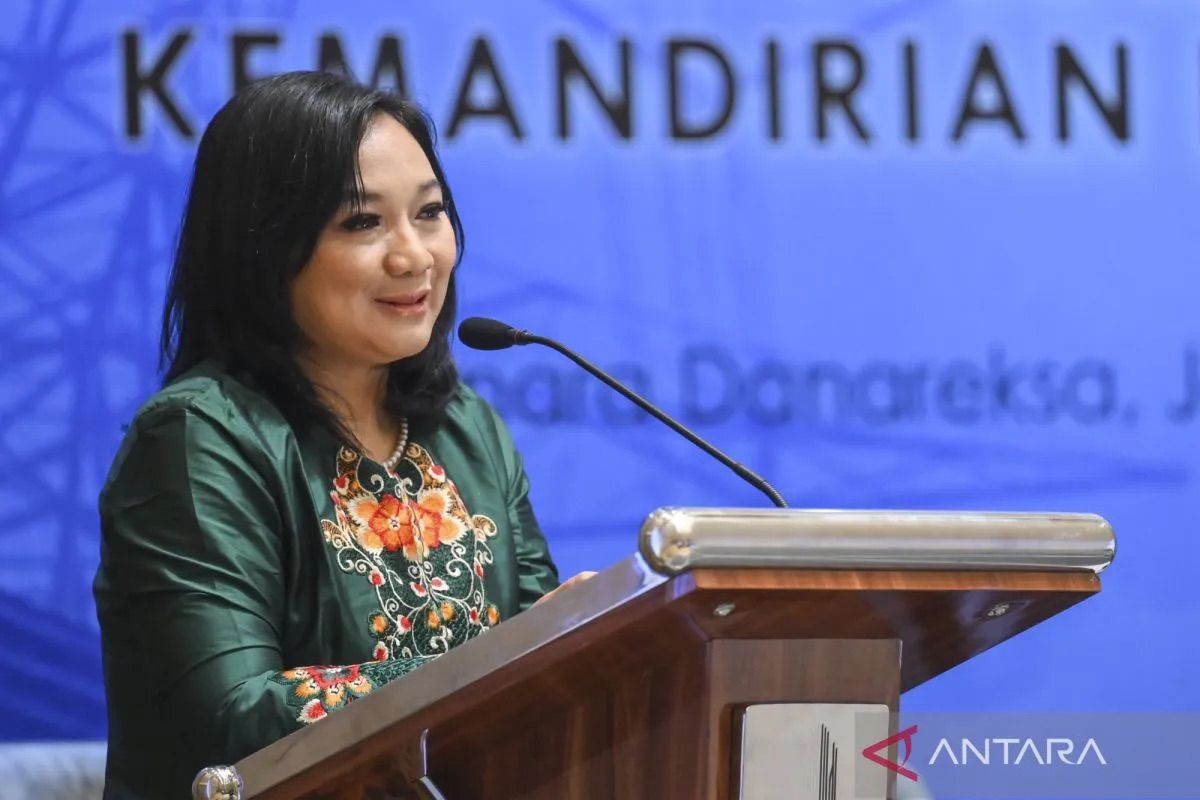
The Institute for Development of Economics and Finance (Indef) believes that the implementation of Local Currency Transactions (LCT), strengthening export orientation, diversifying supply chains, and operational efficiency are effective steps to mitigate the impact of exchange rate fluctuations on the industrial sector.
Speaking in Jakarta on Friday, Indef Executive Director Esther Sri Astuti stated that one strategy that needs to be strengthened is the diversification of supply chains so that industries do not depend on a single supplier country. This can be achieved by seeking alternative suppliers from countries with more competitive production costs, while simultaneously increasing the use of domestic components and raw materials.
Furthermore, the application of Local Currency Transactions (LCT) is considered vital to reduce dependency on the US dollar in international trade transactions. Through this scheme, she noted, trade can be conducted using local currencies with partner countries such as Japan, China, or Thailand.
“Encourage international trade transactions using local currencies with partner countries, such as Japan, China, or Thailand, to reduce dependence on the US dollar,” said Esther.
On the other hand, Esther views the weakening exchange rate as an opportunity to strengthen national export performance. According to her, Indonesian products become relatively cheaper in the international market, which has the potential to increase competitiveness and demand from foreign buyers.
“Use the weakening exchange rate as an opportunity to increase product competitiveness in the global market because export goods become relatively cheaper for foreign buyers,” she said.
To maintain business sustainability amidst rising production costs, Esther also emphasised the importance of evaluating pricing strategies. Industrial players are advised not to get caught in price wars, but rather to focus on increasing product value through quality, warranties, or after-sales services.
“Instead of engaging in price wars, focus on increasing product value-add, such as quality, warranties, and after-sales service, so that consumers remain loyal even if prices are adjusted,” she noted.
Furthermore, Esther emphasised that efficiency and automation are crucial factors in strengthening industrial resilience against exchange rate volatility. Companies need to conduct a thorough evaluation of their expenditure structures and direct investments towards technology capable of increasing productivity while reducing long-term operational costs.
“Thoroughly evaluate expenditures and invest funds in business process automation to reduce operational or overhead costs in the long term,” she concluded.