
Indef: Labour Absorption in Labour-Intensive Sectors Continues to Shrink Amid Investment Surge
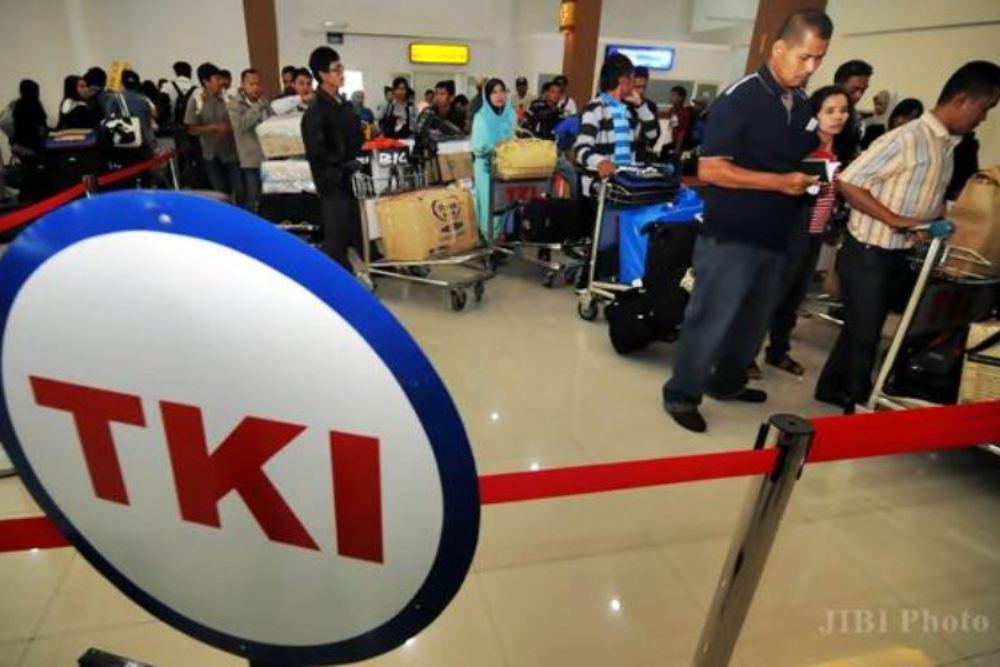
Labour absorption in labour-intensive sectors is showing a continuous downward trend despite investment values increasing over recent years. Ariyo DP Irhamna, an economist at the Institute for Development of Economics and Finance (Indef), explained that according to data from the Ministry of Investment/BKPM, investment values in five key labour-intensive sectors—textiles, garments, leather and footwear, wood, and furniture—have indeed risen.
Investment realisation grew from Rp17.4 trillion in 2021 to Rp56.8 trillion in 2025. Its share of total national investment also rose from 1.9% to 2.9%. In US dollar terms, investment showed a similar trend, increasing from US$1.19 billion in 2021 to US$3.53 billion in 2025. However, this increase in investment has not been accompanied by an increase in the number of workers absorbed. “What is collapsing is not the value, but the ability to create jobs,” he told Bisnis on Friday.
Ariyo noted that the number of workers absorbed from investments in these five labour-intensive sectors peaked at 471,972 people in 2024, then fell to 444,110 people in 2025. The decline continued into the first semester of 2026, dropping to 202,244 workers, a 7.7% contraction compared to the same period the previous year. The ratio is becoming increasingly clear: Ariyo explained that every Rp1 trillion of investment was previously able to absorb approximately 14,382 workers. That figure dropped to 7,823 workers in 2025 and plummeted further to just 5,360 workers in the first semester of 2026.
According to Ariyo, investment growth data for the labour-intensive sector in the first semester of 2026 must be read with caution. Although the nominal value appears to have surged by 34.6%, this increase was driven by a single domestic investment project in the wood sub-sector in Temanggung Regency worth Rp4.52 trillion, which only employed 24 workers. “Without the wood sub-sector, the investment increase for the first semester of 2026 would have been only around 8.2%,” he emphasised.
Furthermore, Ariyo observed a shift in the sources of national job creation. While investment realisation in the first semester of 2026 managed to absorb approximately 1.45 million workers—a 15% increase from the previous year—the largest additions came from other service sectors (61,926 people), hotels and restaurants (37,565 people), and trade (31,244 people). Conversely, labour-intensive sectors experienced a decline in absorption: the footwear industry lost 14,084 workers, the food industry dropped by 12,393, other industries decreased by 5,459, and the textile industry shrank by 3,755. “Essentially, the engine of job absorption has moved from factories to services,” said Ariyo.
On the other hand, he reminded the public to understand the methodological differences between BKPM’s investment realisation data and Bank Indonesia’s Foreign Direct Investment (FDI) data. BKPM recorded that 2025 investment realisation grew by 12.7%. In contrast, Bank Indonesia recorded FDI inflows based on the balance of payments falling by 12.5% from US$24.8 billion to US$21.7 billion in 2025, and further declining by approximately 8% year-on-year in the first quarter of 2026. Ariyo explained that both datasets are accurate as they measure different aspects: BKPM calculates the value of investment projects reported by companies, including domestic financing and debt, whereas Bank Indonesia calculates the actual foreign exchange inflows into Indonesia.
Source: jawawa.id (https://jawawa.id/newsitem/indef-labour-absorption-in-labour-intensive-sectors-continues-to-shrink-amid-investment-surge-1785538246)
Originally published by ekonomi.bisnis.com (https://ekonomi.bisnis.com/read/20260801/9/1992754/indef-serapan-tenaga-kerja-sektor-padat-karya-terus-menyusut-di-tengah-lonjakan-investasi), translated from Indonesian