
Indef: Kopdes Merah Putih has potential to reduce public dependence on loan sharks
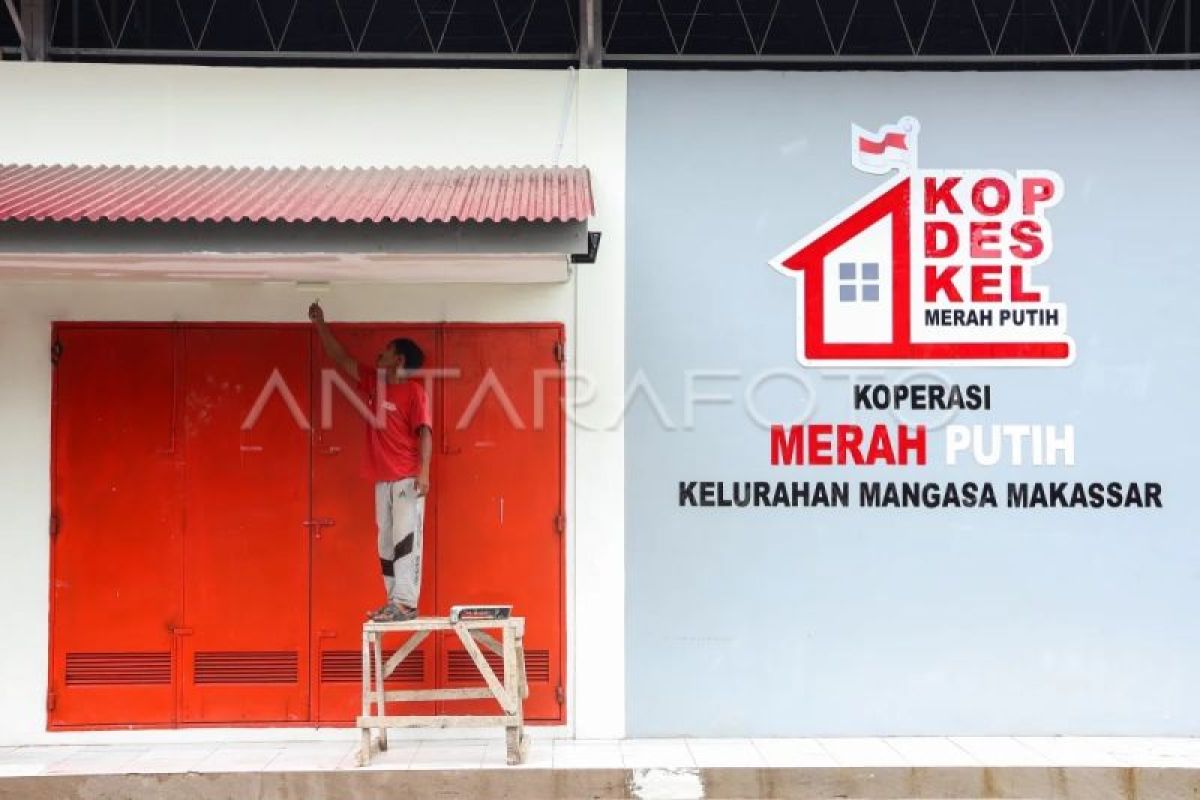
Jakarta - The Institute for Development of Economics and Finance (Indef) has assessed that the Kopdes Merah Putih (Red and White Village/Sub-district Cooperative) programme has the potential to reduce public dependence on loan sharks and middlemen, provided it can deliver easily accessible financing services.
Head of Indef’s Centre for Macroeconomics and Finance, M. Rizal Taufikurahman, stated on Thursday that dependence on loan sharks and middlemen has been driven not only by high capital needs but also by limited access to formal financial services. He noted that such challenges are still widely encountered in rural areas.
Rizal pointed out that although Indonesia’s financial inclusion index has reached around 76 per cent, the financial literacy rate remains at approximately 66 per cent, indicating a persistent gap in access to and utilisation of formal financial services.
To address this issue, the government is preparing the Kopdes Merah Putih, one of whose business units will be an ultra-micro financial institution offering a low-interest financing scheme. The presence of this service is expected to provide an alternative for the public, helping them avoid being trapped by loan sharks or illegal lending.
"Kopdes Merah Putih has the potential to become an alternative to loan sharks, but it will not automatically replace them," Rizal said.
According to him, as long as the cooperative is unable to provide loans that are fast, easy, and flexible, loan sharks will retain their niche because they offer speed and convenience, not merely credit.
He further explained that dependence on loan sharks and middlemen is also a structural problem. Many farmers and micro-enterprise operators lack sufficient collateral or credit history to obtain financing from formal institutions, while their business capital needs often must be met within a short timeframe. On the other hand, middlemen not only provide financing but also assist in marketing the community’s produce.
For this reason, Rizal argued that low loan interest alone is not enough to attract people away from loan sharks or middlemen. "If Kopdes is unable to provide financing along with market access, business mentoring, and rapid disbursement, the public will not automatically switch," he stated.
Rizal believes Kopdes Merah Putih needs to be designed as a village economic service ecosystem, not merely a loan distribution institution. Beyond providing financing, the cooperative should also be linked to business training, market access, digitalisation, and partnerships with the private sector to boost the productivity of community enterprises.
He said that if managed professionally, Kopdes Merah Putih has the potential to strengthen financial inclusion in rural areas, increase the productivity of micro, small, and medium enterprises (UMKM), while simultaneously reducing public dependence on loan sharks.
"The success of this programme must be measured by the reduction of loan shark practices, rising incomes for village business operators, an increase in productive enterprises, and sustainable improvements in public welfare," he concluded.