
Indef: Indonesia Must Capitalise on IEU-CEPA Opportunities to Attract Investment
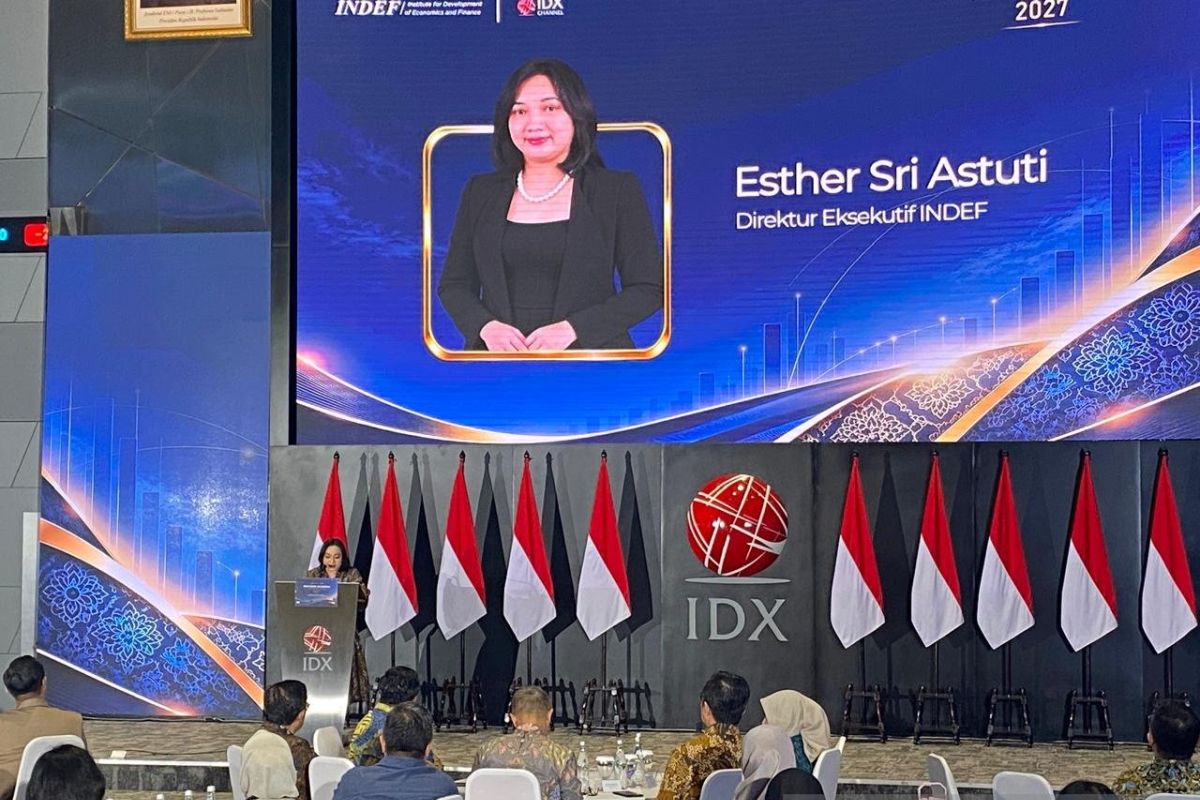
Jakarta (ANTARA) – The Institute for Development of Economics and Finance (Indef) has warned that Indonesia must make effective use of the IEU-CEPA agreement, particularly to attract investment into the country and, ultimately, help drive economic growth.
The Indonesian Government and the European Union recently signed the Indonesia–European Union Comprehensive Economic Partnership Agreement (IEU-CEPA) to strengthen economic cooperation.
“If we are talking about the IEU-CEPA agreement, Indonesia must be smart enough to capitalise on this opportunity. I believe IEU-CEPA will have a positive impact,” Indef Executive Director Esther Sri Astuti said at the “Indonesia Economic Outlook 2027” discussion at the Indonesia Stock Exchange (IDX) in Jakarta on Wednesday.
Esther said the agreement would give Indonesia an opportunity to access European countries’ markets as new export destinations. It could also encourage investment into Indonesia and create more jobs.
Indonesia also stands to gain access to cheaper raw materials and capital goods, which could ultimately improve production cost efficiency, she said.
However, Esther cautioned that IEU-CEPA also carried risks, including tariff reductions that could lead to increased imports of cheaper agricultural and livestock products.
She added that Indonesia needed to mitigate the risk of a trade deficit and increased dividend payments overseas as the ceiling for foreign investment rose.
“We hope that, with IEU-CEPA, Indonesia will not simply become a market for these imported products, but that the agreement will also encourage investment into the country, ultimately driving economic growth,” Esther said.
Esther said the economic challenges facing Indonesia in 2027 would stem not only from global conditions but also from domestic issues that still needed to be resolved.
Globally, Indonesia faces fragmentation in international trade, shifting geopolitical dynamics, technological competition and changes to supply chains.
“In this situation, I hope Indonesia will not only be able to withstand these changes, but also capitalise on the shifts taking place in the global environment,” she said.
Domestically, Indonesia still has a number of outstanding issues, including complex bureaucracy and regulations, as well as business and logistics costs that are relatively high compared with neighbouring countries.
“These are still issues we need to resolve. They are domestic challenges that we must address and, of course, implement solutions for, so that investment can truly flow into Indonesia,” Esther said.
Esther said Indonesia should focus on several strategic priorities in 2027, including maintaining a balance between stability and accelerating economic growth.
Fiscal, exchange-rate and financial-sector stability should not be seen merely as ends in themselves, she said, but as foundations for achieving faster economic growth.
Another priority is to ensure economic policies strengthen the real sector and national industrialisation, boost household purchasing power and ensure public spending is effective in improving people’s welfare.
Indonesia also needs to prepare for economic transformation to meet future challenges, Esther said.
In this context, Indef believes Indonesia’s 2027 economic outlook should not focus solely on the headline growth rate. The Government should also consider the main sources of growth and the strength of the economy’s fundamentals.
Fiscal and monetary policies should also be geared towards supporting productive sectors and raising economic productivity.
Esther added that investment must generate added value and create jobs so that economic growth genuinely improves the welfare of Indonesians.
“I hope Indef can continue to play an important role in presenting an objective economic perspective. Data- and research-based criticism is not something we should avoid; constructive criticism can identify current problems and help produce better economic policies,” Esther said.
Source: jawawa.id (https://jawawa.id/newsitem/indef-indonesia-must-capitalise-on-ieu-cepa-opportunities-to-attract-investment-1795596955)
Originally published by Antara (Indonesian) (https://www.antaranews.com/berita/5877459/indef-ri-harus-bisa-manfaatkan-peluang-ieu-cepa-untuk-tarik-investasi), translated from Indonesian