
INDEF Highlights Anomaly in Employment Data Between BKPM and BPS
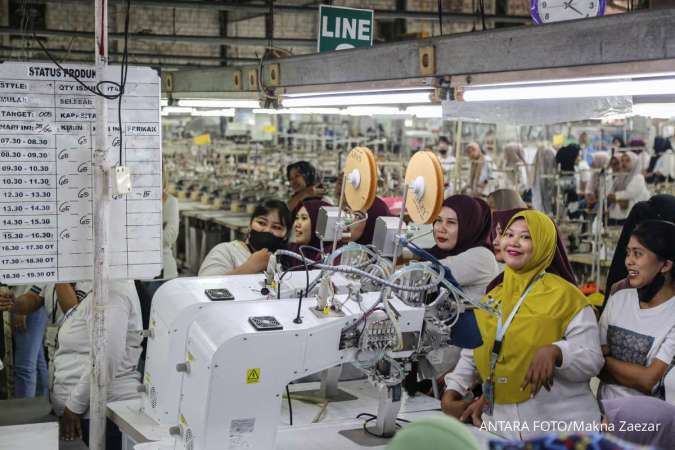
A researcher from the Institute for Development of Economics and Finance (INDEF), Ahmad Heri Firdaus, has highlighted an anomaly between employment absorption data released by the Ministry of Investment and Downstreaming/BKPM and data from Statistics Indonesia (BPS). He stated that the discrepancy needs to be explained to avoid confusion when assessing the national employment situation. Heri explained that investment realisation in the second quarter of 2026 was recorded at Rp 511.8 trillion, growing 7.1% year-on-year. However, while investment increased quite significantly, Indonesia’s economic growth in the same period only reached 5.29%. ‘This means the incoming investment has not been fully utilised to generate economic growth. This shows our investment is still inefficient,’ Heri said during an INDEF Public Discussion on Wednesday (6/8/2026). ‘Why does investment always grow above economic growth, yet economic growth remains stagnant? This is still a homework assignment,’ he said. Furthermore, Heri also assessed that there is an oddity between the employment absorption data from BKPM and BPS. Based on BKPM data, the investment realisation of Rp 511 trillion in the second quarter of 2026 was claimed to have absorbed around 742,293 workers from April to June 2026. Meanwhile, BPS data recorded an increase in the working population of only about 522,000 people during the period from February to May 2026. ‘I do not understand why BKPM recorded much higher employment absorption than BPS, even though BPS’s period is longer. BKPM only records part of investment activities, while BPS covers all economic activities,’ he said. Heri believes this difference needs an explanation from the government, particularly regarding the calculation methodology used by each institution, so the public can have a complete picture of the labour market conditions. ‘If investment grows by around 7% and the economy only grows by 5.3%, it means that to achieve 6% economic growth or even higher, how much must investment grow? And that is with the caveat that the investment is efficient and directly converted into economic output,’ he said. Heri added that increased investment must also be balanced with improvements in the quality of the workforce. According to him, the high proportion of workers in the informal sector and the continued dominance of workers with low educational attainment are challenges in attracting investment oriented towards high-technology sectors.