
INDEF GTI: Regulatory Certainty Key to Successful Green Electricity Exports
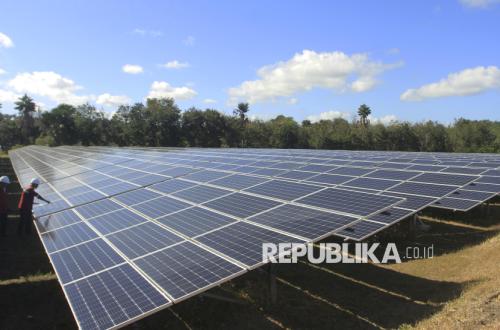
The INDEF Green Transition Initiative (GTI) assesses that regulatory certainty is the main prerequisite for the success of Indonesia’s plan to export green electricity to Singapore. Without a clear policy framework, the cross-border project is deemed unlikely to attract investment and achieve optimal economic benefits.
INDEF GTI Director Imaduddin Abdullah stated that investors require certainty regarding tariff mechanisms, bankable long-term power purchase agreements (PPAs), offtaker certainty, and a clear division of roles and risks between PLN, Danantara, and independent power producers (IPPs).
‘Certainty in the business scheme and regulation is the main condition for the project’s success,’ Imaduddin said.
He added that the government needs to immediately issue a framework for implementing green electricity exports that regulates capacity quotas, tariff mechanisms, the division of roles among parties, domestic manufacturing development, and the sharing of economic benefits and carbon value. INDEF GTI also noted that international practice shows cross-border electricity trade requires an integrated ecosystem. The experience of the Lao PDR–Thailand–Malaysia–Singapore Power Integration Project (LTMS-PIP) demonstrates that the success of electricity exports depends not only on energy supply but also on the readiness of transmission networks, wheeling arrangements, and policy coordination between countries.
INDEF GTI also urged the government to develop the electricity export project within a Renewable Energy Zones (REZ) framework. This approach integrates renewable energy development, industrial zones, land and network readiness, licensing, financing, and demand sources into a single development plan, thereby providing better investment certainty.
Previously, Minister of Energy and Mineral Resources (ESDM) Bahlil Lahadalia stressed that the cooperation on green electricity exports from Indonesia to Singapore must provide balanced benefits for both countries. He said the government is still negotiating the electricity price because Indonesian regulations place the authority for setting prices with the government.
‘Regarding the electricity price to Singapore, the process is ongoing, but we are still negotiating the price. Our regulations indeed place the price authority with the government. We want a win-win, mutually beneficial outcome. Cooperation must benefit both parties. It is just at that point, and I think there will be a meeting point soon,’ Bahlil said.
The ESDM Minister explained that the cooperation is part of three memoranda of understanding agreed upon by Indonesia and Singapore last year, namely green electricity exports, green industrial zone development, and carbon capture and storage (CCS). The government hopes that the completion of price negotiations and regulatory certainty will accelerate project implementation while ensuring optimal economic benefits for Indonesia.