
Incredible! Pesticide Use in This Country Is 10 Times the Global Average
Jakarta, CNBC Indonesia – Pesticide use in Costa Rica is more than 10 times the global average. The finding has raised concerns about the effects of agricultural chemicals on human health and the environment, particularly in tropical countries that rely on large-scale agricultural production.
According to research published in the September 2026 issue of the scientific journal Environment International, the average intensity of pesticide use on cropland in Costa Rica is 21.91 kilograms of active ingredient per hectare each year.
That is far above the global average of 2.18 kilograms and the Central American average of 7.16 kilograms per hectare, based on the FAO comparison data used by the researchers.
The study, titled “Grounding Pesticide Use Intensity and Hazards with Real-World Data: Toward Correcting Global Models in Tropical Agriculture”, was conducted by Soledad Castro-Vargas of the University of Zurich, Santiago Alvarez-Fernandez and Ryan E. Galt of the University of California, Davis.
The researchers combined pesticide import and export records, agricultural production statistics and data on registered chemicals to estimate pesticide use by commodity and region from 2012 to 2024.
Banana plantations use the most pesticides
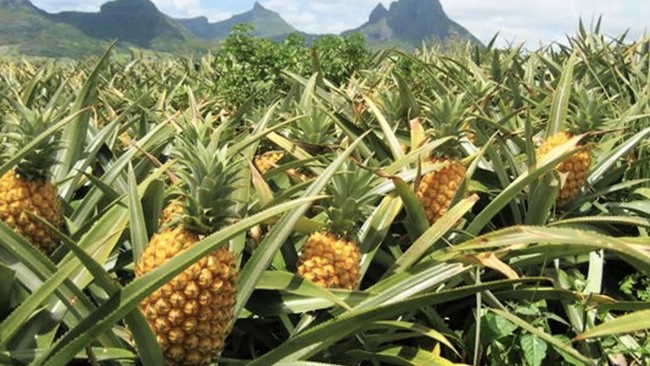
Costa Rica’s reliance on pesticides is particularly evident in its banana and pineapple plantations, two of the country’s main agricultural export commodities.
According to the study, banana plantations recorded the highest intensity of pesticide use, averaging 78.88 kilograms of active ingredient per hectare per year. Pineapples followed at 34.07 kilograms, rice at 33.88 kilograms, tomatoes at 32.04 kilograms and potatoes at 30.42 kilograms.
Limón, a centre of banana and pineapple production on the Caribbean coast, recorded the highest use at 35.77 kilograms per hectare when managed agricultural land and pasture were included in the calculation.
Costa Rica’s Ministry of Agriculture had previously reported average use of about 11 kilograms per hectare. The difference is mainly due to the method of calculation, which includes pasture, where pesticide use is less intensive.
When the researchers used the same land coverage, their estimate was also close to 11 kilograms per hectare.
Threats to health and the environment
The study also identified several of the active pesticide ingredients most widely used in Costa Rica.
Mancozeb, a fungicide used to control fungal diseases in banana crops, accounted for about 36% of the country’s estimated total active pesticide ingredients. Other widely used chemicals include glyphosate, diazinon and ethoprophos.
In addition to the volume used, the researchers assessed potential hazards to human health and ecosystems.
Their findings showed that several hazard indicators associated with cancer risk, endocrine disruption and toxicity through skin contact did not improve significantly over the study period.
Ecological risks are also a concern. Some indicators of potential harm to aquatic organisms, including fish and freshwater invertebrates, showed a worsening trend, although other environmental indicators improved.
The researchers stressed, however, that the study measures the hazard characteristics of chemicals, not direct human exposure or the number of illnesses caused by pesticides.
The findings are notable given Costa Rica’s international reputation for successful conservation and rich biodiversity. At the same time, the country’s main agricultural industries remain heavily reliant on chemicals to protect crops from pests and disease.
The researchers highlighted the importance of transparent pesticide-use data and more detailed environmental monitoring, especially in tropical regions whose ecosystems differ from those in temperate countries.
What about Indonesia?
Pesticide use is also a concern in Indonesia. According to data from the Food and Agriculture Organization (FAO), agricultural pesticide use was estimated at 295,413 tonnes of active ingredient in 2024, up slightly by 0.16% from 2023 and 15.9% from 2012.
In terms of intensity, pesticide use in Indonesia was estimated at 6.74 kilograms per hectare of cropland in 2024, or about 2.7 times the global average of 2.49 kilograms.
That figure is lower than Costa Rica’s 21.91 kilograms per hectare per year, although the periods and calculation methods differ.
Research in Indonesia has also highlighted pesticide-related risks. A study published in Jurnal Entomologi Indonesia in August 2026 found that the longer the interval between spraying and harvest, the lower the pesticide residue in Chinese cabbage.
Meanwhile, research published in the Journal of Applied Plant Technology in May 2026 found chlorpyrifos and mancozeb residues in bean samples in Surabaya, although the levels remained below the maximum limits set.
These findings underline the importance of using pesticides in accordance with regulations and monitoring residues to protect food safety, farmers’ health and the environment.
Sustainable agriculture is key
Pesticides play a role in protecting crops from pests and disease. However, improper use can pollute soil and water, disrupt biodiversity and increase farmers’ exposure to chemicals.
The Costa Rican researchers emphasised the need for more detailed records of pesticide use by crop, region and active ingredient. Such data are needed to identify risks and develop more targeted oversight.
For Indonesia, strengthening residue monitoring, ensuring pesticides are used in accordance with regulations, adopting integrated pest management and protecting agricultural workers are all important to sustaining production.
These measures are consistent with the Sustainable Development Goals (SDGs), particularly SDG 2 on sustainable agriculture, SDG 3 on health and SDG 6 on protecting water quality.
Ultimately, agricultural success should be measured not only by high yields, but also by the ability to produce safe food without compromising farmers’ health or the environment.
Source: jawawa.id (https://jawawa.id/newsitem/incredible-pesticide-use-in-this-country-is-10-times-the-global-average-1792669836)
Originally published by CNBC Indonesia (https://www.cnbcindonesia.com/research/20261022141434-128-778639/gila-pestisida-di-negara-ini-10-kali-lipat-rata-rata-dunia), translated from Indonesian