
Inclusive Public Transport Services Become a Key Focus for KAI
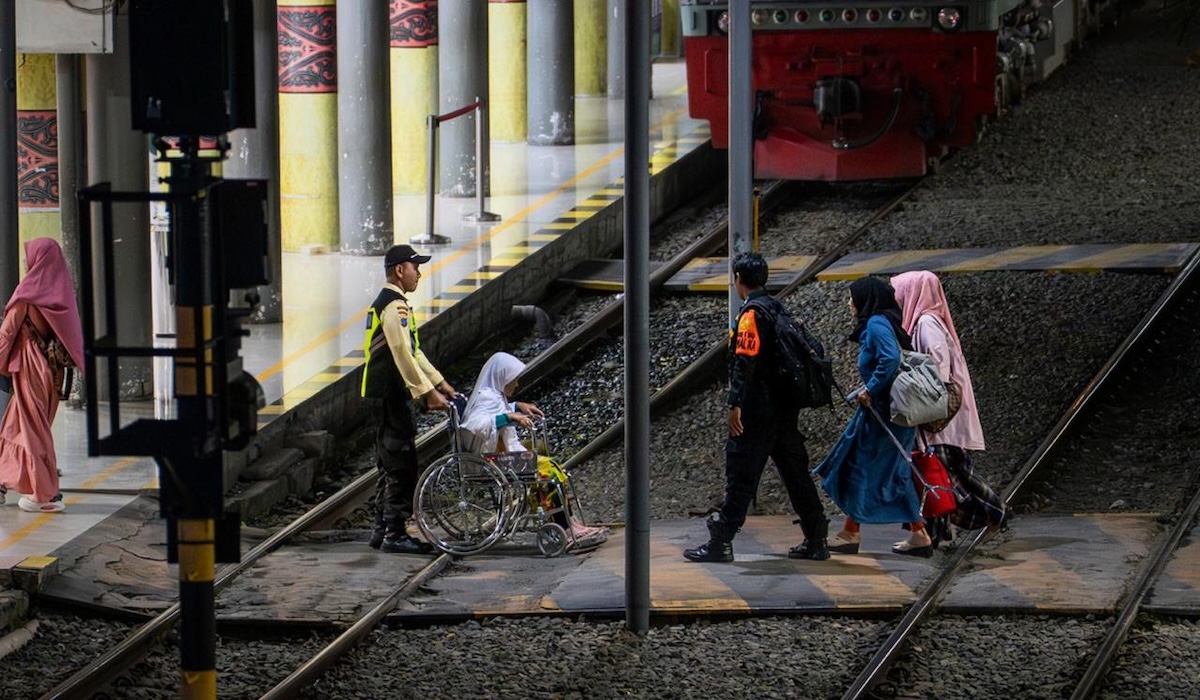
The transformation of PT Kereta Api Indonesia (Persero) or KAI is no longer solely focused on travel speed and punctuality. Providing access for people with disabilities, the elderly, pregnant women, and other groups with special needs has now become an indicator of quality improvement in national public transport.
Academic and land transport observer Djoko Setijowarno assessed that the quality of Indonesia’s public transport services, including railways, is now able to compete with a number of developed countries. According to him, service innovation is an important element in public transport development. However, this progress is not only marked by the use of technology or the modernisation of facilities. The operator’s ability to provide inclusive services is also an important benchmark.
“When compared to a number of developed countries, Indonesia’s public transport services are already able to compete. Comparative study experiences abroad also show that Indonesia is capable of presenting competitive service standards,” Djoko said, as reported from the podcast ‘Transformasi Pelayanan Kereta Api di Indonesia: Sudah Setara Global!’ on Marketeers TV, Friday (17/5).
He stated that KAI’s commitment to inclusive services is realised through the provision of various facilities at stations and during journeys. These facilities include guiding blocks, portable ramps, wheelchairs, toilets accessible for people with disabilities, and lactation rooms. KAI also equips its staff with training to assist and accompany customers with special needs. This assistance is an important part of ensuring all customers can access train services safely, comfortably, and equally.
This effort, he said, shows that customer experience is not only built through service speed. The travel experience is also determined by the ease with which customers enter the station, use facilities, board the train, and arrive at their destination.
Travel Content Creator Taufik Effendi, who has tried train services in 24 countries, mentioned that the experience during the journey is now a major consideration for the public when choosing a mode of transport. According to Taufik, passengers are no longer solely oriented towards the final destination. They also pay attention to staff service, cabin comfort, supporting facilities, food, scenery, and the sense of safety while on the train.
“There is a lot to enjoy during the journey. People now are not just looking at the final destination, but also enjoying the experience while on the train. Things like service, comfort, and supporting facilities become part of the journey itself,” Taufik said in the podcast ‘Kenapa Video Naik Kereta Bisa Ditonton Jutaan Orang? Rahasia Storytelling Travel Content’ on Marketeers TV.
He assessed that improving access for groups with special needs also has value beyond merely fulfilling service standards. These facilities are a form of recognition that every customer has the same right to enjoy public transport. Therefore, he continued, the quality of KAI’s transformation cannot only be seen from the modernisation of the ticketing system, train upgrades, or increased service speed. Progress is also reflected in the company’s ability to respond to the diverse needs of its customers.
This approach makes public transport services more relevant to the community. Customers are not simply transported from one place to another, but also gain assurance that their needs are attended to during the journey. By strengthening increasingly inclusive services, KAI’s transformation shows that public transport development is not just about pursuing operational efficiency. Equality of access and comfort for all customers are now an important part of building a globally competitive railway service.