
In This Country, 3 Working Days Can Get You an iPhone 17 Pro; How Long for Indonesia?
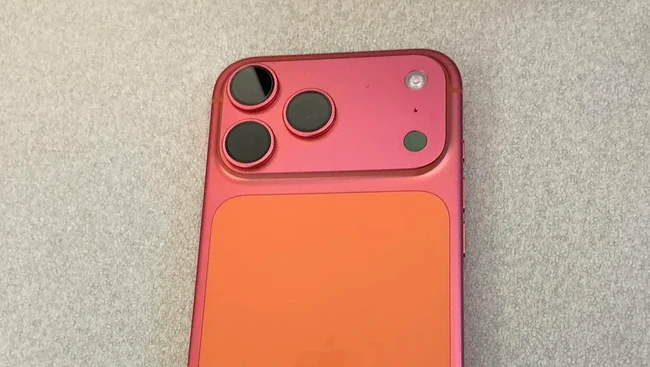
The price of an iPhone 17 Pro serves as a mirror for a population’s purchasing power. In wealthy nations, this handset can be purchased with less than a week’s worth of work, whereas in other countries, it requires several months.
A comparison of 33 countries was calculated based on local iPhone prices, average monthly income, and weekly working hours using data from the International Labour Organization (ILO). This demonstrates the extent of the iPhone’s price burden relative to a worker’s income in each nation.
The results of this comparison do not merely show which countries sell iPhones more cheaply, but rather how much working time must be sacrificed to own one. An iPhone may feel like a minor purchase for a worker in a high-income country, but it represents months of labour for workers elsewhere. The difference lies not in the product itself, but in the purchasing power of the buyer. This disparity shows that nominal price is not the only measure of affordability; income and purchasing power are far more decisive factors. The lower the income relative to the product price, the more working time must be ‘exchanged’ to acquire it.
Europe dominates the list of most affordable nations. In Luxembourg and Switzerland, the average worker only needs three working days to earn enough to buy the phone. Conversely, workers in India require 160 working days, or more than five months.
Luxembourg boasts one of the highest purchasing powers for the iPhone 17 Pro. Although the minimum wage in the country reaches €2,771 per month for unskilled workers and €3,326 for skilled workers—approximately IDR 57.04–68.46 million per month (at a rate of 1€ = IDR 20,584)—calculations based on average income show Luxembourgish workers need only about three working days. High average incomes, combined with relatively lower working hours, make the iPhone much more affordable compared to other nations.
In addition to high income, Luxembourgish workers have relatively low average working hours, at approximately 35.5 hours per week according to ILO data. European countries dominate the top of the iPhone 17 Pro affordability list. Besides Luxembourg and Switzerland, which require only three working days, workers in Belgium, Denmark, the Netherlands, and Norway require about four days. Meanwhile, Austria, Finland, Ireland, and Germany fall within the five-day range. Workers in France require six days, and the United Kingdom requires seven.
However, disparities within Europe remain visible. Workers in Portugal require 24 working days, Poland 17 days, and Hungary 27 days to purchase the same device. These differences primarily reflect gaps in income and purchasing power. While the iPhone price is important, the burden it places on workers depends heavily on their earnings.
The gap widens further in developing nations. Workers in Chile require 32 working days, Malaysia 45 days, Thailand 61 days, and Brazil 77 days. In Turkey, the time reaches 89 days, while in Vietnam, it is 99 days. The Philippines requires 101 working days, and India occupies the bottom position, requiring 160 working days. This means Indian workers need more than 50 times the working time of workers in Luxembourg or Switzerland to purchase the same iPhone 17 Pro.
What about Indonesia? Indonesia also faces significant purchasing power challenges. Using the highest 2026 Regional Minimum Wage (UMR) in Indonesia, which is in Jakarta (IDR 5,729,876 per month), and assuming the price of an iPhone 17 Pro is approximately IDR 23 million, it would take four months of work to afford the device.
Source: jawawa.id (https://jawawa.id/newsitem/in-this-country-3-working-days-can-get-you-an-iphone-17-pro-how-long-for-indonesia-1788522873)
Originally published by CNBC Indonesia (https://www.cnbcindonesia.com/research/20260904150129-128-765048/di-negara-ini-3-hari-kerja-bisa-dapat-iphone-17-pro-ri-berapa-lama), translated from Indonesian