
In the Shadow of Rantemario: An Epic of Humanity, Historical Wounds and the Dialectics of Bugis Culture
Where the night wind whispers through gaps in ancient rock and thick mist creeps down to cover Sulawesi’s valleys, Rantemario stands tall, like an enduring monument to struggles of an age that has never truly passed.
The highest peak in Bugis country is not merely a geographical expanse that tests the courage of climbers. It is a silent witness, a cosmic altar where the blood of warriors once soaked the roots of the earth, seeped into the soil and mingled with the pulse of the history of the Indonesian archipelago. Beneath the same sky, where the morning sun reflects with the sharp glint of a newly forged badik dagger, an epic of humanity unfolds—not as a cold bureaucratic archival record, but as a lament and a great song of honour, broken friendship and ideological tragedy.
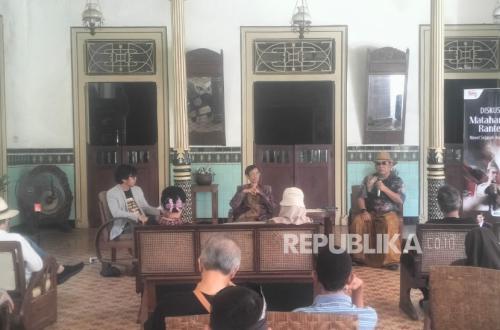
Makmur Makka’s novel Matahari di Atas Rantemario enters our consciousness not merely as a sequence of neatly arranged words on paper, but as an echo of the past demanding to be heard again. Its pages invite us through the veil of time to witness how two souls, raised beneath the same sky, breathing the same air and sharing the innocent dreams of youth, are swept into a historical storm that divides their lives, leaving them on opposite ends of gun barrels aimed at one another. This critical essay seeks to absorb the depth of that narrative, sharpen the tools of cultural-philosophical analysis, navigate the labyrinth of historical epistemology and reconsider the meaning of sacrifice at the crossroads of national politics.
I. The ontology of Bugis culture: siri’ na pacce and the moral pulse beneath Rantemario
Bugis culture is not a dead artefact displayed in a cultural museum. It is a living moral cosmos, breathing and pulsing, demanding existential commitment from everyone born into it. In the framework of Bugis cultural thought, a person’s existence is not measured by the wealth they accumulate or the power they hold, but by how well they preserve and uphold two sacred pillars: siri’ and pacce.
Siri’ is the inner shield that protects self-respect, a sense of shame and human dignity. It is a moral boundary that must not be crossed; when a person’s siri’ is trampled, death is often considered more honourable than living with disgrace. Pacce, meanwhile, is its affective dimension: profound social empathy, human solidarity rooted in shared suffering, and the inner resolve to feel the wounds experienced by fellow countrymen.
When Bahar and Badillah leave the lanes of their childhood and take up arms against Dutch colonial rule, their heroic actions are driven neither by modern geopolitical calculations nor by pragmatic ambitions for power. They are an existential eruption of wounded siri’—a spontaneous yet dignified response to the desecration of their homeland, the seizure of its sovereignty and the trampling of human dignity beneath colonial boots. From the perspective of Bugis moral thought, colonialism is not merely a political or territorial issue; it is an existential violation of humanity itself.
Yet this is where history’s irony cuts most deeply. The post-independence storm brings political ambiguity in its wake, dividing the unity of the struggle. Badillah pledges his allegiance to the newly born republic, joining the official ranks of the Hasanuddin Brigade under Lieutenant Colonel Kahar Muzakkar in Yogyakarta. He would later wear the rank of first lieutenant in the Indonesian National Armed Forces (TNI). Bahar, meanwhile, driven by an equally powerful inner turmoil, chooses a solitary and arduous path, joining Darul Islam/Indonesian Islamic Army (DI/TII) forces and leading guerrillas in dense forest as Major “Lambe Beluak”, or “Long-Haired One”.
At this crossroads, Jean-Paul Sartre’s existentialism takes on its sharpest, most piercing relevance. Sartre’s radical premise was that human beings are freedom condemned to choose (l’homme est condamné à être libre). Bahar and Badillah are not puppets moved by blind fate; their extreme choices—however bitter the consequences—express their radical freedom to interpret loyalty, justice and moral responsibility in accordance with their convictions.
“Honour is not a passive inheritance handed down from one generation to the next, but a daily battlefield where a person stakes their entire existence on what they believe to be right, even if that belief must be paid for with blood and a friendship torn apart.”
II. The dialectics of history and struggle: an ideological labyrinth at the crossroads
The history of Indonesia’s independence struggle in the Republic’s early decades was not a smooth, straight path to triumph, but a dark labyrinth filled with ambiguity, blood, sweat and tears. The eminent historian Sartono Kartodirdjo, in his landmark studies of social movements and peasant uprisings in the archipelago, repeatedly observed that ideological conflict and regional upheaval often stem from deep structural tensions: the clash between the centralised modern nation-state at the seat of power and local aspirations that feel marginalised, neglected and denied room to breathe politically and culturally.
In Matahari di Atas Rantemario, these structural tensions become an intimate human drama. One of the narrative’s most harrowing scenes comes when fate brings Badillah, a TNI officer, and Bahar, a DI/TII guerrilla commander, together again in a secret meeting deep in the forest at night during a military operation. It is no joyful reunion, but a silent confrontation overshadowed by an appalling certainty. They both understand that the following day, beneath the Rantemario sun or amid the dense undergrowth, the bullets from their rifles will no longer be aimed at foreign colonial soldiers. Instead, they will be aimed at the chest of a fellow countryman—a close friend from their youth with whom they once shared toil, sweat and dreams beneath the Sulawesi sky.
Here the ideas of Albert Camus, the great philosopher and Nobel laureate who devoted his life to questions of revolt, justice and the absurdity of existence, ring out. In his landmark essay L’Homme révolté (The Rebel), Camus wrote:
“Revolt is born from the spectacle of the irrational, in which the world suddenly loses its transparent meaning and justice seems impossible to attain fully through human reason.”
Source: jawawa.id (https://jawawa.id/newsitem/in-the-shadow-of-rantemario-an-epic-of-humanity-historical-wounds-and-the-dialectics-of-bugis-culture-1792245028)
Originally published by Republika (https://news.republika.co.id/berita/tn1yop370/di-bawah-bayangbayang-rantemario-epos-kemanusiaan-luka-sejarah-dan-dialektika-kebudayaan-bugis), translated from Indonesian