
In the end, plecostomus are just fish
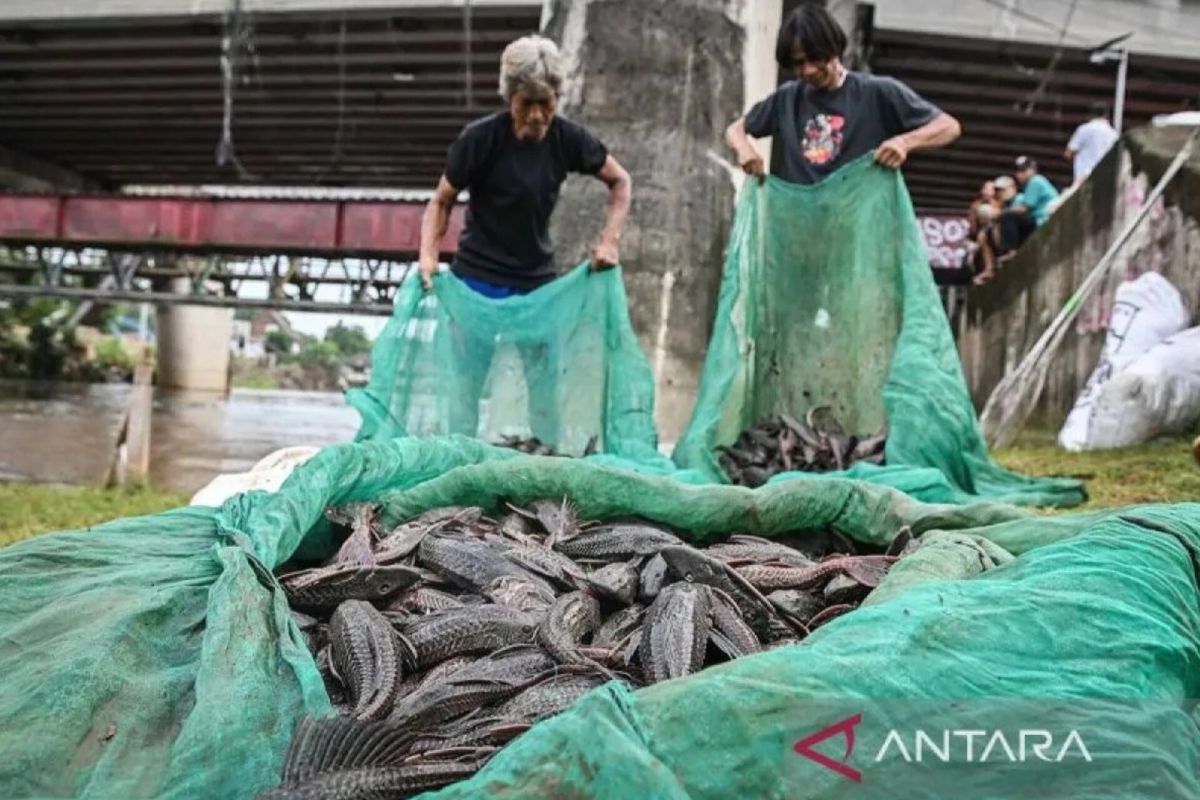
Plecostomus fish merely adapt and survive. Meanwhile, it is humans who possess the ability to choose. Whether to continue allowing damage to persist, or to begin repairing the relationship with nature.
Jakarta (ANTARA) - The classical philosopher Al-Ghazali once formulated humans as al-insanu hayawanun nathiq, or living beings capable of thinking and speaking.
In this sense, humans are indeed still part of the biological world like other creatures, but they are distinguished by reason, which gives them the ability to weigh options, understand cause and effect, and take responsibility for their choices.
This concept is not merely a philosophical definition, but also an ethical reminder. The reason possessed by humans should serve as an instrument to maintain balance, not to destroy it.
Reason gives humans the capacity not just to react, but also to anticipate. Not only to exploit, but also to care for.
However, in practice, this superiority often turns into irony. When the environment suffers damage, humans tend to seek others to blame, even if those parties lack the ability to choose. It is in this context that the plecostomus fish often becomes an easy target.
In various urban rivers, especially in densely populated areas like Jakarta and its surroundings, the plecostomus fish is frequently labelled as the culprit of ecosystem damage. Its abundant population, body shape considered “foreign”, and ability to survive in murky water make it appear as a symbol of something wrong.
Yet, if traced further, the presence of this fish cannot be separated from the history of human interaction with nature.
The plecostomus fish is not a native species of Indonesia. It originates from South America and entered through the ornamental fish trade. From the beginning, its presence was utilised by humans as an aquarium cleaner due to its ability to consume algae.
The problem arises when these fish are released into public waters, whether accidentally, through negligence, or by deliberate decision when owners no longer wish to keep them. From this point, the story develops into something more complex.