
In Paris, Government Outlines How Digitalisation Can Simplify Bureaucracy
The Indonesian Government is continuing to promote bureaucratic simplification to strengthen governance and improve the quality of public services. This involves reorganising institutions and administrative procedures, as well as changing working practices to make them more effective, integrated and focused on results.
In the digital transformation, the Government needs to simplify work processes before introducing technology. Digitalisation should not merely transfer procedures to electronic applications; it should also streamline service delivery through data integration and aligned regulations, while improving civil servants’ capabilities and maintaining accountability and integrity.
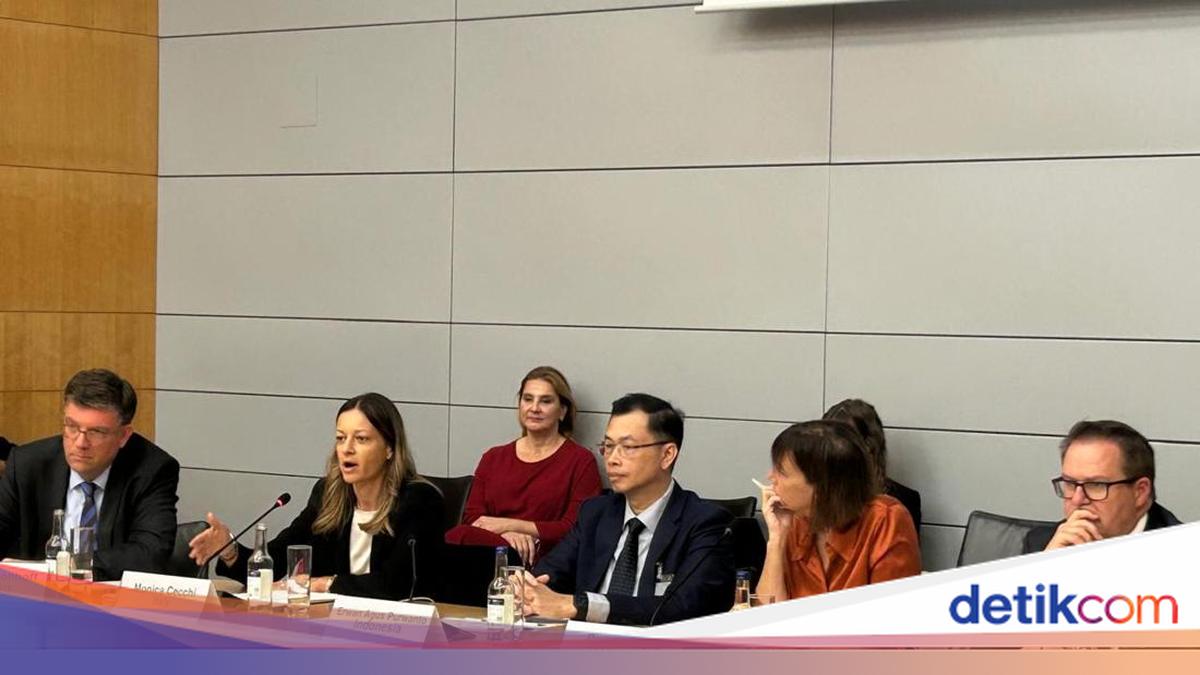
Erwan Agus Purwanto, Deputy for Bureaucratic Reform, Civil Service Accountability and Oversight at the Ministry of Administrative and Bureaucratic Reform (PANRB), said one initiative was the development of Digital Social Protection (Perlinsos Digital) to integrate social and economic data on the public.
“PANRB is currently working with other relevant agencies to develop Digital Social Protection. It is intended to integrate social and economic data to help the Government identify people’s needs and connect them with social protection programmes suited to those needs,” Erwan said in a written statement on Wednesday (14 October 2026).
He made the remarks during a presentation at the panel session “A Simplified Government Focused on Delivery” at the OECD Global Forum on Building Trust and Reinforcing Democracy in Paris, France, on Monday (12 October).
Erwan said Indonesia’s participation in the 2026 OECD forum formed part of its active engagement in policy dialogue and international exchanges of experience, as the country proceeds with its accession to the OECD.
“Bureaucratic simplification is not enough if it only means reducing organisational tiers or speeding up administrative procedures. The Government needs to change how the bureaucracy works, placing greater emphasis on expertise, cross-agency collaboration and outcomes that make a tangible difference to the public,” he said.
Erwan said one measure Indonesia was taking was to simplify the bureaucratic structure by reducing hierarchical levels and converting some structural posts into functional roles.
“The restructuring is intended to strengthen the role of civil servants’ expertise, improve collaboration and encourage more effective decision-making. The Government also needs to review business processes to remove unnecessary steps and integrate services, so people do not have to repeatedly meet the same administrative requirements,” he said.
Erwan stressed that bureaucratic simplification must become a lasting working principle, rather than a temporary reform programme. New regulations, organisations and applications should take account of existing systems and deliver tangible benefits to the public.
“Through a whole-of-government approach, Indonesia is seeking to strengthen coordination among agencies and break down bureaucratic silos. This is part of the bureaucratic reform agenda to create a more effective and accountable government that is responsive to people’s needs,” Erwan added.
Indonesia’s participation in the forum also provided an opportunity to share its experience and learn from international best practice in building simpler, more responsive governance that delivers tangible results.
The discussion, focused on strategies for creating simpler, more effective and results-oriented government, was moderated by Pamela Herd, Professor of Social Policy at the Ford School of Public Policy, University of Michigan. Representatives from New Zealand, Italy and Germany, as well as Ibec, the Irish business representative organisation, also attended.