
IN FOCUS: With landfills almost full, Indonesia grapples with ‘ticking time bomb’ of waste crisis
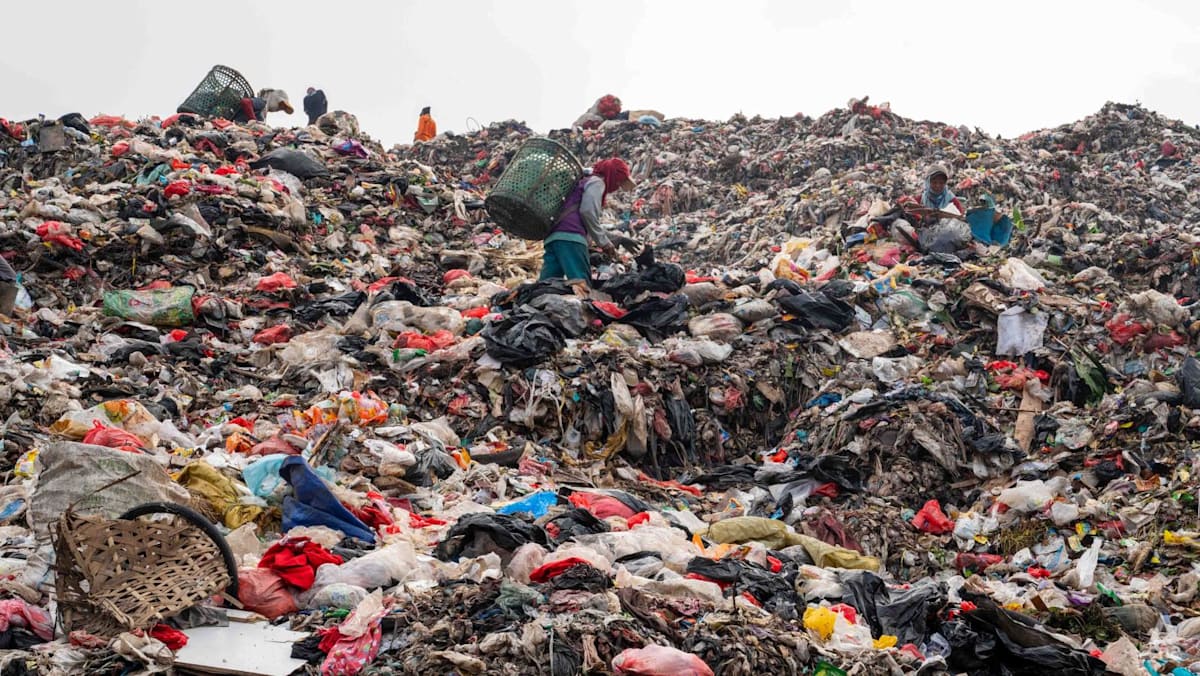
IN FOCUS: With landfills almost full, Indonesia grapples with ‘ticking time bomb’ of waste crisis
Indonesia is counting on waste-to-energy plants to tackle its waste crisis, but experts say it’s no substitute for reducing trash at the source.
DENPASAR/JAKARTA: With its sandy beaches and lush paddy fields, Bali has long been sold as Indonesia’s picture-perfect island paradise.
But to locals, especially those living in southern Bali, their streets have been far from dreamy, with piles of trash filling up parts of the island in recent months.
Since Apr 1, residents in Bali have had to separate organic and inorganic waste. Organic waste has largely been barred from the island’s biggest landfill, Suwung, which serves the heavily populated and tourism-driven south.
Under the new regulation, residents are supposed to compost or send their waste to recycling centres.
Inorganic waste can be sent to a newly established small inorganic landfill in southern Bali.
Organic waste is biodegradable waste such as fruits and eggshells that originate from plants or animals. Inorganic waste is non-biodegradable waste originating from non-living, synthetic, or mineral-based materials, such as bottles and styrofoam.
The rule was meant to push households and businesses to sort and process waste at the source, rather than sending everything to a landfill already at breaking point.
But many residents were still confused and struggling to do so when CNA spoke to them two weeks after the new rule was enforced.
“I am confused. But after I learned how to separate the waste, it is not even collected,” said domestic worker Kuswati in Jimbaran, southern Bali, who goes by one name.
Bali’s waste problem has had serious consequences. Last September, the island suffered deadly floods caused by waterways blocked by trash, among other factors, which claimed the lives of 17 people.
The island offers a glimpse of the waste crisis unfolding in Indonesia.
INDONESIA’S LANDFILLS HITTING CAPACITY
Indonesia generates 56.6 million tonnes of waste annually, its then-Environment Minister Hanif Faisol Nurofiq said last year.
The country has 550 landfills, The Jakarta Post reported in June 2025, and Hanif said they are projected to hit maximum capacity by 2030 unless significant measures are taken.
Under former President Joko Widodo, the target was for Indonesia to achieve 100 per cent waste management by the end of 2025, but current President Prabowo Subianto has extended it to 2029.
Waste management refers to waste that is properly sorted and collected, then converted into raw materials or energy sources, or recycled.
In February 2026, Hanif said Indonesia’s waste management rate had hit 24.95 per cent, up from 10 per cent in early 2025, Antara news agency reported. But that means three-quarters of waste is still unmanaged, often ending up in open dumps or rivers, or burned, polluting the environment, the Jakarta Globe noted.
Environmental expert Mahawan Karuniasa from the University of Indonesia said Indonesia’s waste problem is not mainly about litter or cleanliness but rather a structural crisis of governance, capacity, and urban growth.
“It’s clear that Indonesia has a waste problem,” Mahawan told CNA.
“The problem isn’t simply the high volume of waste generated, but rather the inability of the waste management system to keep pace with, among other things, the growth in consumption and urbanisation.”
Indonesia’s population is currently about 285 million, up from 258 million a decade ago.
Acknowledging the problem, President Prabowo declared waste management a national priority during a visit on Apr 28 to a waste processing facility in Banyumas, Central Java, saying Indonesia must bring waste under control within two to three years.
This month, the government is also targeting the groundbreaking of five waste-to-energy projects, namely in Denpasar, Bekasi, Bogor, Bandung and Yogyakarta, while pushing regions to end open dumping by this year.
Indonesia currently has two waste-to-energy plants – typically incinerators that generate electricity from the burning of waste – in Surabaya and Solo, according to a policy brief last year by researchers from University of Maryland in the United States alongside others from Indonesia and Denmark.
News reports in recent years have also cited the presence of some small incinerators in the country, such as one in Bogor.
However, experts CNA spoke to said these waste-to-energy projects are not enough to tackle the waste problem, and viable solutions must be implemented to suit each region, such as Bali, which faces overtourism, and Jakarta, with an overpopulation issue.
WHAT IS BALI’S WASTE PROBLEM?
In Bali, trash has usually been most visible at the end of the year, when monsoon currents bring waves of plastic and debris onto its beaches.
But the current problem is different.
In some neighbourhoods, confusion about the new regulation has led residents to burn or dump their waste onto sidewalks and into drains when they do not know what else to do.
Bali generated about 3,400 tonnes of waste per day in 2025 but only 29 per cent, or around 916 tonnes, was managed, according to Bali’s environment agency.
The pressure is not evenly spread across the island.
Environmental expert Shinta Enggar Maharani from Mahasaraswati University said the problem is worse in tourism-centred southern Bali, especially in the island’s capital, Denpasar, and Badung, where hotels, restaurants, villas, construction and changing urban lifestyles generate far more waste than in rural districts.
“Five-star hotels already have a system (to manage their waste), but there are more small hotels than four- and five-star hotels,” she said.
“In fact, the worst are villas, many of which are not registered.”
For decades, open dumping and reliance on landfills have been the main ways to manage waste in Southeast Asia’s largest economy.
Indonesia banned open landfills in 2013 because hazardous waste disposal in open fields or landfills pol