
IN FOCUS: As Putrajaya and Bangkok warm up to Naypyidaw, Myanmar refugees fear being sent home
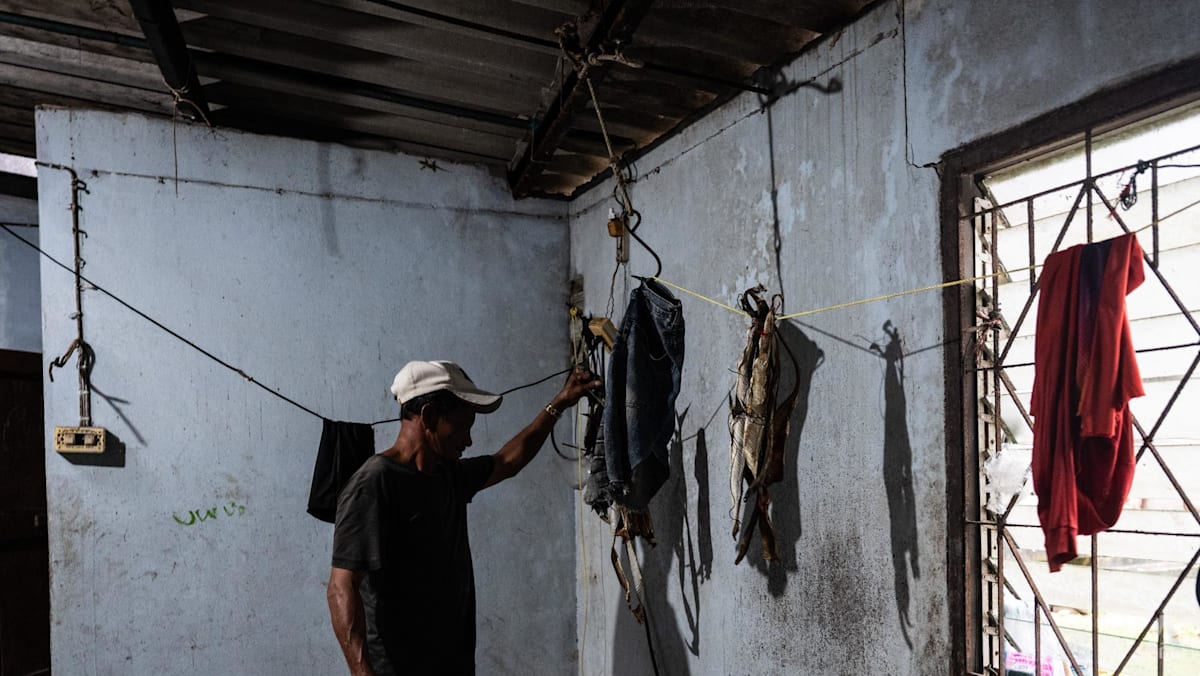
IN FOCUS: As Putrajaya and Bangkok warm up to Naypyidaw, Myanmar refugees fear being sent home
Thailand and Malaysia have been a safe haven for hundreds of thousands of Myanmar nationals fleeing conflict, but recent developments have stoked worries among the refugees.
KUALA LUMPUR/BANGKOK: Nearly 20 years ago, 54-year-old Mohamed Sadek fled Rakhine State in western Myanmar to Malaysia, desperate to escape possible persecution and violence.
Three years ago, 39-year-old Lele Khine was forced to make the same decision. She fled Myanmar’s southernmost region of Tanintharyi, trading everything she knew for the life of a refugee in Thailand.
Today, they are terrified by the possibility of being sent back.
As host nations across Southeast Asia shift their policy postures, thousands of displaced Myanmar refugees in Malaysia and Thailand worry their safe havens may be vanishing. Analysts say mounting public fatigue on refugees and domestic political expediency were among factors that drove the policy shifts.
Malaysia has announced plans to return 5,000 Myanmar refugees, with the Home Ministry announcing that the first 1,476 people - whose ethnicities have not been disclosed - are scheduled to depart Malaysia on Sep 29 on board two Myanmar Navy warships and a hospital ship.
Malaysia Prime Minister Anwar Ibrahim said on Sep 16 he would invite Myanmar’s leader Min Aung Hlaing for an official visit in return for his government accepting the return of thousands of Rohingya Muslim refugees.
“Why did I invite him? I invited him because I want to tell him that we can be friends and trade. We can accept Myanmar, but they must accept (its refugees) back,” said Anwar.
Thailand, meanwhile, has been leading an effort to normalise relations with Myanmar, both bilaterally and through the Association of Southeast Asian Nations (ASEAN).
Myanmar leader Min Aung Hlaing made an official visit to the country on Aug 6.
Days after the visit, Thai authorities raided an undocumented Karen community in Kaeng Krachan National Park, arresting 28 villagers including children and pregnant women and slating 26 people for deportation to Myanmar.
Thailand has also enacted a new law authorising the swift deportation of foreign nationals who violate domestic regulations – a measure human rights activists warn will leave refugees more vulnerable to forced repatriation.
According to the United Nations refugee agency’s figures from February, Malaysia has a total of 193,824 refugees from Myanmar. They include 126,144 Rohingya, 15,774 Chin, and 33,002 individuals from other ethnic groups.
Thailand has over 90,000 refugees from Myanmar – mainly Karen, Karenni and Burmese ethnicity – at nine temporary shelters run by the Thai government on the border.
Indonesia – another major refugee-hosting Southeast Asian country – has around 2,800 Myanmar refugees because it is seen as a transit country with limited work opportunities and is more difficult to access geographically.
Human rights watchers say the situation in Myanmar is still not conducive for the safe return of those who originally fled the country.
But Malaysia has said the repatriation programme is voluntary, while Myanmar has pledged “safe and dignified” returns for its citizens displaced abroad.
Thai Prime Minister Anutin Charnvirakul has, so far, directed the authorities to fully exercise their legal powers for offences such as aggressive behaviour, illegal business operations and landholdings, and actions deemed disrespectful to Thai culture.
WHY THEY FLED
Malaysia and Thailand are top destinations for Myanmar refugees due to their geographic closeness and established support networks, despite the fact that neither country has ratified the United Nations (UN) Refugee Convention or formally recognises refugees.
The displacement of Myanmar nationals into Thailand and Malaysia spans nearly four decades, unfolding across three primary historical waves driven by military offensives, ethnic violence and political crackdowns.
Refugees in both countries told CNA the time was not right to return to their homeland.
Khine fled to southern Thailand in 2023 because of fighting between the military and rebel forces.
Her husband, 41, had fled more than a year earlier, and she joined him after he saved enough money to get her across. Together, they worked to bring their three children, aged 9 to 15, to safety.
“We came because of the political crisis in Myanmar. We could hear bombs dropping from the sky. I was very worried about my family,” she said.
Khine now lives in a coastal area in southern Thailand and works at a seafood processing plant. She worries that Thailand will start cooperating with the Myanmar government and send Myanmarese back, particularly men like her husband who may be forced to join the military.
In 2024, the Myanmar government announced that all men aged 18 to 35, and women aged 18 to 27, had to serve at least two years under military command.
“But it is not safe there for my family. I don’t think peace will ever be achieved if both sides continue to fight,” said Khine.
Just three months ago, the Myanmar military searched every house in her village for rebel fighters, she said.
That same anxiety is felt hundreds of kilometres away in Kuala Lumpur.
James Bawi Thang Bik, a Chin refugee living in the Malaysian capital, told CNA the reports of 5,000 refugees in Malaysia facing repatriation came as a profound shock.
“We hope that things will change and that we can go back to Myanmar one day, but the whole Chin state and Myanmar is a complete war zone. There isn’t any peace in the country,” said Bawi, who has been in Malaysia for almost 15 years.
He had fled Malaysia to escape conscription to the army, and said youngsters in Myanmar today still face the same risk.
Ye Htet, a 29-year-old from Mon State, said this was the reason he fled Myanmar four years ago.
“I know people who were forced to become soldiers. I knew that if I stayed, sooner or later they would come for me,” said
Source: jawawa.id (https://jawawa.id/newsitem/in-focus-as-putrajaya-and-bangkok-warm-up-to-naypyidaw-myanmar-refugees-fear-being-sent-home-1790117421)
Originally published by CNA (https://www.channelnewsasia.com/asia/myanmar-refugees-malaysia-thailand-repatriation-6401701)