
In 20 Years, Humans Will Not Need to Work and Money Will Lose Its Value
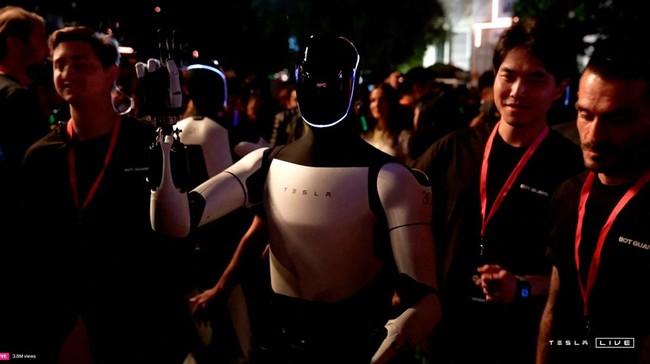
The world’s richest person, Elon Musk, has once again shared his predictions regarding the future of humanity. Speaking at the Saudi-US Investment Forum in Washington, D.C., the Tesla CEO stated that in the next 10 to 20 years, humans will no longer need to work, as almost all tasks and jobs can be fully completed by artificial intelligence (AI) and advanced robotics.
“My prediction is that working will become merely an option. It will be like sports or playing games—something you do because you want to, not because you are forced to,” Musk said, as reported by Fortune. “If you still choose to work, it will be exactly like growing vegetables in your backyard instead of buying them at the market. It is more difficult, but there are always people who do it simply because they enjoy it.”
Musk predicts that millions of humanoid robots will be utilised across all industrial sectors and daily life, significantly boosting productivity. Due to the extreme efficiency of robots, human labour will no longer be required for many tasks. He even targets 80% of Tesla’s future valuation to stem from the Optimus humanoid robot project, despite ongoing development delays.
Musk added that in this new world, money will lose its function and value. He drew inspiration from Iain M. Banks’ science fiction series, ‘The Culture’, which depicts a world without scarcity due to the immense capability of AI to manage resources. “In those stories, money does not exist at all. It is very interesting. And my guess is that if AI and robotics technology continue to evolve, that is almost certain to happen. Money will eventually become irrelevant,” Musk added.
Predictions from Bill Gates and Sam Altman
Musk is not the only tech mogul predicting massive changes due to AI. Other prominent figures have shared their visions:
Sam Altman (CEO of OpenAI - Creator of ChatGPT):
Altman agrees that AI will transform how we work and how wealth is distributed, but believes this change will be more gradual and that human jobs will not disappear entirely.
He predicts that by 2027-2028, AI will be capable of handling most cognitive tasks. By the end of 2028, the combined cognitive power of AI could surpass the total intelligence of all humans on Earth.
Goods and services will become very cheap or even free, creating a world of abundance where basic needs are met, potentially necessitating Universal Basic Income.
Approximately 30%-50% of job types will change within five years, rather than being replaced by AI.
Unlike Musk, Altman believes money will remain useful, but its function will shift—economic value will focus more on scarce elements such as land, life experiences, creative works, and human relationships.
Bill Gates (Founder of Microsoft):
Gates expects major changes to be felt in the next 5-10 years, but emphasises that certain types of jobs will never be replaceable.
AI will drastically reduce working hours, potentially leading to a three-day work week or just 20 hours per week in the near future.
Repetitive, rule-based, or data-processing jobs will disappear the fastest. However, jobs requiring empathy, ethical judgement, leadership, deep creativity, and human connection will remain and become even more valuable.
Ray Kurzweil (Renowned Technologist & Futurist):
Kurzweil is known for his detailed predictions regarding technological progress. He believes that around 2045, we will reach the “Singularity”—a moment when artificial intelligence surpasses human intelligence, fundamentally altering our civilisation.
Before this point (around 2030-2040), most physical and basic cognitive labour will be handled by machines. Humans will focus more on creation, research, and scientific development.
He envisions a future world where production costs approach near-zero, automatically meeting everyone’s basic needs. Money will still exist, but will function more as a measure of value rather than a determinant of survival.
Economists Offer a Different View
While the predictions of these tech leaders sound compelling, economists argue that the future depicted by Musk will not be easily achieved. They highlight several key obstacles:
The cost of developing and implementing robotic technology is currently extremely high. Furthermore, AI capabilities may not evolve fast enough to disrupt the labour market structure within just 20 years. A report from the Yale Budget Lab even shows that since the arrival of ChatGPT in 2022, the global labour market has not yet experienced significant disruption.
Such a transition would impact millions to billions of people who could lose their livelihoods. Samuel Solomon, an economist from Temple University, stated that political will and policymaking regarding AI are just as crucial as the development of the technology itself. Without mature systems in place, the transition to an AI-based world could lead to inequality and social crises rather than shared prosperity.