
IMS 2026 to Focus on Supply-Chain Efficiency and Investment
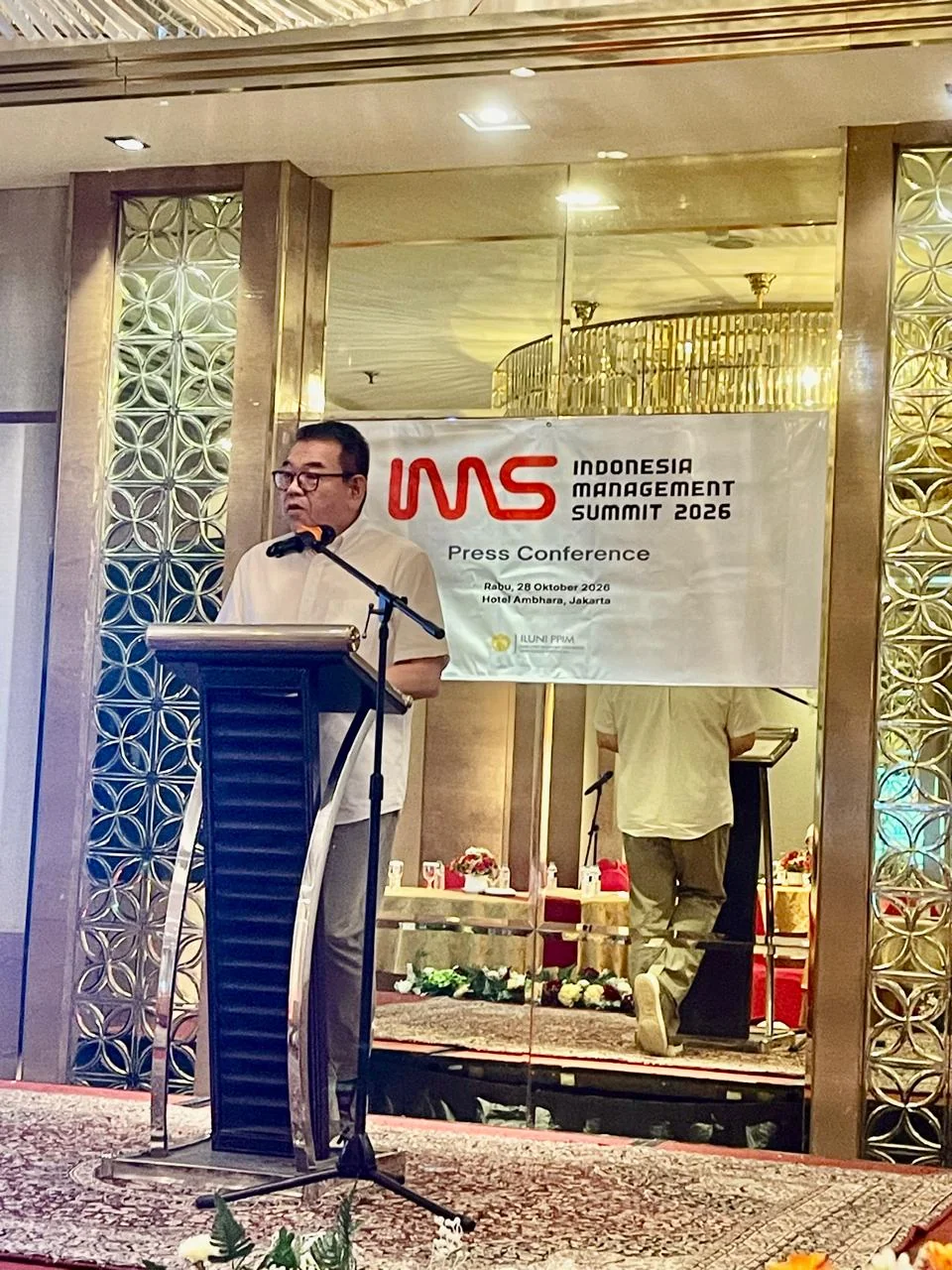
The Alumni Association of the Postgraduate Management Science Programme at the Faculty of Economics and Business, University of Indonesia (ILUNI PPIM FEB UI) is preparing to hold the Indonesia Management Summit (IMS) 2026.
The cross-sector strategic forum is designed to strengthen national economic competitiveness and resilience by raising productivity at corporate and institutional level.
Soebowo Musa, chair of the IMS 2026 programme and chair of ILUNI PPIM FEB UI, said the event is based on the fundamental belief that national resilience is built on tangible excellence at the level of companies, institutions and human resources.
“Under the theme ‘Micro Excellence, National Resilience’, IMS 2026 emphasises that national competitiveness is determined not only by macroeconomic stability and the direction of government policy, but also by the ability of companies, institutions and supply chains to improve productivity, develop innovation, build leadership and execute strategies consistently,” Soebowo said at a press conference in Jakarta.
He added that Indonesia’s considerable economic potential must be translated into higher productivity, quality investment, competitive companies and leadership capable of transforming organisations.
IMS 2026 is scheduled to take place on 9 December 2026 at the Indonesia Stock Exchange’s Main Hall in Jakarta. The forum will bring together the government, regulators, business leaders, investors, academics and professional communities to develop practical solutions to global economic challenges.
The summit will focus on three pillars of the national strategic agenda. The first, “competitive capital”, promotes effective investment allocation and stronger governance to maximise added value and domestic job creation.
The second pillar, “competitive enterprises”, aims to drive the operational transformation of Indonesian corporations by integrating automation and technology to improve supply-chain efficiency.
The third, “transformational leadership”, prioritises governance and sustainability in the execution of organisational strategies.
Alongside the conference, the programme will include the Indonesia Management Awards 2026. The awards recognise leadership, management excellence and tangible contributions to the advancement of organisations and the nation, while promoting a culture of excellence and integrity in Indonesia.
ILUNI PPIM FEB UI hopes the forum will produce several strategic outcomes, including the Indonesia Management Outlook 2027, a CEO Action Agenda and a data-based Policy Recommendation Paper for the government and regulators.
The programme is expected to contribute to a more productive, innovative, competitive and resilient Indonesia towards 2030 and beyond.
Indonesia Stock Exchange reshuffles HSC Committee
Separately, oversight and governance of Indonesia’s capital market have been tightened amid developments in global indices. The Indonesia Stock Exchange (IDX) has reshuffled and expanded the membership of its High Shareholding Concentration (HSC) Committee to make it more independent and credible.
IDX President Director Jeffrey Hendrik said the changes were made to address questions and doubts among market participants and global investors.
The committee, previously made up solely of representatives from Self-Regulatory Organisations (SROs), has been strengthened with independent figures who have strong reputations in the financial industry.
“Last week we decided to expand the membership of the HSC Committee. Previously it consisted only of SRO representatives; we have now added independent individuals with strong reputations and credibility,” Jeffrey said at a capital-market media gathering in Lombok, West Nusa Tenggara, on Saturday, 31 October 2026.
The reconstituted committee has nine members: four from SROs and five independent members. Independent figures therefore hold the majority.
The independent members include market professionals with more than 20 years of experience, the chair of the National Committee on Governance Policy to ensure compliance with governance standards, prominent academics and a representative of foreign investors.
Global investors are represented to ensure that international investors’ interests and perspectives are taken into account.
Jeffrey said the exchange was confident that the committee’s greater independence would make reviews of share-ownership concentration data more objective.
The committee is also expected to produce more credible findings to support transparency and restore investors’ confidence in Indonesia’s capital market.
The exchange plans to introduce additional indicators to identify affiliations between shareholders. More granular data is expected to meet global investors’ expectations and strengthen the integrity of the national capital market against the risk of information irregularities.
Disclosure of share ownership is one of the reforms being pursued in Indonesia’s capital market amid global investor scrutiny of transparency and listed-company governance. The IDX has made information available on shareholders with stakes of more than 1 per cent. However, transparency requires more than disclosing the names of registered shareholders.
The next challenge is ensuring the public can identify the ultimate beneficial owners behind companies’ ownership structures, including any affiliations concealed through intermediary entities.
The issue is significant given the ownership structures of Indonesian listed companies. The Organisation for Economic Co-operation and Development (OECD), in its Corporate Governance Factbook 2025, reported that around 88 per cent of listed companies in Indonesia have three largest shareholders who collectively control more than 50 per cent of the company’s shares.
That figure reflects the high concentration of share ownership in the domestic capital market. In this context, disclosing shareholder information is important to help investors understand how ownership is distributed and the potential influence of major shareholders over companies.
The OECD also reported that the average combined stake held by the three largest shareholders in Indonesian companies exceeds 70 per cent. The finding, published in the Asia Capital Markets Report 2025, places Indonesia among the markets in the region with relatively high ownership concentration.
Source: jawawa.id (https://jawawa.id/newsitem/ims-2026-to-focus-on-supply-chain-efficiency-and-investment-1793609430)
Originally published by kabarbursa.com (https://www.kabarbursa.com/makro/bidik-efisiensi-rantai-pasok-dan-investasi-ims-2026-digelar), translated from Indonesian