
Improving the Organisation of the 2027 Hajj
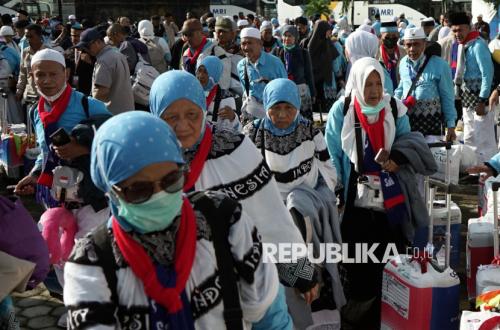
As he prepared to return home from Madinah on Tuesday (16 June 2026), Annas, a Hajj pilgrim from Blora regency, shared his impressions of nearly 40 days in the Holy Land with Republika. He said he had received good service, particularly from Hajj officials.
In Annas’s view, the officials carried out their duties promptly. They responded quickly when pilgrims became separated from their groups or encountered difficulties during the Hajj.
“I’m pleased with the officials. If anyone gets left behind or lost, they come straight over and take them to the hotel or terminal,” he said.
He considered this year’s services very good and said they made pilgrims feel safe. “I’m grateful. The officials have been very quick this year,” he said.
Annas experienced their attentiveness first-hand when his wife needed a wheelchair at the airport. He said an official came to help and accompanied them through the process without being asked.
“My wife needed a wheelchair earlier and an official helped immediately. You can’t fake things like that. I saw for myself how quickly and sincerely they worked,” he said.
Hajj officials also praised the pilgrims, particularly those who cooperated with them.
Windarti, a food-service official in Madinah Sector 5, said smooth service depended on cooperation between staff and pilgrims, who actively provided feedback. She cited comments on the quality of the meals served.
“Thankfully, food services in Sector 5 have run smoothly. That is thanks to cooperation between the food-service staff and the pilgrims. They often give us feedback, particularly about adjusting the taste of the food,” Windarti said.
She said comments that food was not salty enough, too salty or too sweet were recorded and passed on to the kitchen or the work area so that adjustments could be made promptly.
“We usually pass the feedback straight on to the kitchen or the work area. By the following day, God willing, the taste will have been adjusted or improved,” she said.
Windarti said most pilgrims had responded positively to the food service in Madinah. Many had even said the food there tasted better.
First Hajj under the new ministry
The 2026 Hajj was the first organised by the Ministry of Hajj and Umrah. For decades, Indonesia’s Hajj had been administered by the Ministry of Religious Affairs.
The Ministry of Hajj and Umrah was established under the leadership of President Prabowo Subianto and Vice-President Gibran Rakabuming. It was created under Law No. 14 of 2025 on the Organisation of Hajj and Umrah.
Several parties have made positive assessments of this year’s Hajj. One was the Indonesian Ombudsman, which submitted its 2026/1447 AH Hajj Organisation Oversight Report to the Ministry of Hajj and Umrah in Central Jakarta on Wednesday (23 September 2026).
Ombudsman member Nuzran Joher said the 2026 Hajj had generally gone well.
“We found that the 2026 Hajj was successfully organised,” Nuzran said.
The Ombudsman praised the use of the Kawal Haji app as a complaints channel, saying it made it easier for the public to raise concerns during the Hajj.
On Thursday (6 August 2026), Statistics Indonesia (BPS) said the 2026 survey recorded an Indonesian Hajj Service Satisfaction Index score of 83.28, placing it in the ‘satisfactory’ category.
Source: jawawa.id (https://jawawa.id/newsitem/improving-the-organisation-of-the-2027-hajj-1792464680)
Originally published by Republika (https://khazanah.republika.co.id/berita/tn6nsg430/agar-penyelenggaraan-haji-2027-semakin-baik), translated from Indonesian