
Improving Ethics in the Indonesia-South Korea Defence Partnership
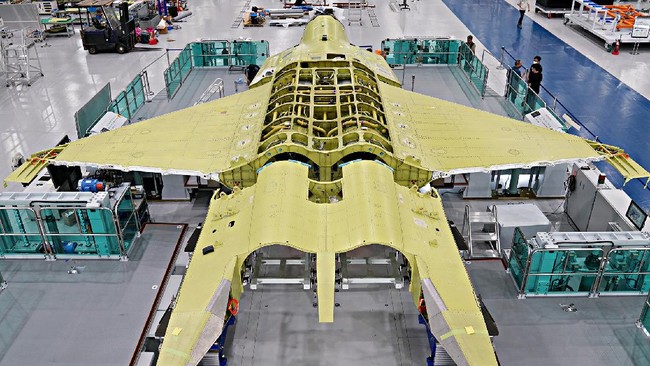
By April 2026, a prototype of the KF-21 Boramae is expected to be handed over to Indonesia. For many, this event represents a long-awaited milestone, proving that the ambition to possess a 4.5-generation fighter jet through joint development is not merely a dream. While images of the aircraft bearing the Red and White flag are celebrated as a step towards defence independence, the journey to this point reveals significant unresolved issues.
The partnership originated from trust, established in 2010 under Presidents Susilo Bambang Yudhoyono and Lee Myung-bak, and formalised through a defence cooperation agreement in 2013. South Korea chose Indonesia as its sole foreign partner in this major military project, reflecting confidence in Indonesia’s long-term commitment. For Indonesia, this participation addresses a long-standing goal to reduce dependence on foreign suppliers following the post-1999 military embargo, as mandated by the 2012 Defence Industry Law.
The KF-21 serves as a gateway to mastering avionics, composite structures, and AESA radar. However, complications arose after the agreement was signed. Indonesia committed to covering approximately 20 per cent of the costs, roughly 1.6 trillion won, in exchange for technology transfer and prototypes. Subsequently, payments stalled, and several Indonesian engineers were withdrawn from the programme. It is fair to acknowledge that the cause was not simply a refusal to honour promises; Indonesia’s renegotiations were rooted in real economic pressures. As the rupiah weakened sharply, the government sought to preserve foreign exchange reserves for exchange rate stability, leading to a review of project contributions paid in foreign currency.
This represents the classic dilemma of defence procurement: the intersection of long-term strategic needs and short-term economic pressures, where defence budgets are often the first to be sacrificed during financial instability. While this dilemma is understandable, the management of it is problematic. Ultimately, Indonesia’s contribution was slashed to approximately 600 billion won, about one-third of the original commitment. Crucially, this reduction came at a cost, as the scope of technology transfer received was also reduced. When budget commitments falter, we diminish the very knowledge we intended to absorb.
There are three key reflections to consider. First, consistency: long-term commitments should remain robust despite currency fluctuations or shifting budget priorities. While renegotiation is a legitimate practice in international law, the issue lies in the period preceding negotiations—unpaid arrears and hanging commitments. Second, reputation: international reports consistently suggest that Indonesia’s track record in this project has raised doubts regarding our credibility as a partner, which affects our bargaining power in future deals. Reputation is built over years but can be eroded in a single season.
Third, and perhaps most central to the ethical issue, is the trust required for technology transfer. The process was disrupted when several Indonesian engineers at Korea Aerospace Industries were investigated for allegedly removing sensitive KF-21 data. Regardless of the outcome, this incident serves as a reminder that healthy technology transfer is built on trust, not deception. Knowledge obtained through dishonourable means will never truly belong to us.
Viewing ethics as a practical strategy is essential. In defence partnerships, ethics and governance have concrete value: partners who honour commitments gain trust, which leads to broader technology transfer and stronger bargaining positions. Conversely, unstable partners will continually see their shares reduced, as Indonesia has experienced. Maintaining consistency is not about pleasing others, but about safeguarding Indonesia’s national interests. As a sovereign nation, we must ensure our own track record does not provide others with a reason to complicate our future endeavours.