
Imported Raw Materials Still Dominate 90 Per Cent of Indonesia's Halal Pharmaceutical Industry
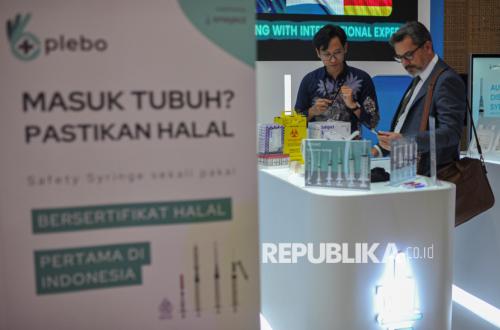
Indonesia has successfully secured fourth place globally in the halal pharmaceutical and cosmetics sector. However, behind this achievement, the domestic industry still faces a fundamental issue: a high dependency on imported raw materials, which reaches approximately 90 per cent.
Murniati Mukhlisin, a researcher at the Centre of Sharia Economic Development (CSED) INDEF, stated that Indonesia possesses a significant opportunity to become a major player in the global halal pharmaceutical and cosmetics industry. In addition to being supported by a large domestic market, global demand for halal products continues to rise annually.
According to her, the global halal cosmetics market, valued at US$92 billion in 2024, is expected to increase to US$124 billion by 2029. Meanwhile, the global halal pharmaceutical market is projected to grow from US$112 billion to US$146 billion during the same period.
“Indonesia’s halal pharmaceutical and cosmetics industry has great potential to grow alongside the increasing global demand for halal products,” Murni and stated during a CSED INDEF public discussion themed ‘SGIE Indonesia Declining: Evaluation of National Halal Policy and Industry’ on Monday night.
Nevertheless, this opportunity is deemed to have not been utilised optimally. One of the greatest challenges is the limited national innovation capacity to produce high-value-added halal pharmaceutical and cosmetic products capable of competing in international markets.
On the other hand, the reliance on imported raw materials remains a major task for the national industry. This condition prevents the competitiveness of Indonesia’s halal pharmaceutical and cosmetics industry from being as strong as competing nations that have already established upstream industrial independence.
Murniati assessed that developing the halal industry requires more than just product certification. The government needs to build more integrated policies, ranging from raw material development, research and development, investment incentives, and technology utilisation, to export support.
She noted that policy harmonisation between ministries and agencies remains a challenge for business actors. The expansion of mandatory halal certification must be balanced with increased industrial capacity to ensure it does not become an additional burden, particularly for small and medium enterprises.
Murniati added that technology could serve as a solution to strengthen the national halal ecosystem. The use of blockchain is considered capable of improving the traceability of raw materials from upstream to downstream, ensuring that the halal status of products can be verified more transparently.
Furthermore, the use of Artificial Intelligence (AI) can assist in the halal document inspection process, raw material risk identification, supplier mapping, and the harmonisation of halal standards between countries. Such technology is also seen as a way to accelerate the certification and export processes for Indonesian halal products.
To strengthen industrial competitiveness, Murniati proposed the development of ‘Halal Local Hubs’ in various regions. This concept would integrate business assistance services, market access, access to Sharia financing, halal certification, and support for research and laboratories into a single ecosystem.
She hopes that every province will eventually have a halal service centre connected to universities, local governments, industries, halal certification bodies, and Sharia financial institutions.
Murniati emphasised that such steps are necessary so that Indonesia does not merely become a consumer of the world’s halal products, but is also able to evolve into a producer and innovator with global competitiveness.
“Indonesia should not only be the largest consumer of the world’s halal products, but also become a leading producer and innovator capable of creating economic value-add and increasing national competitiveness,” she concluded.