
Import dependency remains a weak point for Indonesia's manufacturing industry
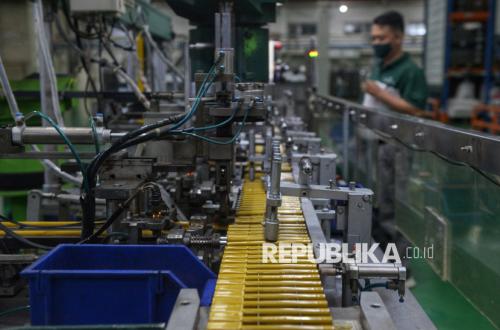
National industry’s dependence on imported raw materials remains a major challenge for Indonesia’s manufacturing resilience. Amid global geopolitical pressures, rising logistics costs, and a weakening rupiah, strengthening domestic raw material industries is seen as key to maintaining the manufacturing sector’s competitiveness.
CORE Indonesia Executive Director Mohammad Faisal said manufacturing pressures became evident in March 2026, following two months of strong industrial activity at the start of the year.
“Looking at the first quarter as a whole, the aggregate remains positive at 5 percent,” Faisal said on Friday, 29 May 2926.
Data from the Central Statistics Agency (BPS) showed manufacturing grew 5.04% year-on-year in Q1 2026, contributing to national economic growth of 5.61%.
However, manufacturing activity indicators began to slow. Indonesia’s Manufacturing Purchasing Managers’ Index (PMI), which reached 53.8 in February 2026, fell to 49.1 in April 2026, re-entering contraction territory.
Faisal attributed the situation to rising raw material, logistics, and insurance costs due to global dynamics. The rupiah’s depreciation against the US dollar further increased production costs for manufacturers.
“Production costs have risen due to the war, increasing raw material and logistics expenses,” he said.
CORE Insight research shows around 70% of Indonesia’s imports are dominated by industrial raw materials and components. This makes the national manufacturing sector vulnerable to currency fluctuations and global supply chain disruptions.
Import dependency remains high in several strategic sectors. CORE noted that around 85% of the nation’s pharmaceutical raw materials are imported, mainly from India and China.
Therefore, Faisal stressed the need to accelerate domestic raw material industries to enhance the manufacturing sector’s resilience against external pressures.
He cited naphtha-based petrochemicals, textiles and textile products (TPT), and iron and steel as industries needing strengthening.
Naphtha-based petrochemicals play a crucial role as raw material suppliers for the textile and plastic industries, while iron and steel support the national manufacturing and construction supply chains.
The textile and textile products industry is considered strategic, employing around 3.76 million workers, or 19% of the national manufacturing workforce.
“The government must create space for the manufacturing industry to operate better, ease the burden of rising production costs, and maintain domestic market access,” Faisal said.
CORE proposed several policy supports, including relaxation of import duties on strategic raw materials, faster tax refunds, and input subsidies for industries affected by rising production costs.
The government continues to push for raw material industry development through downstreaming programs, including in petrochemicals and steel. Downstreaming investments are targeted at around Rp3.8 trillion to strengthen industrial supply chains and boost domestic value addition.