
Import and Export Goods Transport Rules Change, Businesses Need to Know These Five Points
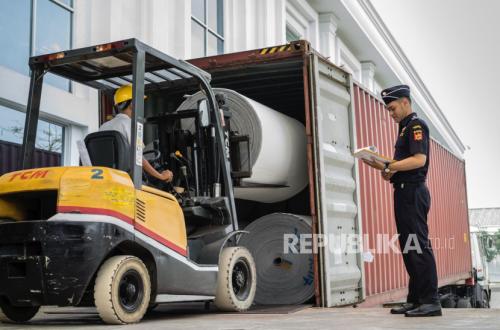
The Ministry of Finance has issued Minister of Finance Regulation (PMK) Number 51 of 2026 concerning the onward carriage or transshipment of imported or exported goods. This regulation replaces PMK Number 216/PMK.04/2019 and forms part of improvements to customs services and supervision that are more adaptive to field needs. PMK 51/2026 was promulgated on 31 July 2026 and will come into effect on 30 August 2026. The 30-day transition period is expected to be used by service users and business operators to study the new provisions and comply with the applicable provisions and business processes.
Head of the Customs and Excise Public Relations and Counselling Sub-directorate, Budi Prasetiyo, said the issuance of PMK 51/2026 is a step to improve the previous provisions while maintaining a balance between service convenience and supervision. The improvements in PMK 51/2026 are also a follow-up to input from vertical Customs and Excise offices, monitoring and evaluation results, and recommendations from functional supervisory apparatus. PMK 51 of 2026 was drafted taking into account business process developments and field needs. These improvements are expected to provide legal certainty, improve services and supervision, and continue to secure state financial rights.
Budi urged service users to make use of the period before the regulation takes effect to understand the changes and prepare their business processes. He said that to understand the changes and improvements regulated in PMK 51/2026, service users also need to know the basic mechanisms of onward carriage and transshipment that form the scope of the regulation. In simple terms, onward carriage is the transport of imported or exported goods through a customs office without prior unloading. Meanwhile, transshipment is the transport of imported or exported goods through a customs office with prior unloading.
Based on these provisions, PMK 51/2026 contains a number of improvements that service users and business operators need to note. The five important points in PMK 51/2026 are as follows:
Expansion of the function of approval documents for loading onward carriage or transshipment goods outside the customs area. One improvement is the expansion of the function of approval documents for activities outside the customs area. The document can be used as a permit for storing goods in another place treated the same as a temporary storage facility if the goods cannot be loaded immediately. This provision provides legal certainty in handling goods while remaining within the customs supervision mechanism.
Accommodating transshipment of spare parts for repairing means of transport. PMK 51/2026 accommodates the transport or settlement of imported goods in the form of spare parts to be used for repairing means of transport serving international routes. With approval from the customs office and a handover report, the goods can be released for transshipment out of the customs area according to the mechanism regulated in this regulation. This provision provides legal certainty for transporting spare parts for repairing means of transport serving international routes.
Expanded scope of multimodal transport. This improvement adjusts to business process developments in goods transport, which in practice may involve a combination of several modes of transport. The new provision also aligns the scope of transport using more than one mode of transport with customs provisions in the export sector. In addition, provisions on reconciliation of export goods transshipment are also aligned with customs provisions in the export sector as regulated in PMK Number 155/PMK.04/2022.
Administrative supervision strengthened through reconciliation and automation. PMK 51/2026 maintains and improves the administrative transport supervision mechanism. Supervision is carried out through reconciliation between the BC 1.1 outward manifest at the origin customs office and the BC 1.1 inward manifest at the destination customs office. The process is supported by automation in the Computer Service System. With this mechanism, supervision of goods movement continues alongside efforts to improve service smoothness.
More detailed provisions for various field needs. In addition to the main changes, PMK 51/2026 also accommodates a number of technical improvements. These include provisions on the type and amount of guarantee value for land transport supervision carried out without electronic seals, as well as detailing activities and conveniences with automation in implementing the Transfer of Storage Location provisions. This regulation also facilitates services and supervision of transporting goods from a customs area to another place within the customs area via outside the customs area (BC 1.3). PMK 51/2026 also accommodates provisions regulated in international agreements or treaties ratified by the Indonesian government related to onward carriage or transshipment.
Budi added that service user readiness is an important part of implementing the new provisions. Therefore, Customs and Excise encourages business operators and interested members of the public to understand the procedural changes before PMK 51/2026 takes effect on 30 August 2026. By understanding the provisions from the outset, service users can adjust their business processes and administrative needs. It is hoped that the implementation of PMK 51 of 2026 can run well from the first day of enforcement. It should be noted that PMK 51/2026 takes effect from 30 August 2026.