
Implementing Free and Active Politics Without Isolation: Prabowo Befriends All Nations
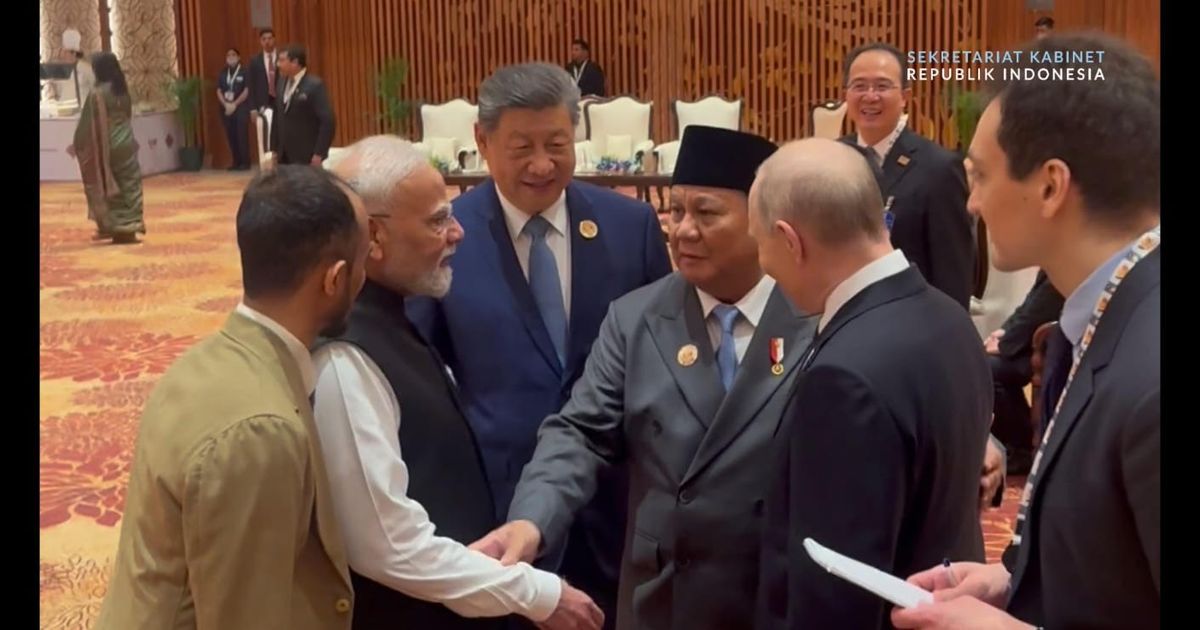
Indonesia must not become a satellite for any power, nor should it stand alone when the world is divided by geopolitical rivalry. Under President Prabowo Subianto, ‘free and active’ politics is translated as strategic independence without isolation: befriending all nations, standing as an equal to every power, and evaluating every cooperation based on its concrete benefits for the Indonesian people.
President Prabowo’s presence at the 18th BRICS Summit in Bharat Mandapam, New Delhi, India, from 12 to 13 September 2026, should be viewed within this framework. Indonesia joined BRICS not to enter a bloc opposed to the United States and Western nations, but to expand its diplomatic space, markets, investment, technology, and development financing sources.
Free and active foreign policy does not mean Indonesia must maintain a rigid, equal distance from all countries. ‘Free’ means Indonesia has the right to determine its stance based on national interests, without being dictated to by foreign powers. ‘Active’ means Indonesia does not remain idle, but actively seeks solutions to global issues, fights for peace, strengthens multilateralism, and builds mutually beneficial cooperation.
This principle can be summarised as strategic independence without strategic isolation. Indonesia does not choose a bloc, but chooses partnerships. Indonesia does not merely offer friendship, but demands results. Every international forum must provide access to markets, investment, technology, employment, development financing, food and energy security, and a stronger bargaining position for Indonesia.
This approach is evident in the wide range of international forums Indonesia participates in. Indonesia is active in ASEAN, the World Trade Organization (WTO), the Asia-Pacific Economic Cooperation (APEC), and the G20. Since 6 January 2025, Indonesia has also officially become a full member of BRICS. In 2026, Prabowo was even involved in the Board of Peace initiated by US President Donald Trump, but emphasised that Indonesia could withdraw if the forum fails to provide tangible benefits for Palestine and does not align with Indonesia’s national interests. This stance demonstrates that Indonesia’s participation is not a blank cheque to any power.
In New Delhi, Prabowo was in the same forum as three major world leaders: Indian Prime Minister Narendra Modi, Chinese President Xi Jinping, and Russian President Vladimir Putin. At the same time, Prablamo also maintains good relations with US President Donald Trump. Relationships with these four leaders serve as Indonesia’s diplomatic capital amidst increasing global power competition.
‘This is the strength of Indonesia’s foreign policy. The President, at the same time, maintains good relations with four major world leaders,’ said a national entrepreneur.
Such closeness must not stop at personal relationships between leaders. Diplomacy must be translated into benefits that touch the lives of the people. Friendship is not enough if it only lives in historical records or state speeches. The quality of international relations must ultimately be measured by increased trade, the influx of quality investment, technology transfer, job creation, and the improvement of public welfare.
Sovereignty, Peace, and Development
In its international politics, Prabowo links three inseparable elements: sovereignty, peace, and development. Indonesia must be sovereign to freely determine its future. However, sovereignty is difficult to maintain without economic strength. At the same time, development and growth require stability and peace.
Thus, economic growth is not merely a domestic agenda, but part of Indonesia’s geopolitical foundation. A country with a strong economy, guaranteed food and energy needs, developing technology, and a prosperous population will possess greater independence and bargaining power in international affairs.
This doctrine also explains why Indonesia continues to build relations with countries that have different interests and political systems. Good relations with China and Russia do not mean distancing from the United States and Europe. Similarly, partnership with Washington must not cause Indonesia to lose its freedom to determine its stance on Palestine, international trade, or global conflicts.
Indonesia conducts diplomacy based on national interests, while adhering to the mandate of the 1945 Constitution to participate in realising a world order based on independence, eternal peace, and social justice. Indonesia does not interfere in the domestic affairs of other nations, but must not remain passive when humanity, peace, and international justice are threatened.
BRICS is Not a Military Bloc
BRICS should be positioned primarily as an instrument for South-South economic cooperation, rather than a political or military bloc. This forum provides Indonesia with the opportunity to expand economic options beyond traditional markets and financing sources, while increasing the voice of developing nations in the formulation of global rules.
BRICS now includes Brazil, Russia, India, China, South Africa, Egypt, Ethiopia, Iran, the United Arab Emirates, Saudi Arabia, and Indonesia. Collectively, these nations represent approximately half of the world’s population, about 40% of global GDP, and more than a quarter of world trade.