
Implementation of locally-made AI for upstream oil and gas receives support
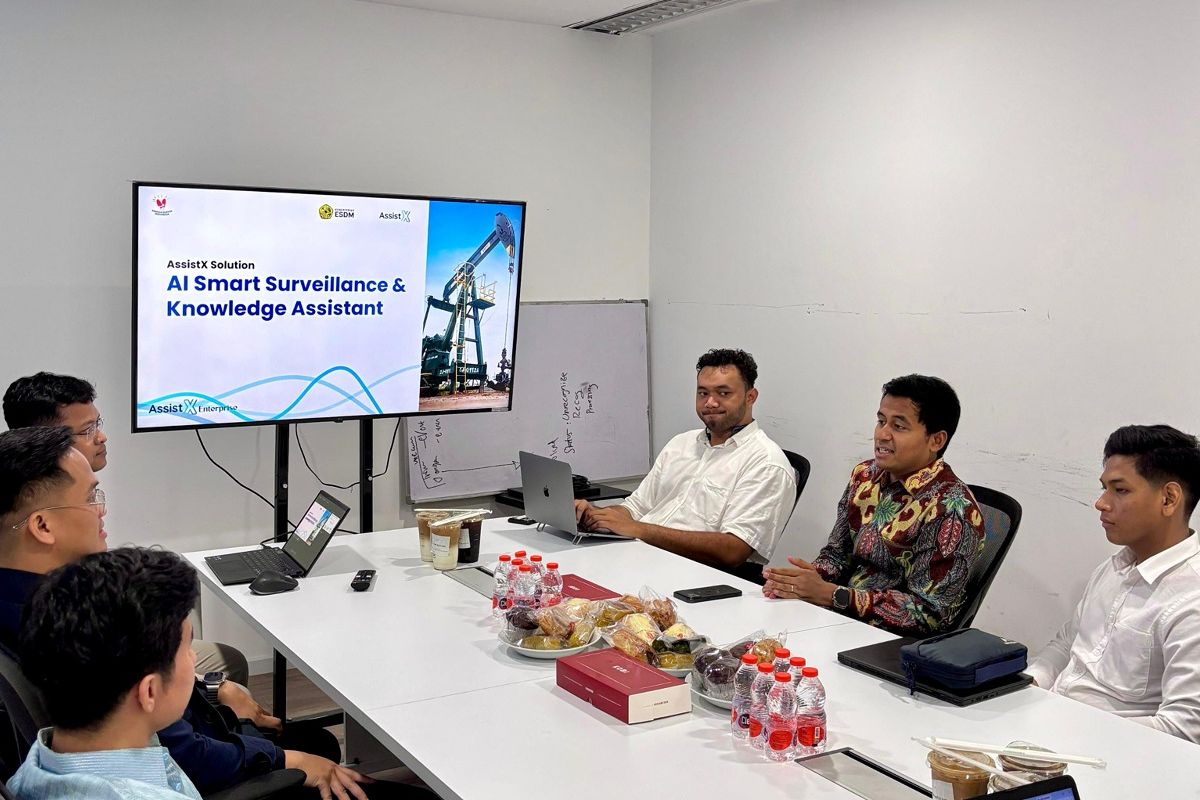
Through cost-benefit analysis, this local solution offers lower operational costs compared to foreign products, stated the Expert for the Minister of Energy and Mineral Resources (ESDM), Satya Hangga Yudha Widya Putra. During a visit to the AssistX office in Jakarta, Hangga noted that this comprehensive innovation is a homegrown creation with a local content requirement (TKDN) of 19 per cent.
He emphasised that the implementation of AI is crucial amidst the challenges facing the upstream oil and gas sector. Currently, Indonesia’s oil production stands at approximately 600,000 barrels per day, while consumption reaches 1.6 million barrels per day, necessitating imports of 1 million barrels per day. Conversely, the national gas sector is experiencing a surplus, with production at 6,500 MMSCFD against a domestic consumption of 4,500 MMSCFD, although the country still faces an 80 per cent deficit in imported LPG.
To achieve the energy security and downstreaming targets outlined in the second and fifth pillars of the ‘Astacita’ programme, Hangga stated that the adoption of intelligent monitoring systems powered by AI is a vital component for rapid and centralised field monitoring. This technology has already been implemented at the Pertamina EP Donggi Matindo Field.
The primary advantage of AssistX lies in its advanced data compression technology, which can reduce the size of document files, CCTV recordings, and bandwidth usage by up to 90 per cent without compromising visual resolution. By utilising local servers, the system ensures that strategic national data sovereignty is strictly maintained within the country, protected from external access.
Furthermore, this monitoring system can be applied to existing CCTV cameras without the need for hardware replacements, making it highly efficient in terms of capital expenditure for private companies and K3S (oil and gas contracting groups). In terms of occupational safety, the system can automatically detect violations, such as workers not wearing helmets or safety gloves, detect human intrusions, track vehicle fleets, and record the duration of tanker berthing at docks. Additionally, the dashboard system integrates Internet of Things (IoT) sensors to detect fire threats and gas leaks that are not visible to standard cameras, allowing for the early prevention of field incidents.
Source: jawawa.id (https://jawawa.id/newsitem/implementation-of-locally-made-ai-for-upstream-oil-and-gas-receives-support-1780818044)
Originally published by Antara (Indonesian) (https://www.antaranews.com/berita/5595401/penerapan-ai-hulu-migas-buatan-anak-bangsa-didukung), translated from Indonesian