
Implementation of LEISA by Bank Indonesia East Kalimantan Boosts Rice Productivity by 44.8 Per Cent
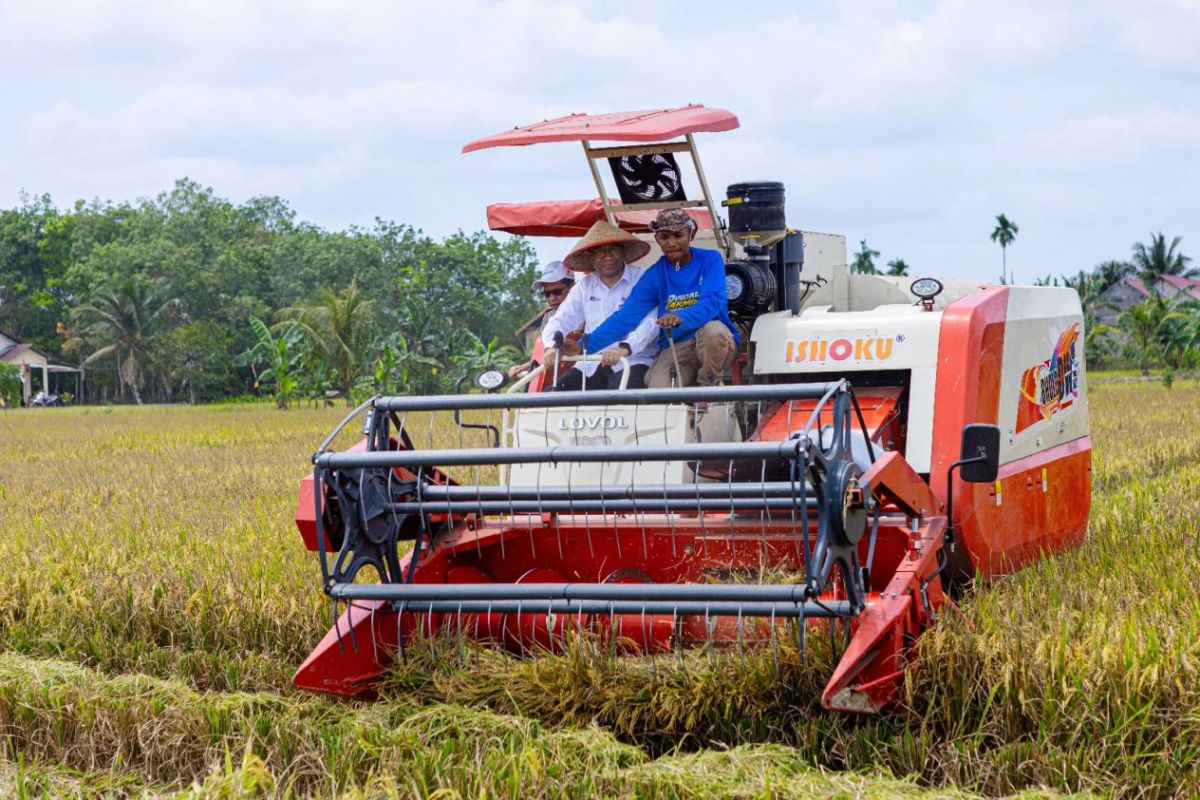
Samarinda (ANTARA) - The implementation of Low External Input Sustainable Agriculture (LEISA) and digital farming technology by Bank Indonesia East Kalimantan (BI Kaltim) has successfully increased paddy productivity by 44.8 per cent, rising from 4.8 tonnes to 6.95 tonnes per hectare.
This achievement is the result of the harvest from a demonstration plot (demplot) for LEISA and digital farming at the Mandiri Farmer Group Association (Gapoktan Mandiri) in Sidomulyo, Anggana, Kutai Kartanegara Regency, a collaborative effort between BI Kaltim, local government, academics, and farmer groups.
“The application of these agricultural technologies not only increases production yields but also reduces costs and accelerates the cultivation process,” said the Head of the BI East Kalimantan Provincial Representative Office, Jajang Herma.wan, during the harvest at the LEISA Paddy Demplot in Anggana on Thursday.
Through the use of drone sprayers, fertilisation and pesticide spraying, which previously required 6 to 8 hours per hectare, can now be completed in approximately 10 minutes per hectare, thereby saving significant time.
According to him, the LEISA concept optimises local resources so that farmers do not rely too heavily on high amounts of external inputs. The application of technology spans from seedling production and fertilisation to pest control and drone spraying. The use of organic fertiliser is also part of the effort to reduce dependency on chemical fertilisers.
Jajang noted that one challenge requiring continued attention is water availability. Nevertheless, the productivity of 6.95 tonnes per hectare demonstrates that this method has the potential to be developed in other regions across East Kalimantan.
Meanwhile, the Deputy Governor of East Kalimantan, Seno Aji, appreciated the production increase and expressed hope that the results of the demonstration plot would not remain merely a pilot project but would be replicated in other agricultural centres.
“The increase is extraordinary. We must set higher targets; with current production at a minimum of 4 tonnes per hectare, we should aim for at least 7 tonnes per hectare in the future,” he said.
Seno stated that East Kalimantan Province currently has approximately 28,000 hectares of active paddy fields. As of August 2024, harvested dry paddy production has reached over 200,000 tonnes.
The provincial government, he added, aims to add approximately 12,000 hectares of new paddy fields, with the projection that East Kalimantan’s active paddy field area will reach around 40,000 hectares by 2027.
“The expansion of land and the application of precision agricultural technology are expected to strengthen rice production while supporting East Kalimantan’s food self-sufficiency targets,” he concluded.