
Implementation of Integrated National Schools in Rural Areas
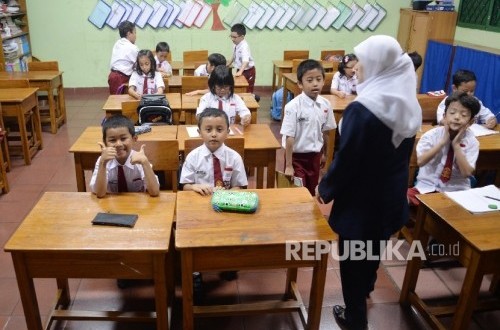
The gap in infrastructure, the lack of certified teaching staff, and limited access to technology continue to be unending problems between urban and rural schools. Consequently, quality education remains a luxury for children growing up in rural areas. For this reason, the government has launched a strategic policy through the Integrated National School (SNT), which for rural areas is not merely about erecting the physical buildings of new schools, but rather an overview of redistributing equal knowledge for children in remote parts of the country.
Legally, the basis for this equitable quality education stems from Presidential Instruction (Inpres) Number 10 of 2026 concerning the Acceleration of Education Quality Improvement. Within the terms of reference of this Inpres, the SNT becomes a national breakthrough instrument that cuts through the rigid chain of sectoral bureaucracy. If under the conventional pattern, the junior secondary level falls under the district/city authority and senior secondary under the province, the SNT is coordinated directly by the central government through the ministry to ensure quality standards are applied uniformly.
Citing the educational governance reform thinking of Fullan (2023) in global public policy research, macro intervention through the highest executive decree (presidential decree) has proven effective in cutting through regional structural barriers in situations of quality emergency. The terms of reference of this Inpres provide strong affirmation for cross-agency synergy, focused fiscal budget allocation, and legal certainty in the development of integrated educational infrastructure in geographically marginalised areas.
Furthermore, this Inpres designs a clear division of roles between the central government, regional authorities, and private strategic partners through a transparent cooperation scheme. The regulation ensures that aspects of financial accountability and the procurement of supporting facilities do not become trapped in a vortex of sluggish bureaucracy. Thus, every stage of SNT implementation can proceed in a measurable manner with direct supervision from the centre.