
Implementation of AI to Accelerate Data-Based Agricultural Development
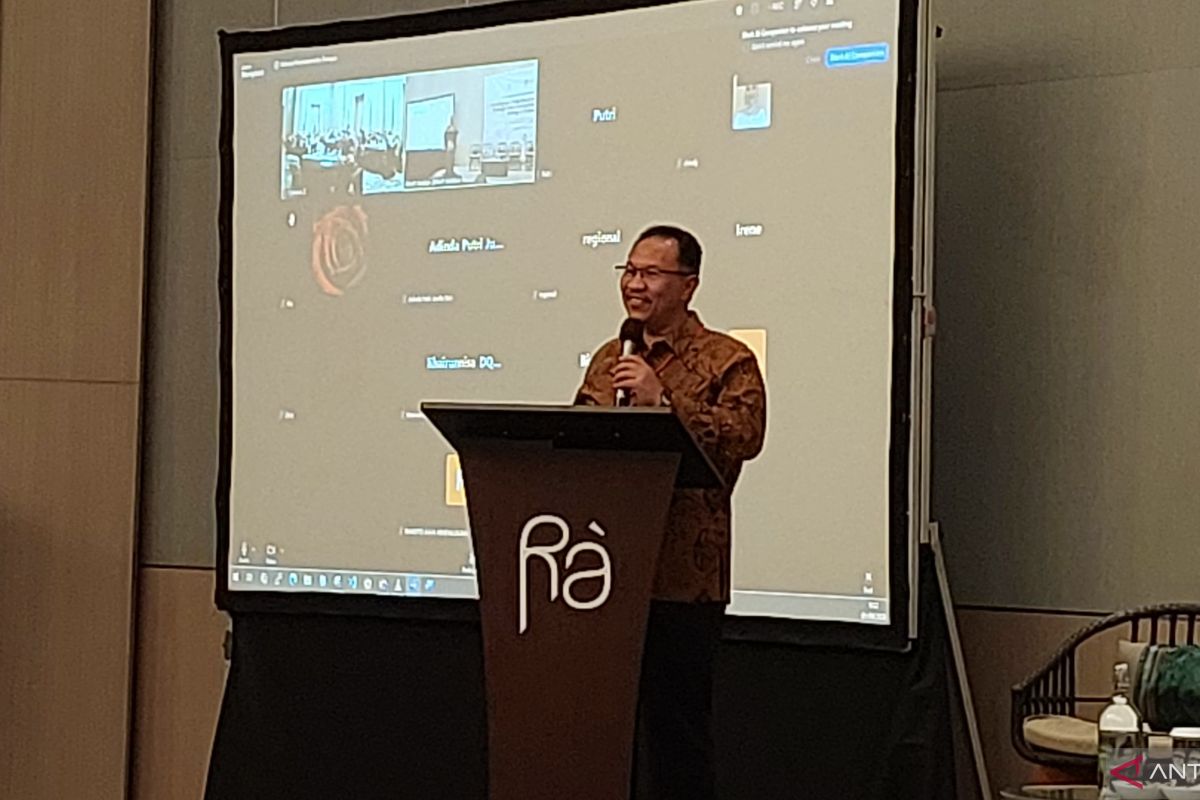
Jakarta (ANTARA) - Professor Ir. Desrial, Expert for the Minister of Agriculture in Precision Agricultural Development at the Ministry of Agriculture, stated that the implementation of artificial intelligence (AI) can accelerate the development of data-based agricultural mechanisation.
According to Desrial, this includes assisting the government and agricultural stakeholders in determining technologies that are appropriate for the specific conditions of each region.
Speaking at the National Multistakeholder Dialogue titled “Scaling Up Crop Residue Management through Mechanisation and Custom Hiring in Indonesia” in Jakarta on Tuesday, he noted that data and knowledge, which have historically developed in isolation, need to be collected and utilised as a basis for making faster decisions that align with the specific conditions of each area.
“How we collect the databases and knowledge we possess, and then use tools that are widely used today, such as artificial intelligence, to make rapid decisions and policies that are appropriate for each specific condition,” he said.
According to him, Indonesia’s experience shows that agricultural mechanisation cannot be applied using a single pattern across all regions. Indonesia’s geographical condition, consisting of thousands of islands with diverse soil and environmental characteristics, ensures that mechanisation needs differ in every area.
This experience also demonstrates that the distribution of agricultural tools and machinery (alsintan) by the government is not necessarily utilised optimally in all regions.
Therefore, the development of mechanisation needs to adopt a bottom-up approach, starting with understanding field conditions and needs before determining the type of technology and support provided to farmers.
In this context, AI is considered capable of accelerating the processing of data originating from various regions and countries. This data can encompass experiences in technology implementation, environmental conditions, land characteristics, and the results of various pilot projects.
“With widely implemented technologies, particularly AI, we can shorten processes that might previously have required multiple iterations to produce a specific policy,” he said.
Desrial stated that the integration of precise data and analysis can produce more concrete learning. The results of such analysis can then be applied through pilot projects in each country to strengthen the knowledge base for mechanisation development in the Asia-Pacific region.
He added that AI is also expected to assist in building smart mechanisation systems. This system does not imply applying a single mechanisation model for an entire country, but rather using data to classify conditions and provide recommendations suited to the characteristics of each region.
Looking ahead, Desrial also encouraged Indonesia’s cooperation with member countries of the Consortium for Sustainable Agricultural Mechanisation (CSAM) to produce a mechanisation outlook for the Asia-Pacific region. Member countries need to agree on data classification, shared indicators, data standards and systems, governance, and update mechanisms.
This publication is expected to serve as a platform for updating data, sharing experiences, and monitoring the sustainable development of agricultural mechanisation.
Through the utilisation of AI and the strengthening of shared databases, the long-standing experiences of each country in developing mechanisation are expected to serve not only as internal learning but also to mutually accelerate the development of more efficient, appropriate, and sustainable agricultural technologies.