
Impact of US-Iran War Must Be Anticipated with Adaptive Policies
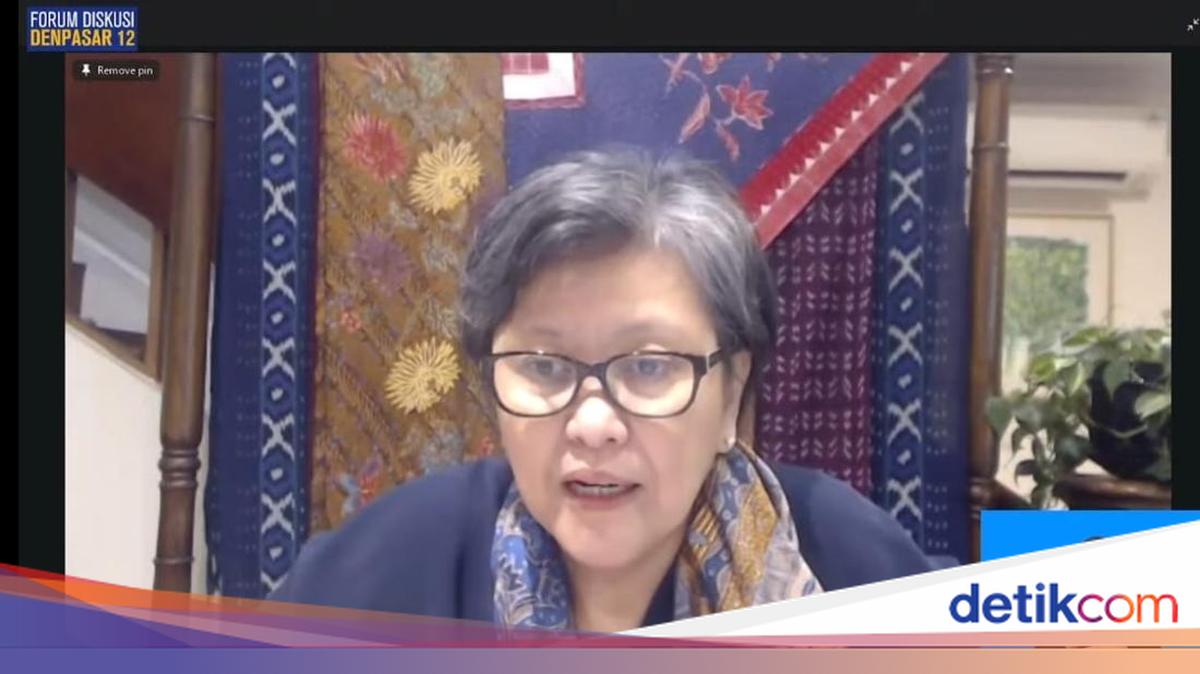
The prolonged peace process between the United States and Iran should serve as an alarm for Indonesia to implement appropriate policies swiftly, so it can manage the resulting impacts. Deputy Speaker of the People’s Consultative Assembly (MPR RI), Lestari Moerdijat, said the uncertainty surrounding the conflict in the Strait of Hormuz compels Indonesia to undertake substantive geopolitical diversification.
“The uncertainty arising from the conflict involving the closure of the Strait of Hormuz requires Indonesia to diversify its geopolitical risks substantially,” Lestari said in a statement on Wednesday (29/7/2026).
She made the remarks in her address to an online discussion themed ‘The Deadlock in Iran-US Peace Talks and Its Impact on the Indonesian and Global Economy’, organised by the Denpasar 1 Discussion Forum. Lestari revealed that the conflict, which began with the joint US-Israel attack on 28 February 2026, has disrupted the vital Strait of Hormuz route, through which roughly one-fifth of the world’s oil and gas flows.
As a result, said Rerie, as Lestari is affectionately known, world oil prices have jumped 25%-30% above the 2026 state budget (APBN) assumption of US$70 per barrel. Rerie, who is also a member of Commission X of the House of Representatives (DPR RI), cautioned that every US$1 per barrel increase in oil prices adds around Rp6.8 trillion to the state budget burden, whilst a Rp100 per dollar weakening of the rupiah adds roughly Rp800 billion.
The member of the NasDem Party’s Supreme Assembly urged the use of Indonesia’s free and active foreign policy to open up available opportunities in facing global uncertainty.
Furthermore, Rerie expressed hope that stakeholders would promptly take anticipatory measures to cushion the impact of global economic shocks, as part of the effort to fulfil the constitutional mandate to protect every citizen.
University of Indonesia international relations analyst Shofwan Al Banna Choiruzzad opined that the current US-Iran war situation is deeply worrying, because after a brief ceasefire, the two countries have resumed attacking each other.
“Does this condition indicate that negotiations have reached a dead end? How we understand the war is very important in predicting the outcome of the negotiation process,” said Shofwan.
He argued that the US-Iran war has not yet reached a dead end, because, according to Shofwan, the mutual attacks are part of the negotiation process.
Each warring party, he explained, holds bargaining chips in negotiations over sensitive matters.
“I assess that the US-Iran negotiations are not yet deadlocked, because the dialogue is not taking place across a table, but in the form of mutual attacks,” he said.
Professor of Middle East Geopolitics at UGM’s Faculty of Social and Political Sciences, Siti Mutiah Setiawati, judged that Indonesia is in an awkward position in responding to the US-Iran war, as Indonesia is perceived to have sided with one of the warring countries. According to Siti, there is a significant diplomatic difficulty that must be resolved urgently, because Indonesia’s position is regarded as non-neutral by several parties.
In her view, the US-Iran negotiations have yet to bear fruit because the warring parties are not committed to the agreements reached. Siti considers the US-Iran conflict to be US aggression against Iranian sovereign territory.
According to Siti, an MOU is a low-level outcome of negotiations compared with an Agreement or a Treaty, so strong commitment is needed to abide by the contents of an MOU if both parties genuinely want peace.
Energy economics observer Fahmy Radhi argued that the US-Iran war has no direct impact on Indonesia, but produces uncontrollable knock-on effects. Fahmy acknowledged that rising world oil prices have triggered a global energy crisis, causing inflation that disrupts the world economy.
Indonesia, Fahmy noted, has not yet declared an energy crisis, as it still produces 600,000 barrels of oil per day. Nevertheless, Fahmy judged that the current Indonesian government’s policies have not been able to address the knock-on effects of rising fuel prices.
“The government must be truly focused in addressing these various impacts,” said Fahmy.
Director of CORE Indonesia Mohammad Faisal opined that the US-Iran war magnifies economic challenges for many countries, including Indonesia. According to Faisal, in facing the current conditions, we must be concerned about national economic stability.
The dynamics of the US-Iran war, he said, should push stakeholders to craft adaptive domestic policies in response to the impacts. According to Faisal, rising world oil prices could increase the fuel subsidy budget by more than Rp300 trillion.
“Without reallocation, refocusing and additional state revenue, the APBN deficit will exceed the 3% of GDP limit,” said Faisal.
Senior journalist Saur Hutabarat revealed that various global institutions are considered by many experts to be no longer functioning, and in the US-Iran bilateral negotiations there is no mutual respect, so the war has the potential to drag on. However, Saur noted that domestically there are signs of capability to escape the pressure of rising fuel prices caused by a prolonged war.
Namely, he said, electric vehicle sales rose 80.8% in the July 2026 period. Compared with vehicle sales in general, he added, the market share of electric vehicles climbed to 18.3%.
“Another sign relates to the resignation of the Bank Indonesia Governor, which had no effect whatsoever — in other words, it seems we are starting to learn to be indifferent, not caring whatever happens,” Saur concluded.
The discussion, moderated by Luthfi Assyaukanie, PhD (expert staff to the Deputy Speaker of the MPR RI), featured speakers Prof. Dr. Siti Mutiah Setiawati, M.A. (Professor of Middle East Geopolitics, Faculty of Social and Political Sciences, Universitas Gadjah Mada), Dr. Fahmy Radhi, M.B.A. (energy economics observer and energy economics consultant to SKK Migas and Pertamina), and Shofwan Al Banna Choiruzzad, PhD (international relations analyst, Universitas Indonesia). Mohammad Faisal, PhD, Director of CORE Indonesia, also attended as a discussant.
Source: jawawa.id (https://jawawa.id/newsitem/impact-of-us-iran-war-must-be-anticipated-with-adaptive-policies-1785333313)
Originally published by detikcom (https://news.detik.com/berita/d-8596049/dampak-perang-as-iran-dinilai-perlu-diantisipasi-dengan-kebijakan-adaptif), translated from Indonesian