
Impact of Rising Imported Soybean Prices on Tempeh and Tofu MSMEs
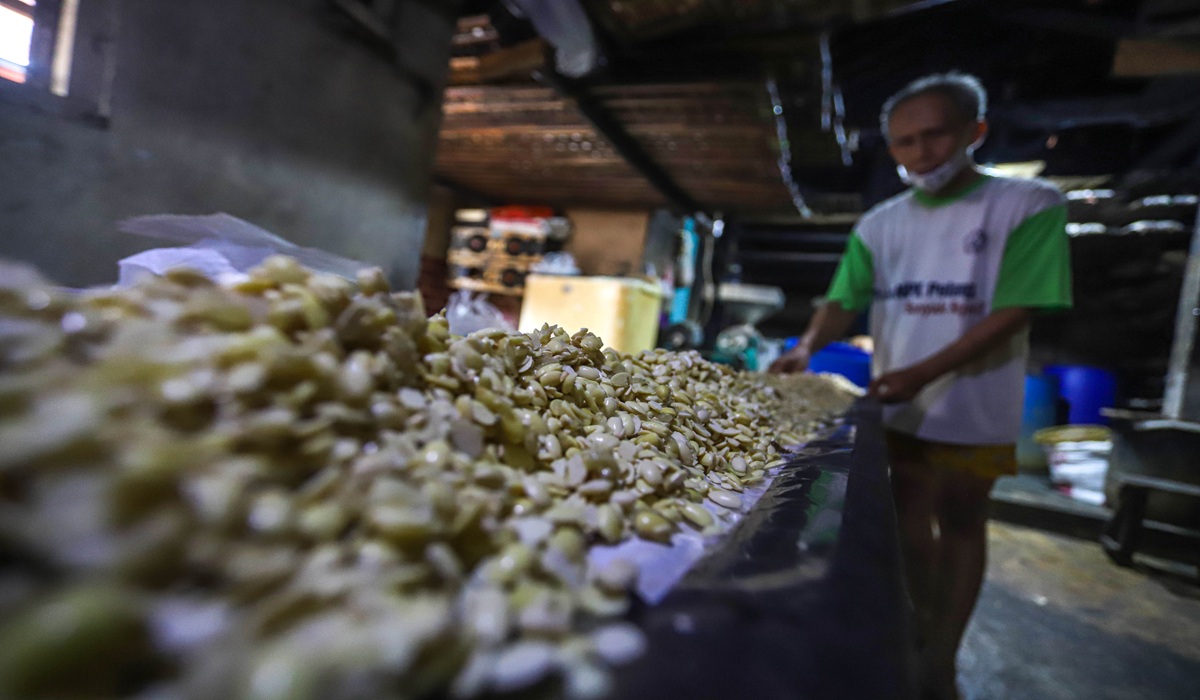
The recent increase in imported soybean prices serves as a clear reflection of how global economic turmoil directly impacts household kitchens and the sustainability of Micro, Small, and Medium Enterprises (MSMEs) in Indonesia. This phenomenon places tempeh and tofu artisans in a difficult position due to their high dependence on foreign supplies.
Dr. Tanti Novianti, a lecturer at the IPB University School of Business, explained that the national tempeh and tofu industry is highly vulnerable to fluctuations in the Rupiah exchange rate. This is because the majority of the main raw material must still be sourced from the global market.
"Tempeh and tofu are sources of protein for the people, yet their raw materials are still dominated by imports, around 90 to 95 percent. When the US dollar strengthens or the Rupiah weakens, the price of imported soybeans automatically becomes more expensive in Rupiah, even if the global soybean price remains relatively stable," said Tanti.
This condition directly impacts the swelling of production costs. On the other hand, business operators have limited ability to raise selling prices. Consumers of tempeh and tofu products come from various levels of society and are very sensitive to even the slightest price changes.
According to Tanti, artisans are now faced with three difficult choices to survive. "The weakening of the Rupiah causes production costs to rise faster than the ability of MSMEs to adjust selling prices. This is what makes many artisans feel squeezed," she added.
Despite the considerable challenges, Tanti sees that opportunities to strengthen national soybean production remain wide open. Indonesia has vast potential land and a very large domestic market. However, farmers need real economic incentives. "It is not enough to just encourage them to plant soybeans; there must also be certainty of price, market, seeds, technology, and mentoring," she stressed.
For the short term, the government is urged to strengthen price stabilisation, supervise distribution channels, and expand access to cheap financing for MSMEs through the People’s Business Credit (KUR) scheme. Meanwhile, for the long term, strategic steps are needed. "Food security is not only about rice, but also about people’s protein such as tempeh and tofu. Policies that protect artisans while strengthening local production must continue to be pushed so that food remains affordable for the community," concluded Tanti.