
Impact of New Regulation: Will GOTO Profit or Suffer Losses?
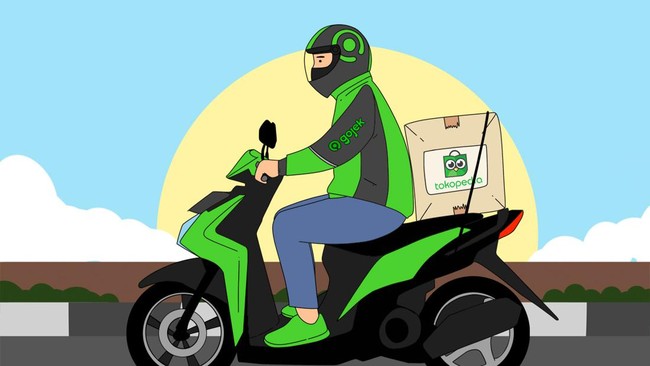
The Indonesian government has taken significant steps to regulate the digital transportation ecosystem through structural interventions and regulations.
Deputy Speaker of the Indonesian House of Representatives, Sufmi Dasco Ahmad, confirmed that BPI Daya Anagata Nusantara (Danantara) has entered as a shareholder in the online transportation application company.
This move is designed as a strategic instrument for the government to monitor and promote policies that directly favour workers’ welfare.
The government’s structural presence in the applicator’s body was already established previously through the share ownership of PT Telkom Indonesia (Persero) Tbk and its subsidiary, Telkomsel, in GOTO, valued at a total of US$450 million or equivalent to Rp6.4 trillion.
In line with strengthening this position, President Prabowo Subianto has officially signed Presidential Regulation No. 27 of 2026 on the Protection of Online Transportation Workers.
One of the most fundamental provisions in this regulation is the revenue sharing that requires drivers to receive at least 92%. This policy effectively limits the maximum deduction ratio by the applicator to 8%, a drastic reduction from the previous scheme which generally ranged from 10% to 20%.
GOTO’s Financial Performance in Q1 2026
Amid sentiments regarding the new regulation that limits commission revenue space, PT GoTo Gojek Tokopedia Tbk (GOTO) has recorded a historic milestone in its financial performance.
Referring to the interim consolidated financial report ending 31 March 2026, GOTO successfully posted a net profit for the period of Rp170.74 billion. This achievement marks a turning point in performance improvement, considering that in the same period the previous year, the company still recorded a loss of up to Rp366.59 billion.
This bottom-line improvement is supported by an increase in consolidated net revenue reaching Rp5.34 trillion. The revenue was dominated by the mobility and logistics business pillars, namely delivery services contributing Rp1.55 trillion and service fees of Rp1.52 trillion.
In addition, other service segments also showed strong contributions, such as revenue from loan services reaching Rp1.31 trillion and e-commerce service fees of Rp288 billion.
GOTO also reported adjusted Group EBITDA performance of Rp907 billion in the first quarter, confirming that the company is on track to realise the full-year target guidance in the range of Rp3.2 trillion to Rp3.4 trillion.
Market and Industry Response
Although the company’s operational fundamentals show improvement, the capital market has responded to the applicator tariff restriction regulation with high caution. On the opening of trading on Monday (4/5/2026) following the regulation announcement, GOTO shares plunged 7.41% and hit the auto rejection lower limit (ARB) at Rp50 per share.
This figure is the lowest price point since GOTO conducted its initial public offering in 2022. Trading activity on the exchange was massive with a transaction value reaching Rp1.7 trillion, positioning GOTO’s market capitalisation at Rp58.17 trillion.
In response to this external dynamic, GOTO’s President Director, Hans Patuwo, stated that the company is always committed to complying with government regulations.
Currently, management is conducting a review to understand the details of the regulation’s implications and preparing operational adjustments in line with the new rules.
A similar response was expressed by Grab Indonesia’s Chief Executive Officer, Neneng Goenadi, who assessed that this commission structure proposal changes the fundamental way digital platforms operate as marketplaces. Grab is committed to collaborating with the government and stakeholders to implement the regulatory changes.
Revenue Exposure and Q2 2026 Net Profit Projection
The decision to limit the maximum deduction to 8% presents a highly material fundamental risk to GOTO’s revenue structure.
Based on the financial report details in note 25, there are three main revenue components most sensitive to this regulation, namely delivery services of Rp1.55 trillion, service fees of Rp1.52 trillion, and e-commerce service fees of Rp288.22 billion.
In aggregate, these three positions contribute Rp3.37 trillion or dominate about 63.10% of GOTO’s total consolidated net revenue of Rp5.34 trillion in Q1 2026.
The large portion of revenue from the on-demand and e-commerce ecosystem indicates a high level of risk exposure. Reducing the applicator’s take rate from the historical range of 10%-20% to a maximum of 8% will mathematically erode the revenue volume from these services instantly.
Given this structural condition, GOTO’s profitability projection in Q2 2026 will face a heavy test. With a Q1 2026 Net Profit Margin that is still very thin at 3.20%, GOTO has limited profitability room.
If this 8% commission cap policy is fully implemented in Q2 2026, GOTO’s top-line revenue is projected to be under significant pressure.
On the other hand, the company’s cost structure, such as cost of revenue at Rp2.08 trillion and selling expenses of Rp749.75 billion, tends to be rigid and cannot be cut immediately, thus there will be potential revenue loss of Rp616.44 billion using the previous 10% commission assumption.
As a consequence, this pressure on the revenue line will flow directly to the net profit line. There is a high probability that GOTO’s net profit will experience a drastic shrinkage in Q2 2026, or even potentially fall back into net loss territory if the company does not promptly adjust its business model.
If calculated quantitatively d