
Impact of Indonesia: Global Coal Prices Surge for 8 Days, India at Risk
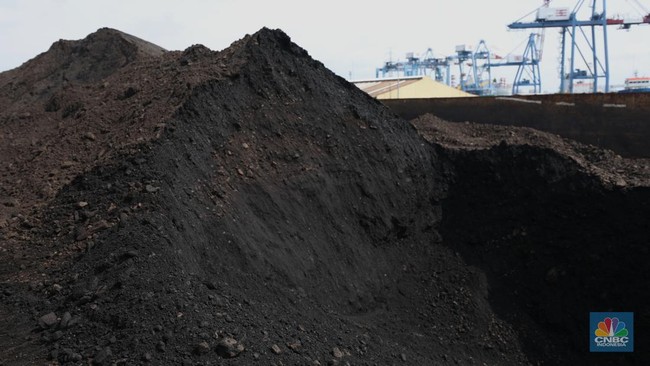
Global coal prices have soared to their highest position in more than two and a half years. This price surge was triggered by rising oil prices as well as supply issues in China and Indonesia.
According to Refinitiv, coal prices in the most recent trading week, ending Friday (4/9/2026), closed at US$153 per tonne, representing a 1.8% increase. This rise extends a coal rally that has seen prices jump by 10.5% over the last eight days. The price broke through its highest record since 18 December 2023, or two years and nine months ago. The surge past the US$150 per tonne level is considered unusual and rare.
In a single week, coal prices jumped 9.5%, marking the fourth consecutive week of price increases. The surge is attributed to rising oil prices and supply shortages. Oil prices rose 9% this week due to the re-escalation of war tensions. As oil and coal are substitute commodities, their prices influence one another.
Coal prices are also climbing due to supply concerns in China and several other nations, partly due to reduced supply from Indonesia. Coal stocks at Qinhuangdao Port continue their downward trend, primarily because coal supply arriving via rail is shrinking. While coal shipments out of the port have also decreased, the decline in inflows is more significant, keeping stocks under pressure. This condition is not limited to Qinhangdao; Sxcoal data shows that combined stocks at several major ports in northern China remained under pressure in early September.
The reduction in rail traffic has made it difficult for ports to replenish stocks being depleted to meet the needs of power plants and industries. Sxcoal reported that Chinese mine-mouth coal prices continue to rise despite cooling electricity demand, suggesting that the current price strength is driven more by supply constraints than demand surges. Heavy rain in Inner Mongolia has also disrupted logistics and limited coal flows to ports.
Despite the price hike, not all market participants are certain the rally will continue. As summer and peak air conditioning usage come to an end, coal consumption for coastal Chinese power plants is expected to undergo a seasonal decline. Some plants are also reported to have relatively high inventories and rely more on long-term contracts, only entering the spot market when mandatory replenishment is required.
China’s rising domestic prices have also spilled over into the imported coal market. Tighter supply from Indonesia is further driving prices. Indonesian 3,800 kcal/kg NAR coal for October shipments is reportedly being traded around US$70-71/tonne FOB, while 3,400 kcal/kg coal is around US$60-61/tonne. For Australian 5,500 kcal/kg NAR coal, September transactions were recorded at approximately US$101/tonne FOB.
Supply from Indonesia Hindered
Drought and falling water levels in several major rivers in Kalimantan have begun to disrupt coal transportation. This condition prevents barges from operating optimally and has the potential to hold stocks at both mines and port stockpiles. Gita Mahyarable, Executive Director of the Indonesian Coal Mining Association (APBI), stated that shallow rivers limit barge drafts, meaning coal loads cannot be transported at maximum capacity. “In general, drought and falling river levels are occurring in several regions of Kalimantan and are starting to affect coal transportation activities,” Gita told CNBC Indonesia on Friday (4/6/2026).
She noted that these logistical disruptions could temporarily increase coal stocks in mining and port areas. However, domestic conditions are not the only determining factor for coal prices, as movements remain influenced by global supply and demand. The Ministry of Energy and Mineral Resources (ESDM) also highlighted the drought in the Kapuas River, West Kalimantan, a key coal distribution route. Deputy Minister of ESDM Yuliot Tanjung emphasised that the halt of barges is not due to production restrictions, but because river water levels have dropped drastically. “It is precisely because the rivers are drying up that the barges cannot run,” Yuliot said in Jakarta on Wednesday (2/9/2026).
This condition has left several barges stranded until river depths allow for passage. The phenomenon has also been widely discussed on social media. In Kampung Sungai Raya, Sekadau, expanses of sand appearing due to the receding Kapuas River have even been used by residents as impromptu recreational sites, while one barge is reported to have been grounded in the river for nearly three months.
India’s Stocks Critical
Coal stocks in thermal power plants across India have fallen to less than half of the recommended levels. As of Wednesday (2/9/2026), 50 power plants were classified as having “very low” coal inventories, amid high electricity demand and supply disruptions caused by the monsoon season, according to data from the Central Electricity Authority (CEA). These 50 plants have a combined capacity of approximately 224 GW. As of Wednesday, coal stocks reached 28.2 million tonnes, which is only 48% of the required 58.7 million tonnes. The available inventory is equivalent to about nine days of demand, assuming an 85% plant utilisation rate, compared to a normal requirement of approximately 19 days. Plants categorised as having shortages have inventories of less than 25% of normal stock levels. However, officials from the Ministry of Coal stated that all plants in the critical category are being monitored daily by cross-ministerial teams and continue to receive regular fuel supplies.
Source: jawawa.id (https://jawawa.id/newsitem/impact-of-indonesia-global-coal-prices-surge-for-8-days-india-at-risk-1788580357)
Originally published by CNBC Indonesia (https://www.cnbcindonesia.com/research/20260905080603-128-765159/gara-gara-ri-harga-batu-bara-dunia-terbang-8-hari-india-dalam-bahaya), translated from Indonesian