
Impact of El Niño on Indonesian Rice Production Worsens
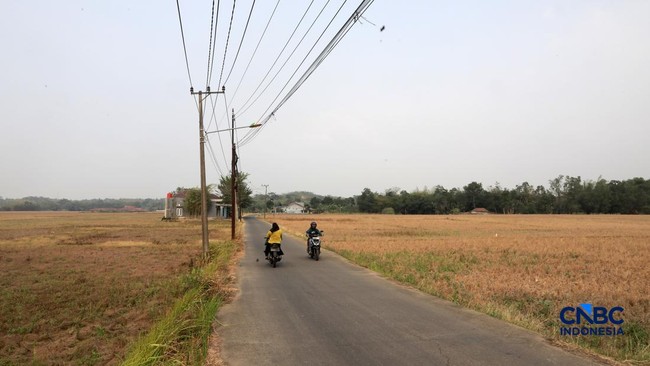
The Indonesian Central Statistics Agency (BPS) has noted that the prolonged drought phenomenon, known as El Niño, occurring in 2026 is more severe than the 2023 period in terms of the reduction in rice planting areas.
According to BPS records, the proportion of the rice area observation phase within the Area Sampling Frame (KSA) in August 2026 was only 28.07%, which is lower than the 29.79% recorded during the 2023 El Niño period. Although this is a decline, the trend since August 2021 shows that El Niño periods consistently result in lower figures compared to normal periods. In August 2021, the proportion of standing crop area was 31.16%, and in August 20<0xA0>22, it was 31.98%. In contrast, August 2024 saw 33.24% and August 2025 reached 34.15%.
“The decrease in standing crop area identifies a lower area of rice cultivation in the pre-harvest phases, namely the early vegetative, late vegetative, and generative phases,” said Ateng Hartono, Deputy for Distribution and Services Statistics at BPS, in Jakarta.
The reduction in rice planting area has a direct implication on shrinking rice production. The realised rice harvest area in August 2026 reached 1.08 million hectares, a 2.83% decrease compared to August 2025, which reached 1.11 million hectares.
In line with the decrease in harvest area, paddy production has also been recorded to decline. In August 2026, paddy production reached 5.46 million tonnes of Dry Milled Grain (GKG), down 2.94% compared to August last year, which stood at 5.63 million tonnes of GKG. Meanwhile, rice production in August 2026 was recorded at 3.15 million tonnes, a 2.90% decrease compared to the same period the previous year.
Nevertheless, cumulatively from January to August 2026, paddy production performance remains relatively stable. The rice harvest area was recorded at 8.32 million hectares, a slight increase of 0.11% compared to the same period last year.
However, BPS warns of a potential decline in production over the next three months. Based on field observations and the Area Sampling Frame (KSA) method, the rice harvest area for September–November 2026 is estimated to reach only 2.23 million hectares, a 12.97% decrease compared to the same period last year. This reduction in harvest area is expected to impact production. BPS estimates that paddy production for September–November 2026 will reach 12.24 million tonnes of GKG, a 11.96% drop compared to the same period last year. Meanwhile, rice production for the next three-month period is projected at 7.06 million tonnes, an 11.95% decrease.
“The impact of El Niño, as reflected in the potential harvest area from January to November 2026, needs to be a shared concern for all of us,” said Ateng.
Source: jawawa.id (https://jawawa.id/newsitem/impact-of-el-nino-on-indonesian-rice-production-worsens-1791075084)
Originally published by CNBC Indonesia (https://www.cnbcindonesia.com/news/20261003222413-4-773087/dampak-el-nino-terhadap-produksi-beras-ri-memburuk), translated from Indonesian