
Impact of BI Rate Rise: IHSG Likely to Be Volatile, Big-Cap Banking Stocks in Focus
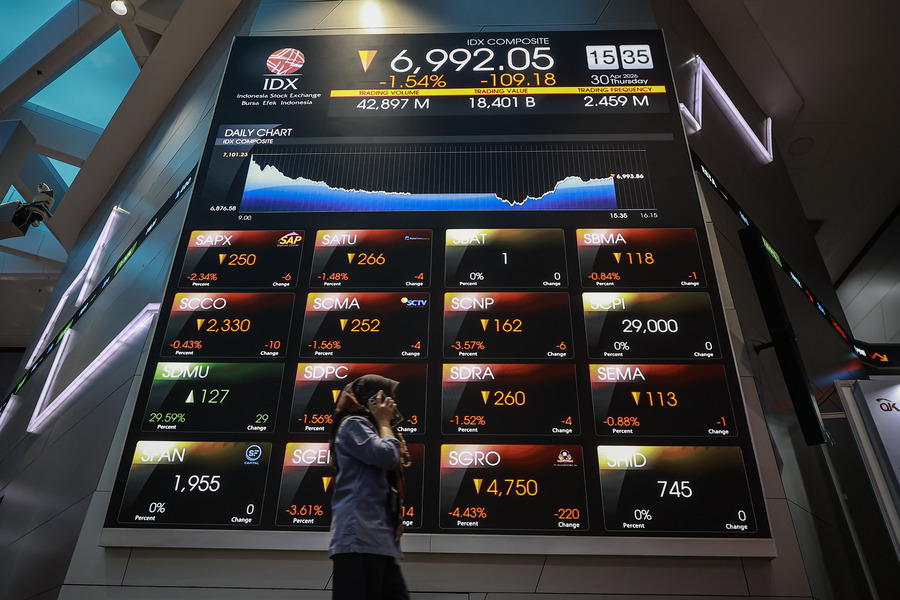
Indonesia’s capital market is pricing in Bank Indonesia’s latest policy decision, which lifted the BI-Rate by 50 basis points to 5.25% at the May 2026 Board of Governors meeting. The deposit facility rate rose to 4.25% and the lending facility to 6%. Market observer Reydi Octa said the IHSG is likely to move with fluctuations and consolidate in the near term, though a technical rebound remains possible, particularly in large-cap banking stocks. ‘If the rupiah stabilises and foreign selling pressure eases after the rate hike, the potential for a technical rebound remains open, especially for banking big caps,’ he said in Jakarta on Wednesday (20/5). Octa noted the policy has two sides: higher rates help stem capital outflows and stabilise the rupiah, but higher borrowing costs can dampen real-economy growth. ‘Consequence is that credit growth, consumption and business expansion may slow somewhat due to higher funding costs.’ Overall, the stock market has come under pressure from rising rates increasing the cost of funds. Sectors sensitive to rates such as property, technology and consumer non-durables may be more pressured, he said. While seen as negative for some issuers, BI’s move was viewed positively by foreign investors as proactive in taming volatility in the rupiah. ‘The market sees BI responds aggressively to external pressures and exchange-rate volatility, potentially helping to curb further capital outflows,’ Octa added. At 15:10 WIB on Wednesday (20/5), the IHSG fell 76.22 points or 1.20% to 6,294.46. Total transactions reached 2.18 billion shares with a volume of 35.97 billion and a value of Rp18.64 trillion. A total of 166 stocks rose, 539 fell, 111 were unchanged. BI Governor Perry Warjiyo stressed that this policy is a strategic step to strengthen domestic economy resilience against external shocks, including tensions in the Middle East. ‘The rate rise is part of ongoing efforts to strengthen the rupiah’s stability against the global shocks arising from the Middle East conflict, and is a pre-emptive move to keep inflation in 2026–2027 within the government’s 2.5% ±1% target range,’ Warjiyo said. The policy reflects Bank Indonesia’s 2026 focus on pro-stability amid global uncertainty. Danantara CEO Rosan Roeslani judged that the banking sector on BEI is currently undervalued with a price-to-book ratio below 1 despite a sharp IHSG correction. The Financial Services Authority (OJK) says the decline in the IHSG in recent days aligns with the region’s bourse weakness. Deputy Speaker of the House Sufmi Dasco Ahmad, together with Danantara’s Rosan Roeslani and OJK Commissioner Friderica Widyasari Dewi, visited the Indonesia Stock Exchange on Tuesday (19/5). The rupiah slipped to Rp17,630 per US dollar. Finance Minister Purbaya Yudhi Sadewa urged investors not to panic and emphasised that the current situation differs from 1998. The IHSG opened down 1.40% to 6,628 on Monday (18/5/2026) amid US-Iran tensions and higher oil prices fueling fears of high global interest rates. Selling pressure remained dominant on the domestic stock market.
Source: jawawa.id (https://jawawa.id/newsitem/impact-of-bi-rate-rise-ihsg-likely-to-be-volatile-big-cap-banking-stocks-in-focus-1779545635)
Originally published by Media Indonesia (https://mediaindonesia.com/ekonomi/892093/dampak-kenaikan-bi-rate-ihsg-berpotensi-volatil-saham-big-caps-perbankan-jadi-sorotan), translated from Indonesian