
Immunisation and the Challenge of Building Public Trust
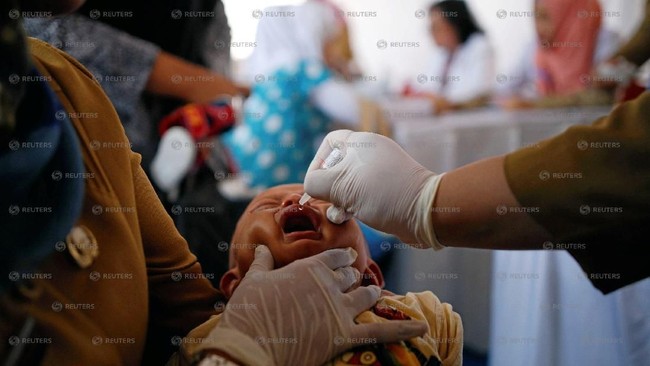
Public policy does not always encounter difficulties at the formulation stage. Many policies are conceptually well designed, supported by budgets and accompanied by technical implementation guidelines. Yet when they reach the implementation stage, another important issue arises: how will the policy be understood, interpreted and accepted by the public?
This issue came to my attention when I was invited to speak at a briefing on the introduction of hexavalent immunisation for healthcare workers in Jakarta in 2026. The event was organised by the Jakarta Health Agency on 23 November 2026.
The event brought together hospital directors, heads of district health offices, community health centre chiefs, and those responsible for immunisation and health promotion programmes. It offered an interesting perspective on the relationship between health policy and public communication.
Before the communication session, participants received a technical briefing from the Ministry of Health’s Directorate of Immunisation on the change from pentavalent to hexavalent immunisation. In my session, I focused on how to communicate the change effectively, both within healthcare organisations and to the public.
From this experience, I saw one fundamental issue: the success of a change in health policy depends on more than technical and administrative readiness. It also depends on communication readiness.
Technical change, social challenges
The introduction of DPT-HB-Hib-IPV, or hexavalent immunisation, is part of the government’s effort to strengthen protection for children’s health. This combination vaccine protects against six diseases: diphtheria, pertussis, tetanus, hepatitis B, Haemophilus influenzae type b and polio.
In Jakarta, implementation is due to begin on 1 December 2026. For eligible infants, the hexavalent vaccine will replace the separate pentavalent and IPV doses. The change simplifies immunisation and reduces the number of separate injections.
Technically, the change can be explained through implementation guidelines, vaccination schedules, vaccine management and service procedures. But it may prompt a range of questions from the public.
Why has the vaccine changed? Is this combination vaccine safe? Why are six types of protection given in one injection? What if a child develops a fever after immunisation? Has my child’s vaccination schedule changed too? These are not questions to avoid. They are precisely why public communication is needed.
A change that seems straightforward to policymakers may not be straightforward to the public. Technical language understood by healthcare workers may not be immediately clear to parents.
The success of a policy therefore depends on more than the government’s ability to issue technical guidelines. It must also be able to turn policy into information that is simple, relevant and trustworthy.
Information alone does not build trust
The World Health Organization (WHO), through its Behavioural and Social Drivers of Vaccination (BeSD) framework, published in 2022, explains that people’s decisions to accept vaccination are influenced by more than knowledge. Perceptions, emotions, social norms, trust, motivation and experiences of healthcare services also shape those decisions.
Research by Syiroj, Pardosi and Heywood, published in the journal Vaccine in 2019, offers empirical insight in the Indonesian context. Based on interviews with 16 caregivers in South Tangerang, the study identified three interrelated groups of issues associated with incomplete childhood immunisation: belief-related barriers, concerns about vaccine safety, and problems of trust and misinformation.
The study was qualitative and was not intended to represent Indonesia’s entire population. However, its findings offer an important illustration of how parents’ decisions involve factors more complex than the availability of information alone.
In the context of immunisation, at least three sources of concern need attention. First, religious considerations. Some people have questions about vaccine ingredients, halal status and whether vaccination is compatible with their beliefs. Medical explanations alone are not enough to address such concerns. Competent religious authorities need to be involved so that the public receives a full explanation.
Second, trust in scientific information. Amid the flood of digital content, people may encounter claims questioning the benefits and safety of immunisation. Healthcare workers need to explain scientific evidence in simple terms without belittling those who remain uncertain.
Third, concerns about adverse events following immunisation (AEFI). Fever, swelling at the injection site and other reactions are common concerns for parents.
Information about possible AEFIs, monitoring and how to respond should be communicated openly and proportionately, in line with medical guidance. Concealing risks is not an appropriate communication strategy. Rather, transparency accompanied by evidence-based explanation is the foundation of trust.
Communication challenges start within organisations
One aspect of public policy implementation that is often overlooked is internal communication. Health policies typically pass through a lengthy bureaucratic chain. Information moves from the Health Agency to district health offices, then to hospitals and community health centres, healthcare workers and Posyandu community health post cadres.
But does every level really share the same understanding? Receiving a circular does not automatically mean it has been understood. Nor does holding a briefing automatically ensure that all staff can explain the change to the public.
Imagine a mother receiving different explanations from two healthcare workers about her child’s immunisation schedule. The resulting confusion is not necessarily a matter of individual competence. It may reflect a communication problem within the organisation.
Hospital directors, district health office heads and community health centre chiefs therefore need to do more than ensure that policies are implemented. They are also communication leaders.
A simple principle should be established: one policy, one understanding, one message.
Those responsible for immunisation programmes must ensure the technical information is accurate. Those in charge of health promotion should translate that information into communication materials that are easy to understand. Both roles must work in tandem.
The importance of healthcare workers’ communication skills is also supported by research by Chen and colleagues, published in the journal Vaccines in 2025. A systematic review of 143 articles found that more than two-thirds of the studies reviewed reported increased vaccine acceptance following communication interventions. Common approaches included training healthcare workers, educating patients and strengthening communication between healthcare workers and patients.
The findings convey an important message: communication skills are not merely an additional competency for healthcare workers. They are part of healthcare service readiness.
The public needs trusted communicators
Health communication is not always effective when it relies solely on formal government channels. People have social networks and figures they trust. In Indonesia, religious and community leaders, teachers and Posyandu cadres play an important role in sharing information.
Research by Jusril and colleagues, published in BMJ Open in 2022, examined factors influencing demand for vaccination in Indonesia. It combined analysis of immunisation coverage data from 395 districts with qualitative research.
The findings identified misinformation on social media, halal and haram concerns, gaps in healthcare workers’ knowledge, family influence, negative experiences and concerns about AEFIs as barriers to immunisation acceptance. Conversely, caregivers’ knowledge, social norms supportive of immunisation, cross-sector collaboration and positive service experiences were enabling factors.
These findings show that health communication cannot rely solely on official government messages. It needs to reach people through social networks close to their everyday lives.
Posyandu cadres, for example, are not merely providers of community-level health services. They also connect health facilities with families.
Regular interactions enable cadres to understand the character of their communities, identify emerging concerns and detect uncertainty before it develops into refusal.
But they need support to carry out this role. Cadres must receive accurate information, simple communication materials and a clear understanding of the limits of their authority. Medical questions beyond their competence should be referred to healthcare workers.
Religious and community leaders are similarly not substitutes for medical authorities, but they can be strategic partners in fostering dialogue and social acceptance. The principle is simple: it matters not only who speaks, but also whom the listener trusts.
From briefing to communication readiness
Briefings are often understood as events for providing information to the public. Yet effective communication should be two-way. The government must do more than explain what people should do; it must also listen to what they think, feel and worry about.
When parents question vaccine safety, they should not be too quickly labelled as resistant. They may simply need more explanation.
When false information circulates in WhatsApp groups, the response should be more than calling it a hoax. Staff need to understand what information is circulating, where it came from and why people believe it.
The WHO’s Risk Communication and Community Engagement (RCCE) approach treats risk communication and community engagement as important elements of public health preparedness and response. Communication is therefore not simply about sending messages; it is about building relationships, listening to needs and providing feedback mechanisms.
This is why I believe it is important to distinguish between two concepts: vaccine hesitancy and communication readiness within healthcare organisations. They are connected, but they are not the same.
Public concerns relate to perceptions, experiences, beliefs and trust. Communication readiness, meanwhile, concerns an organisation’s ability to respond to those issues.
Have healthcare workers received enough information? Have leaders ensured that messages are consistent? Have cadres been trained? Are there mechanisms for addressing rumours and public questions?
A 2022 systematic review by Ahmad, Akande and Majid, published in the European Journal of Public Health and examining 22 qualitative and mixed-methods studies, also found that trust in health authorities and employers, as well as concerns about vaccine safety and effectiveness, can influence healthcare workers’ own attitudes.
This means communication about change must not be directed only at the public. The government must also build trust and a shared understanding within healthcare organisations.
Measuring success through understanding and trust
The success of communication should not be measured only by the number of briefings held, materials printed or messages circulated on social media. More substantive measures include whether healthcare workers understand the policy, whether cadres can explain basic information, whether parents understand changes to the schedule, and whether public questions receive adequate responses.
Immunisation coverage remains an important indicator of programme success. But it is affected by many factors, including service availability, access, logistics and public acceptance.
Communication should therefore be integrated into health programme management, rather than treated as an additional activity undertaken only when a new policy is introduced. Every health facility should have mechanisms to identify public questions, monitor rumours, assess message consistency and improve its communication. A briefing should be the start of this process, not the end of the communication work.
Trust is part of public service
My experience speaking at the briefing on the introduction of hexavalent immunisation in Jakarta reminded me that changes to health policy require more than technical readiness. They require communication readiness.
The government must ensure that every level of the organisation shares the same understanding. Healthcare workers must be able to explain the change in simple language. Cadres need support, while the public must receive accurate, open and trustworthy information.
We cannot expect behaviour to change after a single briefing. Trust is built over time, through consistency and good service experiences.
One point must always be borne in mind: making vaccines available does not guarantee that they will be accepted; sharing information does not guarantee that it will be understood; and adopting a policy does not guarantee that it will be implemented well.
Communication connects policy with people. Ultimately, the success of an immunisation programme is not only about how vaccines are administered, but also about how public trust is built. Communication is not an add-on to healthcare. It is part of healthcare itself.
Source: jawawa.id (https://jawawa.id/newsitem/immunisation-and-the-challenge-of-building-public-trust-1795589500)
Originally published by CNBC Indonesia (https://www.cnbcindonesia.com/opini/20261125123424-14-788299/imunisasi-dan-tantangan-membangun-kepercayaan-publik), translated from Indonesian