
Immigration Partners with ITB to Develop 'Digital Fence' Drone Patrol for Border Surveillance
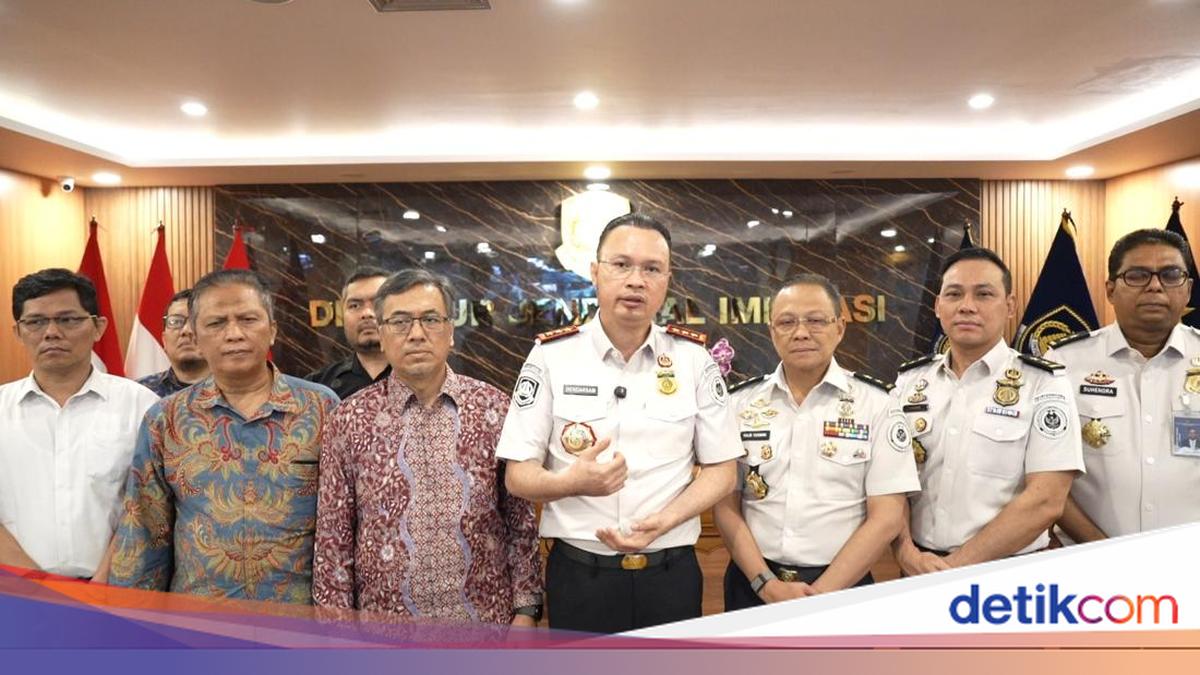
The Directorate General of Immigration is partnering with the Faculty of Mechanical and Aerospace Engineering at the Bandung Institute of Technology (FTMD ITB) to initiate a ‘Digital Fence’ for immigration surveillance at the nation’s borders. Director General of Immigration, Hendarsam Marantoko, explained the plan following a meeting with ITB representatives on Tuesday (30/06/2026) at the Directorate General of Immigration building. “It started from my concern and curiosity when I attended a Defence Exhibition in Singapore a few months ago. I saw various advanced technologies for border security, but none were made by our own people. Yet our human resources domestically have high competitiveness to produce products of equal quality,” Hendarsam stated on Friday (3/7/2026). “From there, I thought of trying to collaborate with the best university in Indonesia in the field of technology to initiate the ‘Digital Fence’, a border security system using drones. We have 3,111 km of land border areas that are very vast and prone to illegal crossings,” he continued. Hendarsam added that along the 3,111 km land border, there are only 18 Cross-Border Posts (PLBN) and 38 Border Crossing Posts (PLB) in Kalimantan, Papua, and East Nusa Tenggara. “Even then, three PLBNs are not yet active and only seven Border Crossing Posts have actual crossings. The rest are inactive or constrained by Cross-Border Agreements,” he said. Based on crossing data at Land Immigration Checkpoints from January to April 2026, the volume of official crossers was recorded at 679,867 people. However, the real challenge is monitoring illegal crossers on unofficial routes along the border line. This situation is worsened by limited digital infrastructure, personnel security risks in conflict areas, and high vulnerability to transnational crimes such as Trafficking in Persons (TPPO), people smuggling, and commodity smuggling. “We are prioritising this Digital Fence for the land areas in Kalimantan bordering Malaysia, Papua bordering Papua New Guinea, and East Nusa Tenggara bordering Timor Leste. Meanwhile, for maritime areas, the focus is directed at the Riau Islands, Batam, and surrounding ferry routes,” Hendarsam explained. To achieve this, Immigration plans to optimise drone technology developed by ITB since 2019 and produced jointly with PT Dirgantara Indonesia (PT DI). These drones are designed to operate nonstop for 24 hours along the border by utilising power supply from solar panels. The aerial surveillance system will combine two types of drones working as a single unit: the HALE (High-Altitude Long-Endurance) Drone, which can fly constantly at an altitude of 1,000 metres for 24 hours for long-range perimeter monitoring; and the Mantis Drone, which functions to perform tactical approach and short-range visual interception once the HALE drone detects suspicious movement. This technology has previously been implemented in the agricultural sector with satisfactory results. “The digital fence cannot physically stop people, but it provides real-time situational awareness. When the drone detects movement in a border blind spot, the system immediately sends coordinates to the nearest immigration post or border guard. This step can drastically cut the response time of conventional patrols,” said Hendarsam, emphasising this as the advantage of the collaborative system. “Drones also expand the reach of our officers. Given the vast surveillance area, the presence of a fast and flexible eye in the sky provides accurate initial data before the team moves to take action. This is far more cost-effective than operating manned air assets,” Hendarsam elaborated. As a long-term plan, the Digital Fence programme is projected to become the main foundation for building cyber security independence within the national immigration environment. “The cooperation between Immigration, ITB, and PT DI is our effort to ensure that the surveillance of state sovereignty does not depend on foreign systems. By securing unofficial routes through cyber technology and domestic air patrols, we can minimise gaps for TPPO perpetrators and illegal crossers, while sustainably actualising national technological independence,” he concluded.