
Immigration Office Promotes Cross-Agency Data Sharing Services
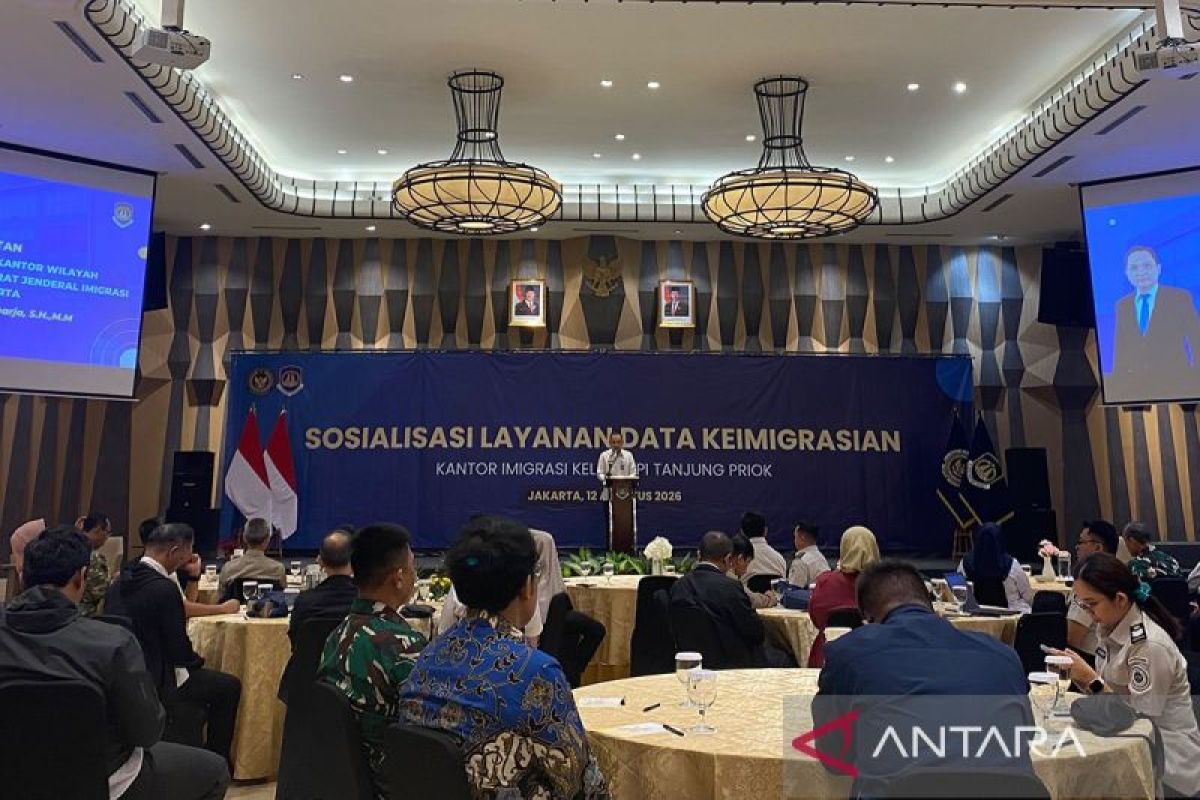
Jakarta (ANTARA) - The Class I Immigration Checkpoint (TPI) Office of Tanjung Priok has organised a socialisation event on immigration data services for cross-sector agencies. The initiative aims to strengthen coordination, synergy, and the utilisation of immigration data to support the execution of government duties and public services. “This socialisation serves as a platform to convey information regarding the services and utilisation of immigration data,” said Pamuji Raharja, Head of the Regional Office of the Directorate General of Immigration for DK Jakarta, on Thursday. Pamuji stated that the socialisation also reinforces understanding of coordination mechanisms and the submission of data requirements between agencies in accordance with applicable regulations. He stressed the importance of accurate, integrated, and accountable data in supporting the implementation of each agency’s duties. “Cross-agency collaboration is expected to create a more effective, efficient, and targeted exchange of information while still paying attention to aspects of security and data protection,” he said. Meanwhile, Imam Setiawan, Head of the Class I TPI Tanjung Priok Immigration Office, said that cross-agency synergy is an important part of improving the quality of immigration service delivery. According to him, through continuous communication and coordination, information needs can be followed up more quickly and optimally. “This activity is a concrete step to strengthen synergy between agencies through the utilisation of immigration data services,” said Imam. His office is committed to providing professional, transparent, and community-oriented services to support the implementation of partner agencies’ duties. He expressed hope that the socialisation would build stronger and more sustainable collaboration with all stakeholders, especially at the Tanjung Priok Immigration Office. “This synergy is expected to support the realisation of immigration service governance that is increasingly effective, responsive, and oriented towards public service,” he said.