
Immigration Directorate Teams Up with ITB to Pioneer 'Digital Fence' for Border Surveillance
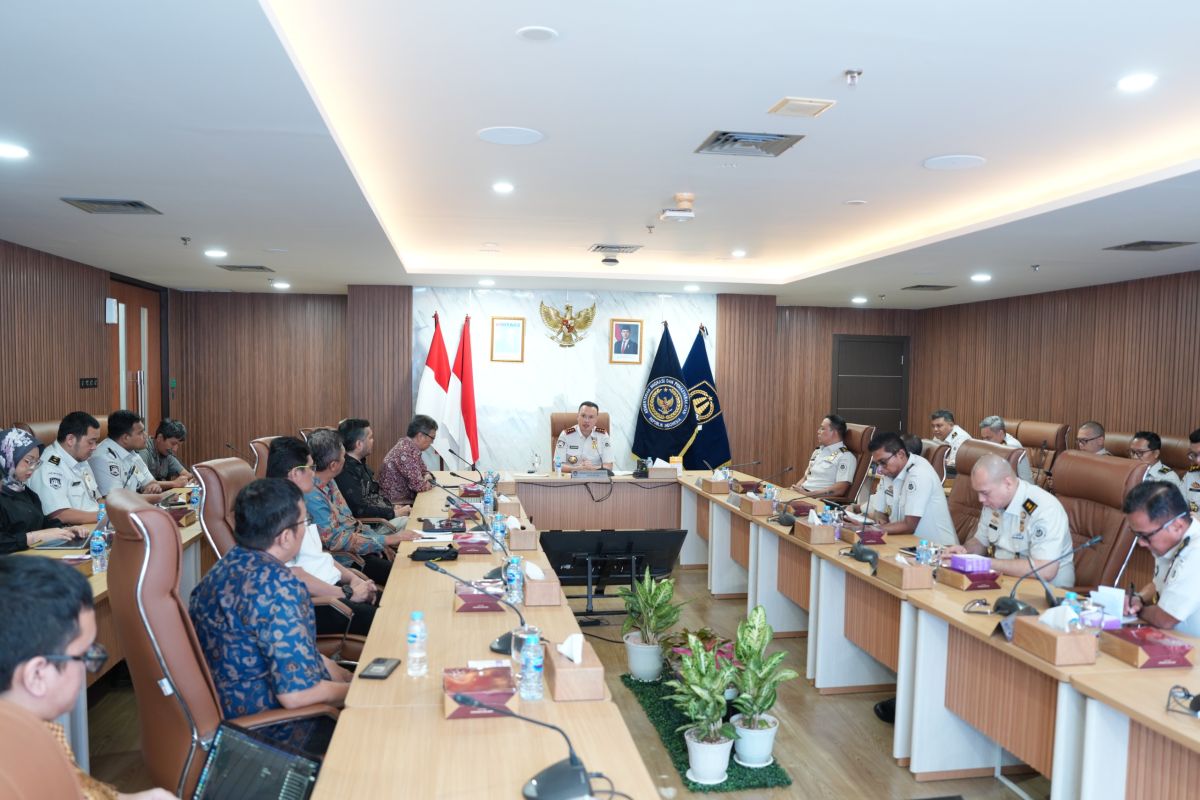
Jakarta (ANTARA) - The Directorate General of Immigration (Ditjenim) has partnered with the Bandung Institute of Technology (ITB) to pioneer a ‘Digital Fence’, a border security system utilising domestically developed drone technology.
Director General of Immigration Hendarsam Marantoko stated in Jakarta on Wednesday that Indonesia possesses an extensive border spanning approximately 3,111 kilometres, which is highly vulnerable to illegal crossings.
“We are prioritising this Digital Fence for land borders in Kalimantan bordering Malaysia, Papua bordering Papua New Limited, and East Nusa Tenggara bordering Timor Leste. For maritime areas, the focus is directed towards the Riau Islands, Batam, and surrounding crossing routes,” he said.
He explained that of the 3,111 kilometres of Indonesia’s border, there are currently only 18 Integrated Border Posts (PLBN) and 38 Border Posts (PLB) located in Kalimantan, Papua, and East Nusa Tenggara (NTT). Furthermore, three PLBNs are not yet active, and only seven PLBs are currently operational for crossings.
“The remainder are either inactive or hindered by border agreement issues,” he added.
This situation, he noted, is exacerbated by limited digital connectivity, security risks to personnel in conflict areas, and high vulnerability to cross-border crimes such as human trafficking (TPPO), human smuggling, and commodity smuggling.
“To address this, we plan to optimise drone technology developed by ITB since 2019,” he said.
The ITB-developed drones, produced in collaboration with PT Dirgantara Indonesia (PT DI), are designed to operate 24 hours a day along the border, utilising power from solar panels.
He explained that this aerial surveillance system will combine two types of drones working in unison: the HALE (High-Altitude Long-Endurance) drone, which can fly constantly at an altitude of 1,000 metres for 24 hours to perform long-range perimeter monitoring, and the Mantis drone, which performs tactical approaches and short-range visual interception once the HALE drone detects suspicious movement.
Previously, he noted, this technology had been implemented in the agricultural sector with satisfactory results.
“The Digital Fence may not physically stop people, but it provides real-time situational awareness,” he explained.
He continued, “When a drone detects movement in a border blind spot, the system immediately sends coordinates to the nearest immigration post or border guard. This step can drastically reduce the response time of conventional patrols.”
Hendarsam emphasised that this collaborative system offers a significant advantage.
“Drones also extend the reach of our officers. Given the vastness of the surveillance area, the presence of fast and flexible aerial eyes provides accurate preliminary data before teams move in to take action. This is more cost-effective than operating manned aerial assets,” he said.
As a long-term plan, he stated that the Digital Fence programme is projected to become the primary foundation for building cyber security independence within the national immigration environment.
“The cooperation between Immigration, ITB, and PT DI is our effort to ensure that the surveillance of national sovereignty does not depend on foreign systems,” he said.
“By securing unofficial routes through cyber technology and domestic aerial patrols, we can minimise loopholes for human traffickers and illegal crossers, while simultaneously realising sustainable national technological independence,” he added.
The involvement of a domestic university is driven by Hendarsam’s observations while attending a defence exhibition in Singapore a few months ago.
He observed various advanced technologies for border security, yet noted a lack of domestically produced technology on display.
“In fact, our domestic human resources possess high competitiveness to produce products of equivalent quality,” he remarked.
Motivated by this concern, the Directorate General of Immigration engaged ITB as Indonesia’s leading technological university. The initiation of the Digital Fence programme was discussed in a meeting with ITB representatives held at the Directorate General of Immigration Building in Jakarta on Tuesday (30/6).
Source: jawawa.id (https://jawawa.id/newsitem/immigration-directorate-teams-up-with-itb-to-pioneer-digital-fence-for-border-surveillance-1782896147)
Originally published by Antara (Indonesian) (https://www.antaranews.com/berita/5630400/ditjen-imigrasi-gandeng-itb-rintis-pagar-digital-pengawasan-perbatasan), translated from Indonesian