
Immigration Directorate General provides corridor gates at Soekarno-Hatta and Surabaya
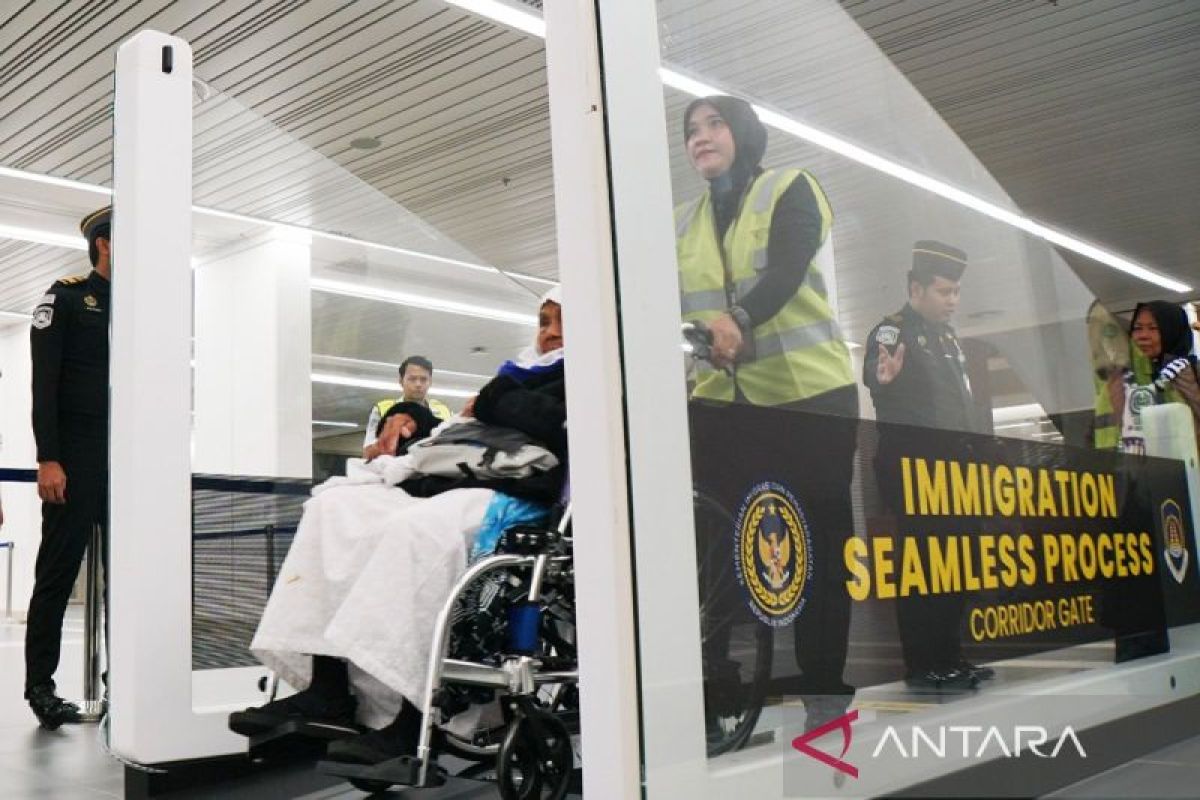
The Directorate General of Immigration, under the Ministry of Immigration and Correctional Services, is providing corridor gates to facilitate the return of Indonesian Hajj pilgrims in 2026 at Soekarno-Hatta International Airport in Tangerang, Banten, and the Sukolilo Hajj Dormitory in Surabaya, East Java.
Director General of Immigration Hendarsam Marantoko stated that with this service, returning Indonesian Hajj pilgrims can simply pass through prepared corridors without needing to undergo conventional immigration checks or use autogates, as the pilgrims’ data will have been pre-verified.
“We have prepared corridor gates in two locations. The first is at Soekarno-Hatta for pilgrims from Jakarta and Lampung, and the second is at the Sukolilo Hajj Dormitory in Surabaya for pilgrims from East Java,” Hendarsam said in a statement in Jakarta on Tuesday.
According to Hendarsam, the corridor gate service will prevent arriving pilgrims from spending excessive time at the airport. “Therefore, as soon as the pilgrims arrive at the airport and collect their luggage, they can proceed directly home,” he added.
He explained that for Soekarno-Hatta Airport, the Directorate General of Immigration has stationed two corridor gates in Terminal 2, which is the dedicated terminal for Hajj pilgrims. The first facility is located at Gate F1 to serve the Jakarta-Lampung flight group, allowing pilgrims to proceed directly to domestic flights to Lampung from the departure area. The second facility is located in the arrival area of Terminal 2 to serve the Jakarta-Pondok Gede and Jakarta-Bekasi groups.
Meanwhile, in Surabaya, the corridor gate has been moved from Terminal 2 of Juanda Airport to the Sukolilo Hajj Dormitory. The system at this location is connected to the immigration network, supported by primary connections, satellite-based backup lines, and other alternative connectivity to bring services closer to the pilgrims.
To ensure the smooth reception of Indonesian Hajj pilgrims returning to the homeland, numerous immigration officers and mobile units will also be stationed at each point. “Similar services will also be implemented at several other embarkation points,” said Hendarsam.