
Immigration Director General Leads DGICM-Australia Meeting in Cambodia
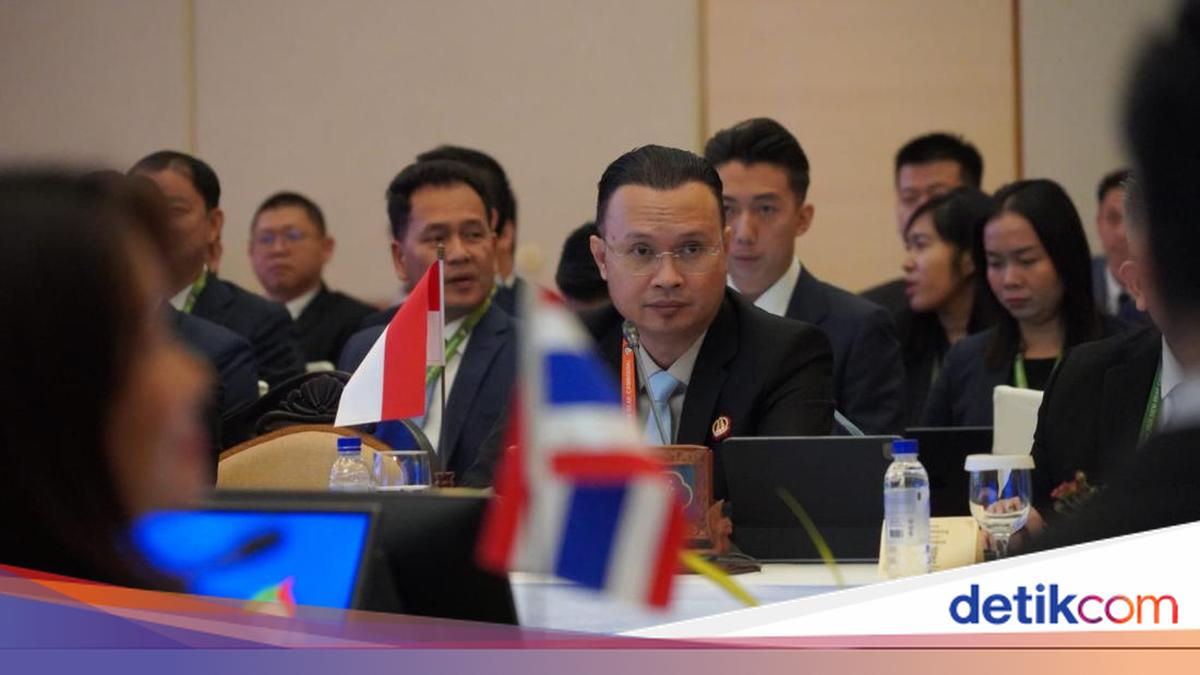
Director General of Immigration Hendarsam Marantoko directly led discussions at the 21st DGICM + Australia Consultation forum held in Siem Reap, Cambodia. The meeting was part of the 29th DGICM and Related Meetings series. The event was co-chaired by representatives from Indonesia and Australia, with the Australian side led by Damien Kilner, First Assistant Secretary (Immigration) at the Department of Home Affairs. The 21st DGICM + Australia Consultation aims to strengthen immigration cooperation between ASEAN member states and Australia, particularly in information exchange, strengthening border security governance, and handling transnational crime. On this occasion, Hendarsam stressed the importance of synergy between ASEAN member countries and Australia in maintaining regional stability. “We hope this forum can become a new direction for a more solid ASEAN-Australia partnership in responding to border dynamics. By building mutual trust and information openness, we are developing more robust operational standards on the immigration and border front lines,” Hendarsam stated on Friday (26/6/2026). Besides discussing synergy among ASEAN countries, the meeting also focused on improving border facilitation. Currently, Indonesian and Bruneian citizens have been granted easier access to SmartGate facilities in Australia. Meanwhile, member countries such as Cambodia, Laos, and the Philippines highlighted increasingly complex security challenges. They raised issues ranging from irregular migration, trafficking in persons, and people smuggling, to the rampant modus operandi of online scams requiring integrated regional coordination. Responding to these digital challenges, Singapore and Australia initiated a new area of cooperation through the utilisation of data and artificial intelligence (AI). This technology is targeted at modernising immigration services and strengthening screening capacity at border checkpoints. The meeting also resulted in an agreement to continue the ASEAN-Australia Programme of Work for the 2026-2027 period through various regional capacity-building programmes. Regarding this, Hendarsam explained that the work programme is highly relevant to the dynamics of transnational crime currently faced by the region. “ASEAN-Australia cooperation is important to strengthen regional capacity and resilience in facing changes in migration patterns, labour mobility, transnational crime, people smuggling, human trafficking, and misuse of immigration channels,” he clarified. Indonesia, he said, is committed to organising a Cyber Resilience Programme in August 2026. This programme uses a train-the-trainer approach to strengthen frontline officers’ preparedness against cybercrime risks often linked to transnational networks. In addition to Indonesia, other strategic work programmes maintained include the Border Control Agency Management Programme (BCAMP) in Vietnam, the Investigative Interviewing Programme in the Philippines, and Document Examination and Facial Comparison Training in Malaysia. As a strategic step forward, Indonesia officially expressed its readiness to host the 22nd DGICM + Australia Consultation, which will be held in Bali in 2027. Logistical and substantive preparations will be carried out early to advance various priority immigration agendas at the regional level. At the end of the meeting, Hendarsam conveyed Indonesia’s commitment and invited all delegations to attend the meeting in Bali. “Indonesia is ready to host the 22nd DGICM + Australia Consultation in Bali in 2027. We will use this opportunity to advance priority agendas such as secure information sharing, immigration data interoperability, cyber resilience, data and AI, protection of migrant workers, and operational cooperation against online scams and transnational crime,” he concluded.